
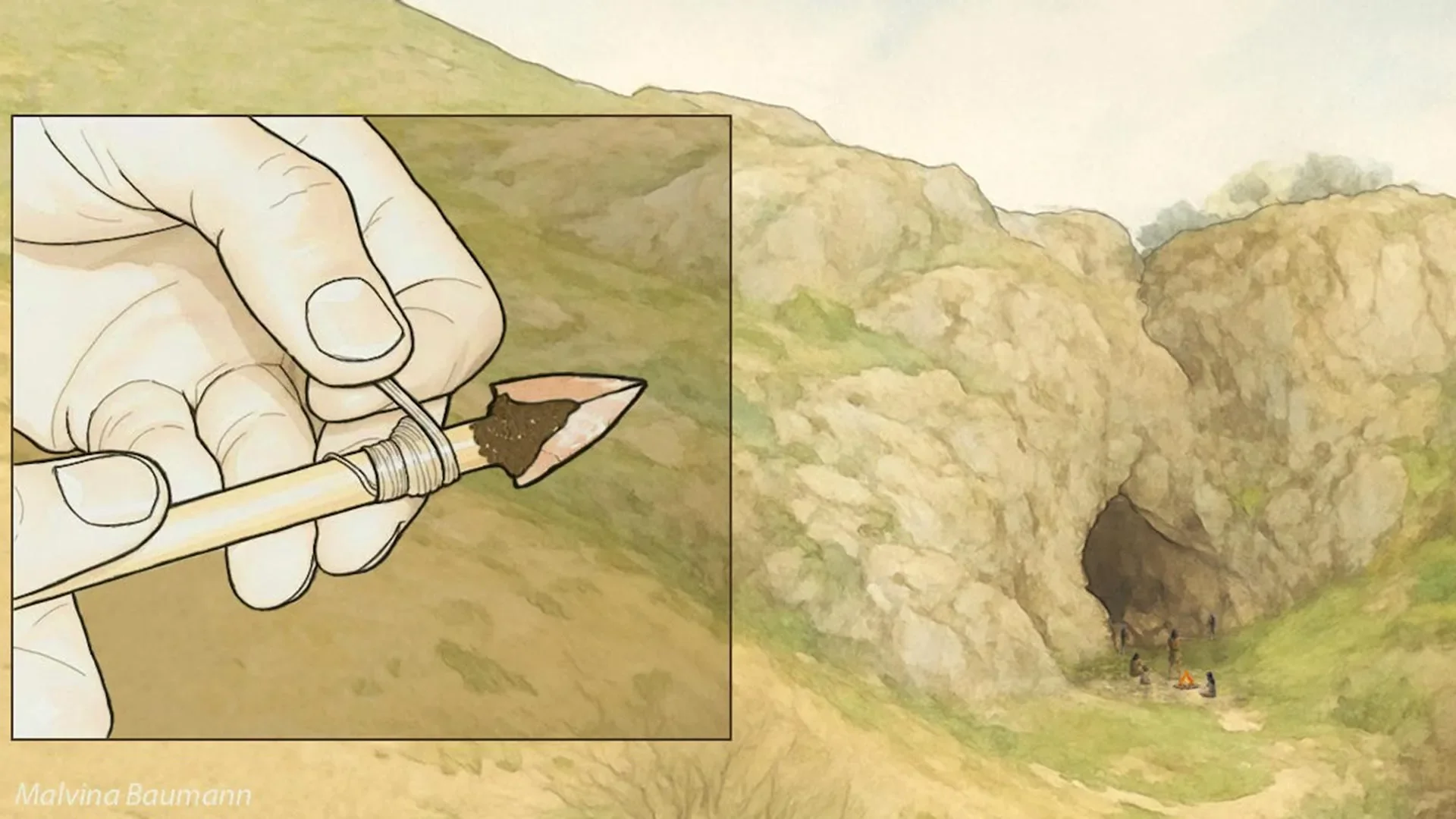
A study published August 11 in PLOS ONE identifies a set of tiny stone points from the Obi-Rakhmat rock shelter in Uzbekistan, dated to roughly 80,000 years ago, that show fracture patterns and dimensions consistent with use as arrow tips rather than spear or dart heads.
Fracture Patterns Point to a Weapon, Not a Butchering Knife
The team, led by Hugues Plisson of the Université de Bordeaux and Andrei Krivoshapkin of Uzbekistan's National Center of Archeology, examined lithic debris from the two oldest excavated layers at Obi-Rakhmat, a limestone rock shelter in the foothills of the Tien Shan mountains. From that material they selected 20 pieces showing the kind of crushed tips and bending fractures that form when a lithic point is used as the business end of a hunting weapon, rather than as a knife, scraper or borer.
The pieces split into three groups. Large retouched points, weighing 25 to 35 grams and 38 to 41 millimeters wide, are broken in ways consistent with spear or dart use. A second group, nine unretouched and one retouched triangular micropoints, is far smaller: an average width of 18.2 millimeters and an average weight, for the broken specimens, of 1.4 grams. Two of these micropoints preserve microscopic linear impact traces under high magnification, in addition to the visible fracture damage, which the authors treat as their strongest individual pieces of evidence. A small set of bladelets rounds out the sample, though the authors say determining their exact role will require a dedicated follow-up study.
To test how the local raw material breaks, the team knapped replica micropoints from the same silicified limestone, hafted them to modern wooden arrow shafts with a bitumen-and-charcoal mastic, and shot them from a 36-pound bow into an unskinned ungulate carcass. The resulting fractures and microwear matched what they see on the archaeological pieces closely enough to support the identification, while also showing where knapping accidents alone can mimic impact damage, a confound the study addresses directly rather than glossing over.
Where Obi-Rakhmat Sits Among the World's Oldest Weapon Points
Impact-damaged points have been proposed before, at older sites. Kathu Pan 1 in South Africa has yielded points, of Fauresmith type, argued to carry weapon damage from roughly 500,000 years ago, though the published photographic record is thin. Misliya Cave in Israel, linked to the earliest archaic Homo sapiens remains found outside Africa, produced 48 weapon-damaged points out of 445 examined pieces around 180,000 years ago, averaging 64 millimeters long and 19 grams. None of those older assemblages, however, combines large weapon points with a distinct, much smaller microlithic class in the same layer, which is the pattern the authors say is otherwise known only from Homo sapiens sites.
Pulling the paper's own comparisons into one place makes the size gap plain:
| Site | Approx. age | Point type | Reported size |
|---|---|---|---|
| Kathu Pan 1 | ~500,000 years | Fauresmith points | average length over 70 mm; weight not reported |
| Misliya Cave | ~180,000 years | Levallois weapon heads | average 19 g, average 64 mm long |
| Obi-Rakhmat (large points) | ~80,000 years | Retouched points | 25–35 g, 38–41 mm wide |
| Obi-Rakhmat (micropoints) | ~80,000 years | Unretouched triangular micropoints | average 1.4 g, average 18.2 mm wide |
Why Width, Not Weight, Decides Whether a Point Is an Arrowhead
The paper's central technical argument is that a projectile's head and shaft form a matched system, and that arrows, darts and hand-thrown spears cannot borrow each other's parts. A heavy weapon carries enough kinetic energy from mass alone, so the head can afford to be robust. An arrow's kinetic energy comes mostly from velocity, which bleeds off quickly, so penetration depends on how easily the head slits the target's skin, which depends on its width relative to the shaft, not its mass.
Using that logic, the authors calculate that the cutting width of the Obi-Rakhmat micropoints implies a shaft roughly 7.5 to 8 millimeters in diameter, which matches the shaft diameters recorded across ethnographic and archaeological arrow collections worldwide, and is markedly narrower than the shafts documented for darts or spears. They cite a separate hypothesis, that such small points were simplified weapons made by or for children, and reject it: the micropoints are not scaled-down copies of the large points, are not produced by the same knapping sequence, and require the same knapping skill visible in the rest of the assemblage, which argues against a maker learning by trial and error.
A Persian Plateau Population Hub Connects Obi-Rakhmat to Mandrin, 25,000 Years On
The closest match the authors could find for the Obi-Rakhmat micropoints is not in Africa, but in the Rhône Valley in France, where Mandrin Cave's layer E produced micropoints described by an earlier study of that site as bearing the same impact damage and interpreted there as arrowheads, roughly 54,000 years ago, some 25,000 years after Obi-Rakhmat's oldest layers and about 6,000 kilometers away. A Homo sapiens milk tooth was recovered from the same Mandrin layer, while Obi-Rakhmat's own human remains, teeth and skull fragments from a roughly 70,000-year-old layer, show a mix of Neanderthal-like and more ambiguous features that the authors say could reflect hybridization, though no genetic testing has been done.
The authors connect the two sites through recent population genetics rather than a claimed direct migration: a 2024 study proposed the Persian Plateau, on whose northeastern edge Obi-Rakhmat sits, as a refuge where the ancestors of all present-day non-Africans lived between roughly 70,000 and 45,000 years ago before dispersing across Eurasia. Obi-Rakhmat and Mandrin, on that reading, could mark two points along a single population's spread from that hub rather than two independent inventions of the same idea. The authors are careful to frame this as a hypothesis, not a demonstrated link, and note that the toolmakers' species at Obi-Rakhmat remains unresolved without genomic evidence, that the sample published so far is a preliminary 20 pieces from a 20-square-meter excavation, and that whether the same micropoint technology appears through the rest of the site's 10-meter stratigraphic sequence is still an open question for future fieldwork.

Benin's Coral Reef, Presumed Dead in 1966, Is Alive at 54 Meters
Sonar and a tethered drone found living octocoral gardens 54 meters deep off Benin, West Africa, reversing a 1966 verdict that had declared the reef dead.
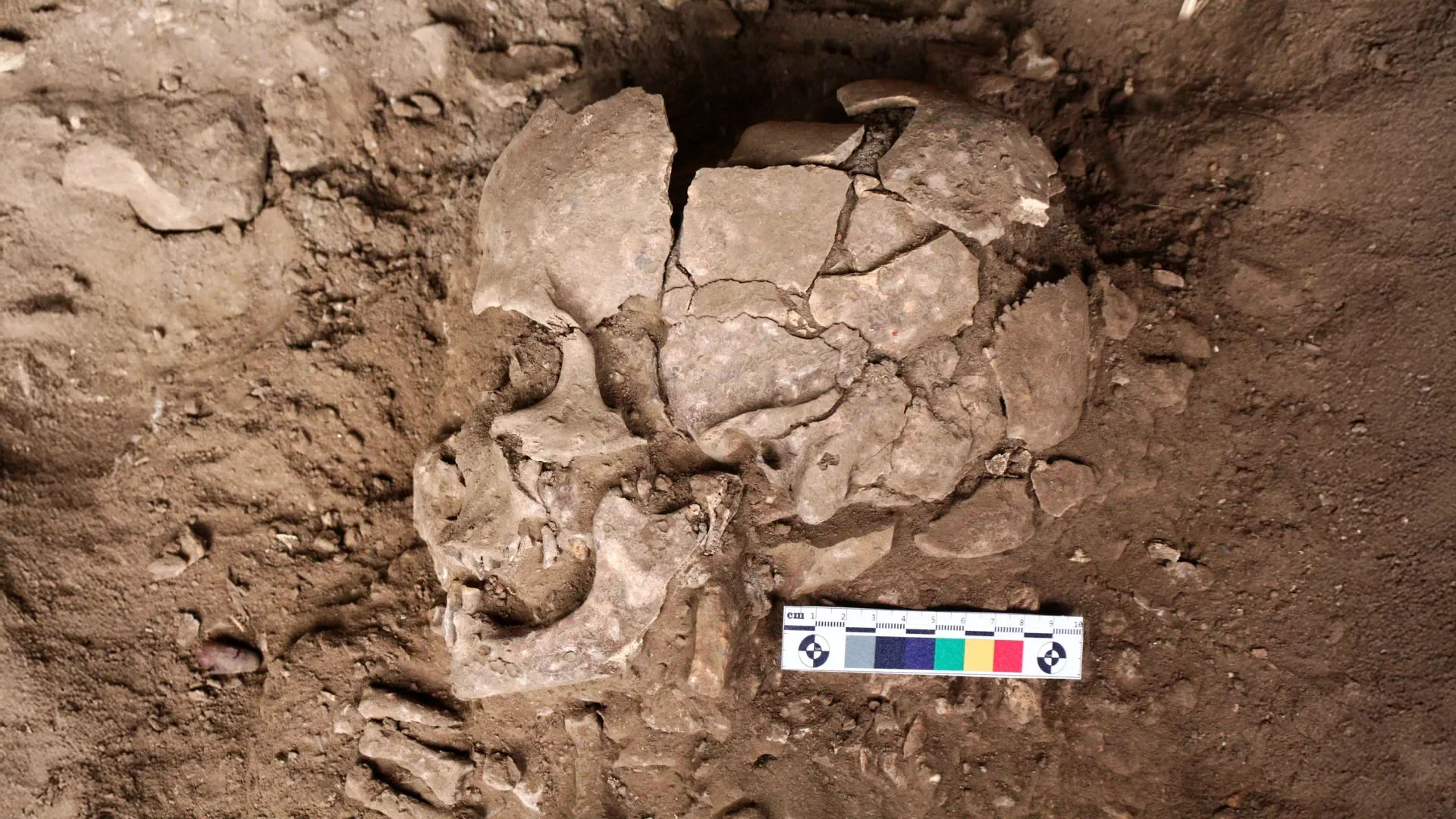
25,000-Year-Old Teeth From Indonesia Reveal the Oldest Known Drug Habit
Grooved teeth from Sulawesi show foragers sucked betel nuts as early as 25,000 years ago, releasing arecoline in the mouth long before farming began.
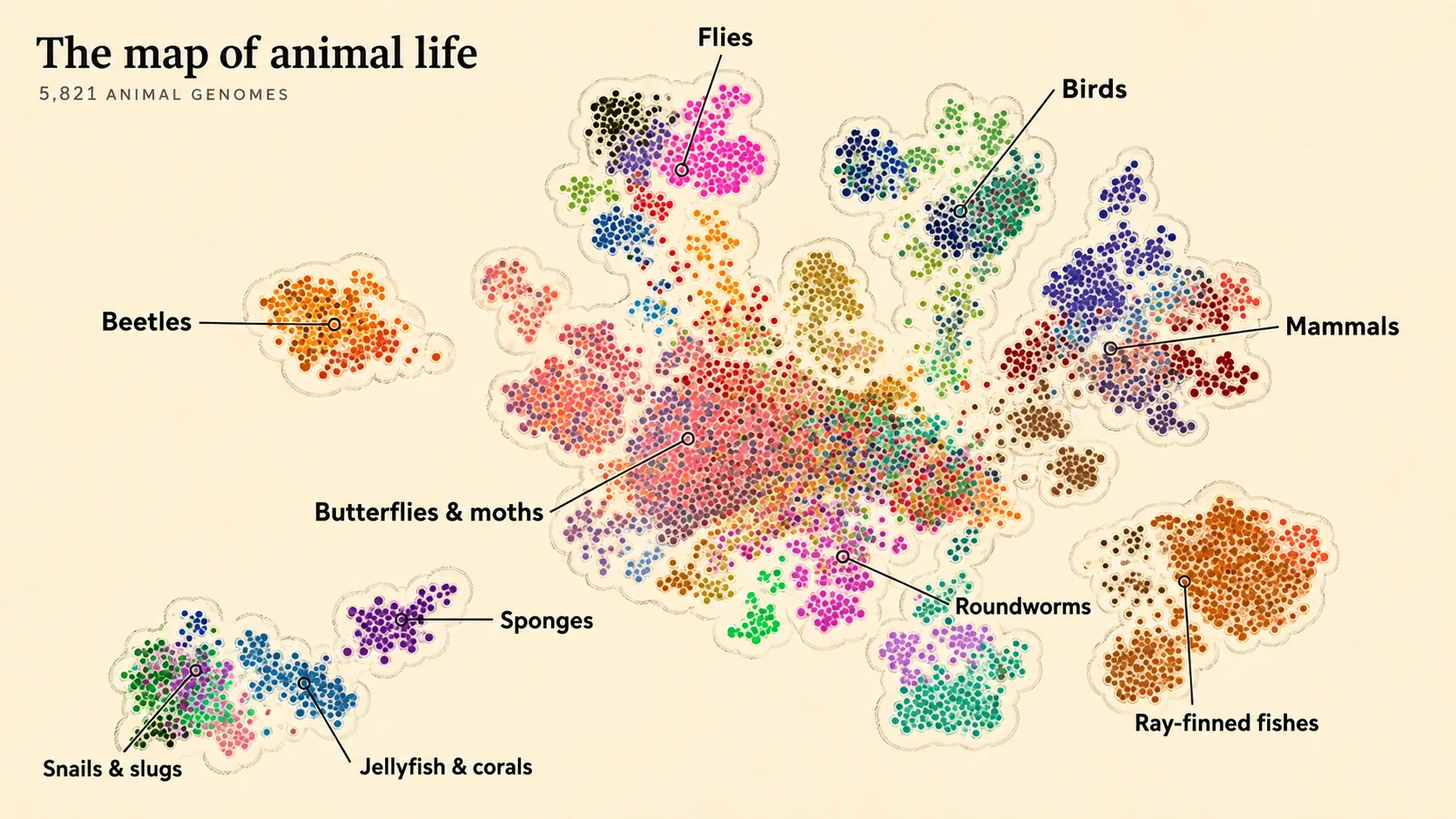
A Map of 5,821 Animal Genomes Shows Chromosomes Fuse Along Fixed Paths
A University of Vienna-led study compared 5,821 chromosome-scale animal genomes and found all 406 possible ancestral chromosome fusions have already occurred.

New Mountain Horned Dragon Species Discovered in Thailand, Named After House of the Dragon's Syrax
Researchers describe Acanthosaura syrax, a new Thai lizard found above 1,300 meters in Mae Wong forest, with COI distance up to 28% from its closest kin.
Comments (0)
Please sign in to join the discussion.
No comments yet.
Be the first to share your perspective on this topic.