
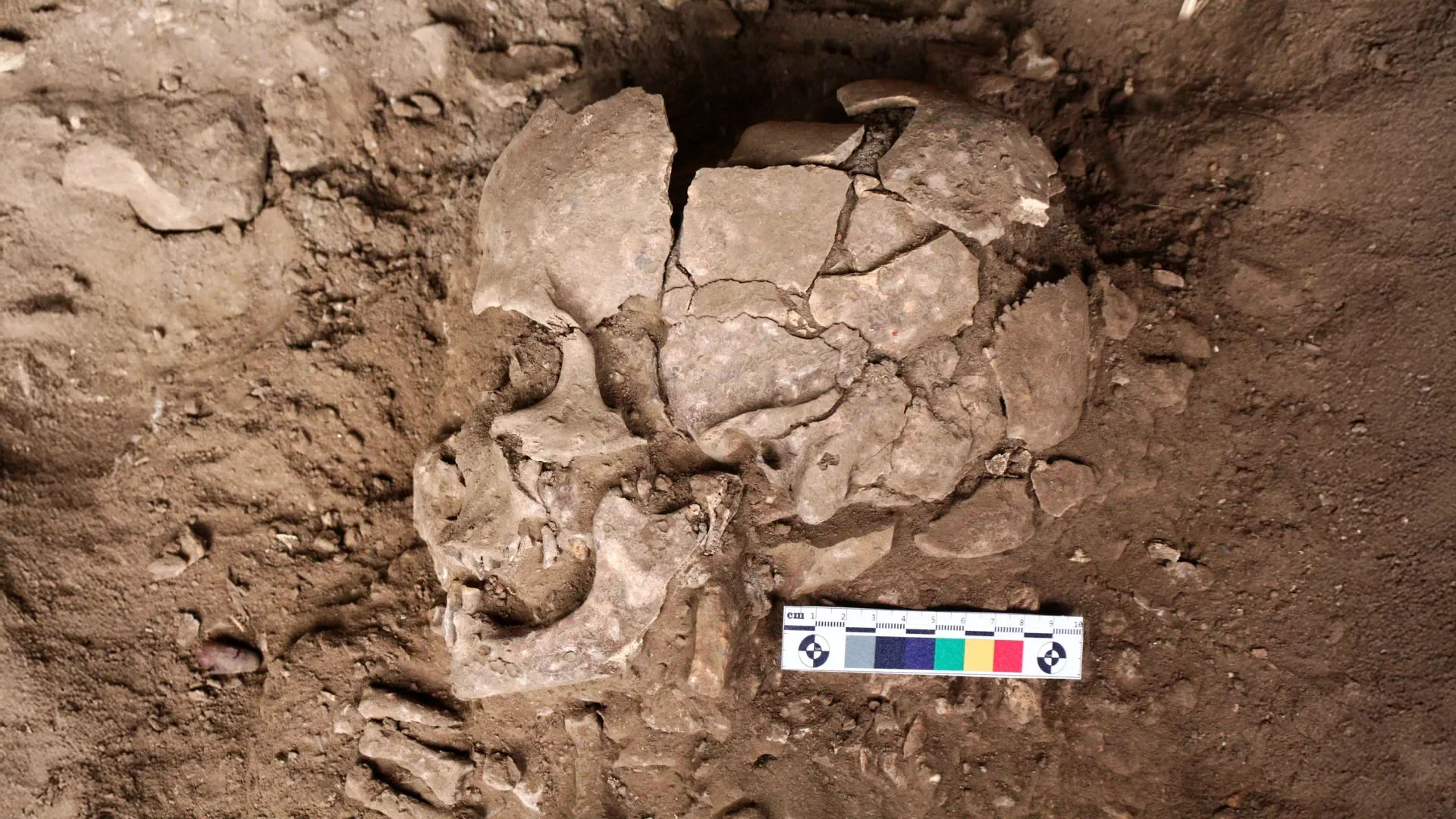
Two sets of worn teeth from the Indonesian island of Sulawesi have pushed the confirmed origin of habitual drug use back more than 20,000 years, according to a study published September 9 in Science Advances.
Two Sulawesi Skeletons and a Pattern No One Had Named
The study, led by Griffith University archaeologist Adam Brumm, examined the partial skeletons of two prehistoric foragers recovered on Sulawesi. Both display an unusual dental-wear pattern: deep, rounded grooves cut into specific teeth, distinct from the wear caused by ordinary chewing. One individual, a man who died between roughly ages 40 and 50, lived between about 25,000 and 16,000 years ago, a window overlapping the Last Glacial Maximum, though Sulawesi itself was not glaciated at the time. The second individual, of undetermined sex and a similar age at death, lived far more recently, between about 7,600 and 6,300 years ago.
Brumm's team traced the grooves to a previously undocumented behavior: sucking on whole, unprocessed betel nuts, the seed of the areca palm (Areca catechu). That is a different practice from the one familiar across much of South and Southeast Asia today, in which betel nut is chewed together with slaked lime to form a stimulant wad known as a quid. The grooves deepened over each person's lifetime, and in one case wore through to the tooth's pulp cavity. Brumm told Live Science the damage would have been "excruciatingly painful," and suggested the habit likely began as an attempt to numb a toothache that ended up making the underlying dental problem worse.
How Sucking Alone Releases Arecoline
A worn tooth shows only that something happened in a mouth, repeatedly, over years. It does not on its own show that the substance had any effect on the brain. To close that gap, the researchers soaked intact betel nuts in artificial saliva and tested the resulting broths against cloned human neuroreceptors expressed in frog egg cells. The nut's main psychoactive compound, arecoline, showed up in concentrations sufficient to activate those receptors. That result matters because earlier accounts of betel nut's stimulant effect assumed the alkaloid had to be released by chewing the processed nut with slaked lime, which converts arecoline into a more bioavailable form. Brumm's experiment showed that prolonged sucking on the raw, unprocessed nut already delivers enough arecoline to alter brain activity. Biomolecular analysis of the ancient teeth turned up chemical traces consistent with that same exposure.
The researchers propose that the lime-and-quid version of betel chewing familiar today is a later refinement. On Sulawesi, they suggest, slaked lime came into use around 4,000 years ago, during the Neolithic, originally as a stabilizer added to pottery clay to keep it from shrinking and cracking during firing. Its adoption into betel preparation, in this account, followed the simpler habit of sucking the whole nut rather than preceding it.
Where Sulawesi Sits Against the Rest of the Archaeological Record
Laid out against other prehistoric evidence of psychoactive plant use, the Sulawesi finding stands well apart from the rest of the record:
Set against that record, the earlier Sulawesi individual moves the confirmed start of habitual betel use back by roughly 12,500 to 21,500 years beyond the next-oldest chemical evidence, found on teeth in Thailand and dated to about 3,500 years ago. It also lands well before the spread of agriculture, which began in the Fertile Crescent around 12,500 years ago. Elisa Guerra Doce, a prehistoric archaeologist at the University of Valladolid who was not involved in the study, called the findings "particularly compelling and direct evidence for the antiquity of drug use," and said they trace a cultural practice still central to parts of Southeast Asia and the Pacific back to its prehistoric roots.
Why the Painkiller Theory Still Needs Testing
The study is explicit about what it establishes and what it leaves open. The dental pattern shows repeated, long-term sucking on betel nuts, and the receptor assay shows that behavior would have had a real neuroactive effect. What two individuals cannot settle is motive: whether people first reached for betel nuts to numb a toothache, for a stimulant effect, or for both, and whether that motive held across the wider population rather than applying only to these two cases. The progression from mild grooves to an exposed pulp cavity is consistent with self-medication that outpaced its own benefit, but the skeletal record alone cannot rule out other reasons the habit persisted once it had already damaged the teeth it was meant to soothe.
Betel nut remains in wide use today, chewed by hundreds of millions of people across South Asia and Oceania, making it, after alcohol, caffeine and nicotine, one of the most consumed psychoactive substances worldwide. Modern quids carry their own cost: arecoline is carcinogenic, and quids are frequently combined with tobacco, a combination strongly linked to oral cancer. The Sulawesi teeth suggest that cost has old roots, tied at first not to ritual or recreation but to two people trying, unsuccessfully, to make a toothache stop.

Benin's Coral Reef, Presumed Dead in 1966, Is Alive at 54 Meters
Sonar and a tethered drone found living octocoral gardens 54 meters deep off Benin, West Africa, reversing a 1966 verdict that had declared the reef dead.
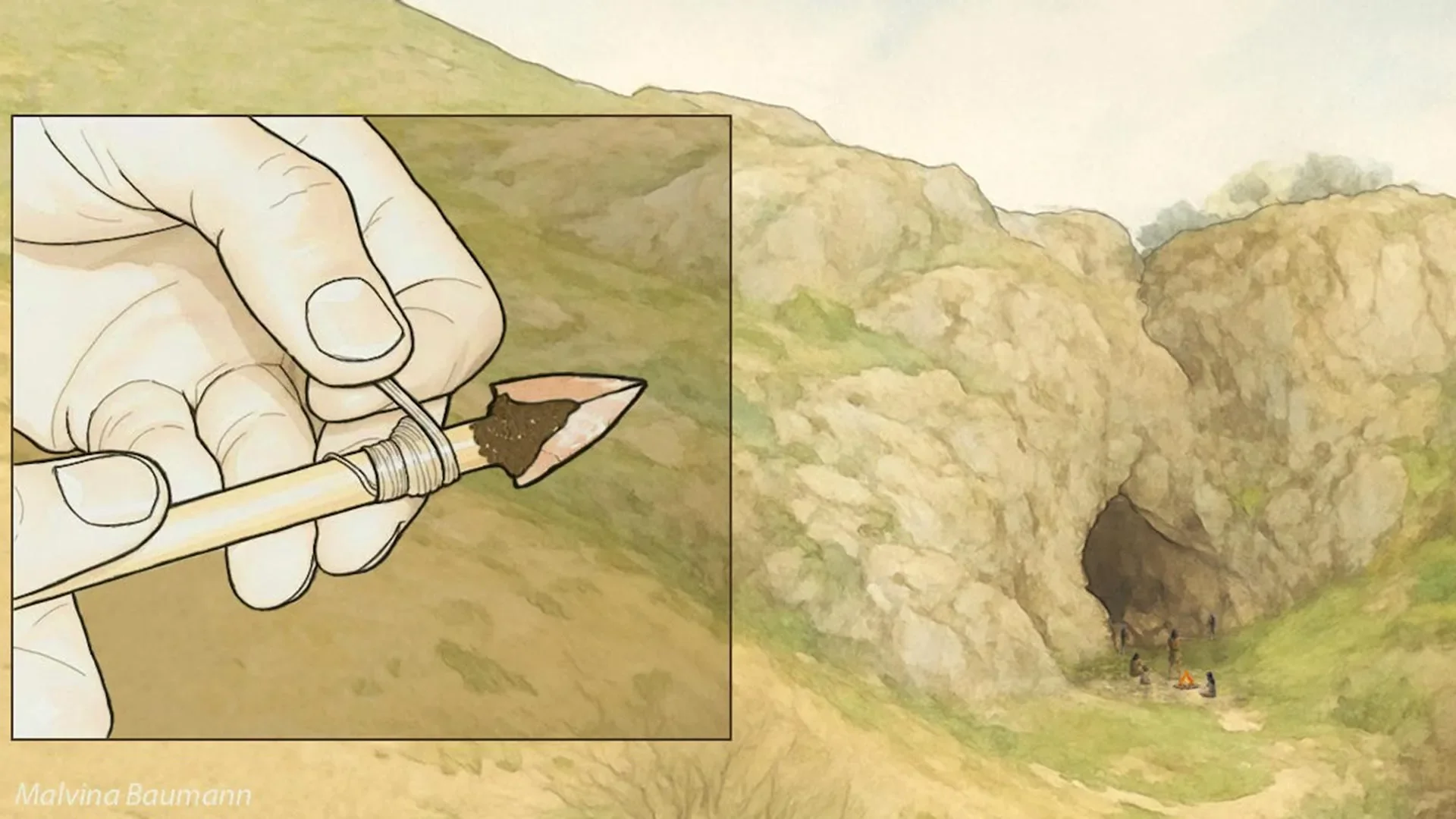
80,000-Year-Old Points From Uzbekistan May Be the Oldest Arrowheads on Record
Tiny stone points from Obi-Rakhmat, Uzbekistan, dated to about 80,000 years ago, show impact damage and size consistent with arrow tips, a study finds.
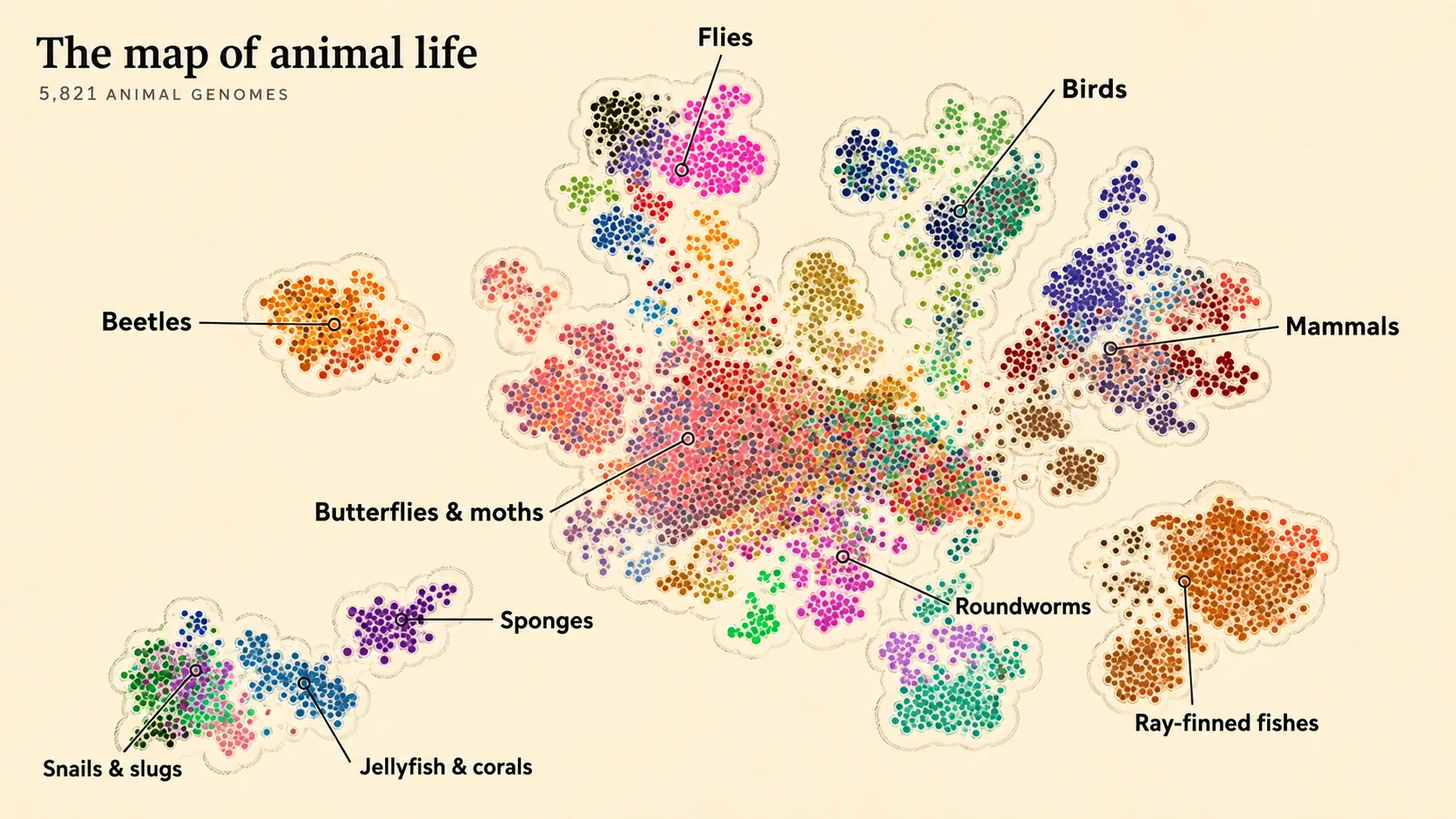
A Map of 5,821 Animal Genomes Shows Chromosomes Fuse Along Fixed Paths
A University of Vienna-led study compared 5,821 chromosome-scale animal genomes and found all 406 possible ancestral chromosome fusions have already occurred.
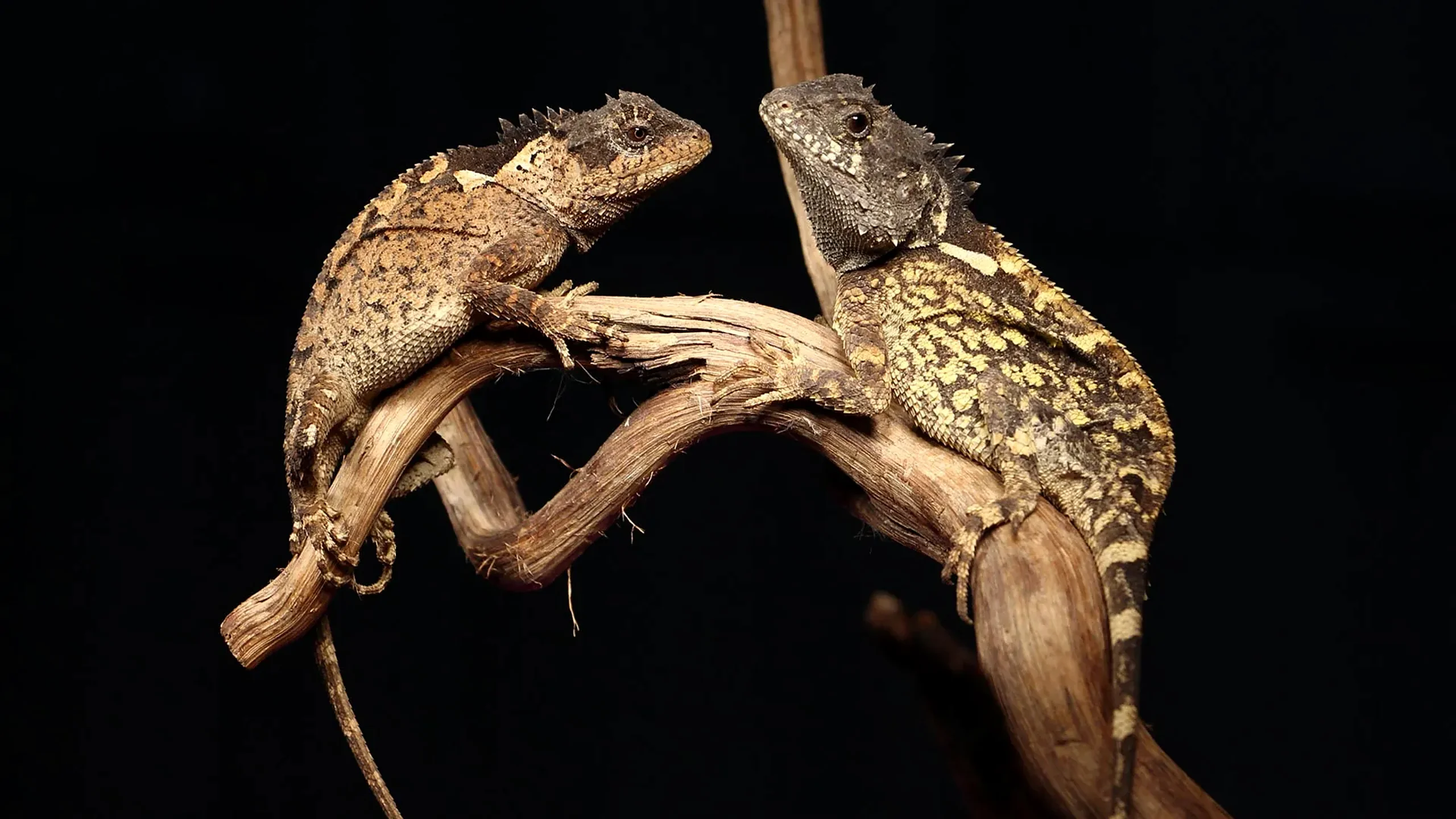
New Mountain Horned Dragon Species Discovered in Thailand, Named After House of the Dragon's Syrax
Researchers describe Acanthosaura syrax, a new Thai lizard found above 1,300 meters in Mae Wong forest, with COI distance up to 28% from its closest kin.
Comments (0)
Please sign in to join the discussion.
No comments yet.
Be the first to share your perspective on this topic.