
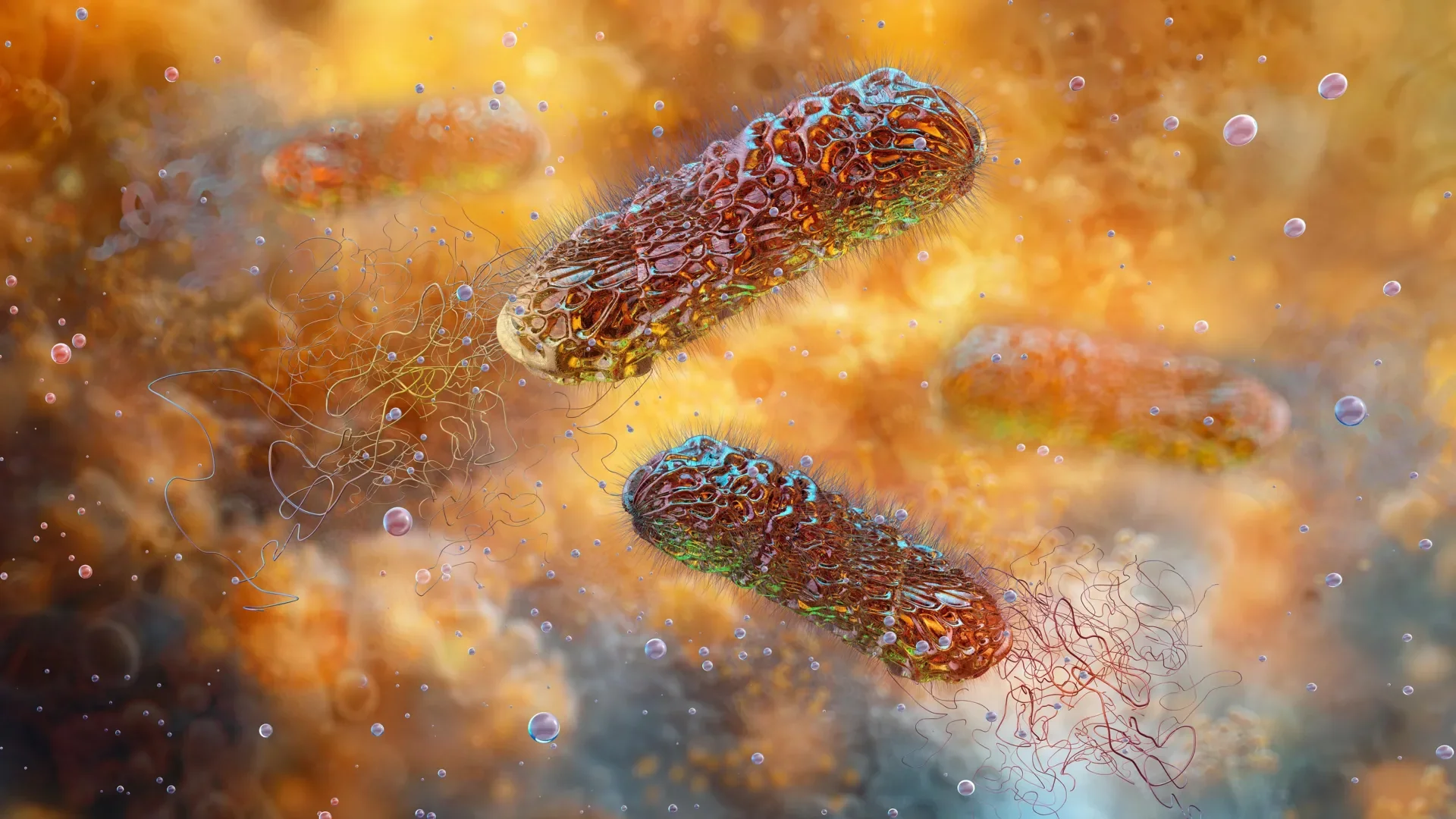
A reconstructed lactoferricin shared by the ancestors of humans and cattle cut Staphylococcus aureus viability roughly 100,000-fold by the end of treatment in a PLOS Biology study published August 25, 2026. The extant human peptide produced a rapid 100-fold drop, after which the bacteria resumed growth. A University of Oregon team led by Matthew Barber resurrected lactoferrin ancestors dating to the earliest placental mammals, and the results show antibacterial potency in this embedded peptide rising and falling along different lineages rather than climbing in one direction.
Positive charge accumulated in lactoferricin after the transferrin duplication
Lactoferrin arose from a duplication of the transferrin gene in the ancestor of placental mammals, roughly 160 million years ago, according to the paper. Serum transferrin carries iron in blood, and the equivalent N-terminal region of human transferrin showed no antimicrobial activity in the authors' assays. Lactoferrin, abundant in milk, tears and neutrophil granules, can be cleaved by host proteases into cationic peptides, including lactoferricin.
The authors reconstructed ancestors from 376 vertebrate transferrin, lactoferrin and melanotransferrin sequences with the Topiary pipeline, then synthesized the core 25-residue lactoferricin region of each. Cationic substitutions appear in sequence: K5 in AncLFcin1, R8 in AncLFcin2 and R9 in AncLFcin3, with hydrophobic residues settling beside charged ones. Peptide isoelectric points rose from the transferrin-derived control to bovine lactoferricin (bLFcin), and AlphaFold2 predictions showed positive surface charge growing in the N-terminal region after the duplication.
The diagram below maps those steps onto the reconstructed lineage.
Arginine at position 8 separates weak from strong ancestral peptides
AncLFcin1 and AncLFcin2 differ at only three positions, yet AncLFcin2 was highly potent against Pseudomonas aeruginosa PAO1 at 100 µg/mL while AncLFcin1 needed 400 µg/mL to cut growth by more than half. The authors swapped position 8 in both directions. Arginine there was necessary and sufficient for the enhanced activity against P. aeruginosa. Against S. aureus strain JE2 it was necessary for AncLFcin2 and insufficient to upgrade AncLFcin1, so other sites contribute to killing Gram-positive cells.
Membrane assays supply a mechanism. Every lactoferricin, ancestral or extant, let propidium iodide into P. aeruginosa within 30 minutes and hyperpolarized the membrane, while the transferrin-derived peptides did neither. Potency therefore diverged on what came next: cells exposed to ancestral peptides shrank moderately, and those exposed to hLFcin and bLFcin became rounded and lost a distinct membrane. The authors speculate that bacteria can repair damage from the early peptides, whereas the extant versions cause irreversible collapse.
The human peptide sits below two reconstructed ancestors against S. aureus
The viability data summarized in the table come from the paper's colony-forming-unit assays, run at 100 µg/mL against P. aeruginosa and 800 µg/mL against S. aureus.
| Peptide | P. aeruginosa PAO1 (100 µg/mL) | S. aureus JE2 (800 µg/mL) |
|---|---|---|
| hTF17–42 and AncTF17–42 (controls) | No detectable effect | No viability reduction |
| AncLFcin1 | Fast early drop, partial recovery | Partial inhibition, little viability loss |
| AncLFcin2 | About 1,000-fold at 24 h | About 100,000-fold by end of treatment |
| AncLFcin3 | 100 to 1,000-fold for 15 h, then regrowth | Significant growth and viability reduction |
| hLFcin (human) | About 10,000-fold at 24 h | 100-fold early drop, then regrowth |
| bLFcin (bovine) | No detectable colonies within 2 h | No detectable colonies within 2 h |
Arranged this way, the rank order flips with the target. Against P. aeruginosa, hLFcin's reported 10,000-fold reduction is about ten times AncLFcin2's 1,000-fold. Against S. aureus, AncLFcin2's roughly 100,000-fold reduction is about 1,000 times hLFcin's 100-fold drop, though the human figure is an early nadir and the ancestral figure an end-of-treatment value, so the true gap depends on timing. Only bLFcin is potent against both bacteria in this dataset.
A host-toxicity trade-off is one candidate explanation for a weaker human peptide, and the hemolysis test argues against it: none of the lactoferricin peptides caused significant lysis of bovine red blood cells at 1 mg/mL. The authors list other candidates, including bacterial resistance, peptide stability, protease digestion, interaction with bacterial lactoferrin receptors and iron binding by the N-lobe. None of those is measured by a growth-and-viability assay, so the assay cannot rank them.
A great-ape arginine at position 5 sharpens human lactoferricin against staphylococci
The same group's 2016 PLOS Genetics study found 17 lactoferrin codons under strong positive selection in primates, 13 of them in the N lobe, or roughly three-quarters. Sites under selection in serum transferrin were restricted to the C lobe. Two of the lactoferrin sites, positions 5 and 12, fall inside lactoferricin. Humans and many monkeys encode glutamine at position 5, and all other great apes encode arginine. Position 12 varies between arginine and lysine.
The team built two human variants. hLFcinQ5R significantly improved potency against S. aureus JE2 and suppressed growth of S. lugdunensis, S. epidermidis, S. caprae and S. capitis. hLFcinK12R matched wild-type hLFcin against P. aeruginosa PAO1 and S. aureus JE2, with a modest but consistent growth reduction in other staphylococci. The residue beside position 5 is always an aromatic amino acid, phenylalanine or tryptophan, across every sequence examined, and the authors suggest that cationic and aromatic pairs may interact epistatically, a hypothesis they leave for future work.
Synthetic peptides in dilute broth leave host conditions untested
Every result comes from commercially synthesized peptides in culture, mostly in 5% tryptic soy broth chosen to mimic low nutrients. Trends held in 0.5% milk and Opti-MEM, with some variation. Peptide doses of 0.1 to 1 mg/mL were drawn from the range of lactoferrin concentrations the paper cites for milk, colostrum, tears and saliva, and how much lactoferrin becomes lactoferricin in the body is a separate quantity. The authors also cite work showing that pH and ionic environment change peptide performance.
Ancestral reconstruction carries its own uncertainty. Alternate versions of each ancestor, built from second-choice residues at ambiguous sites, gave largely consistent trends against P. aeruginosa and S. aureus, with one exception: the alternate transferrin-derived peptide showed weak activity against S. aureus at the highest doses. The paper reports no animal or clinical testing. Its suggestion that reconstructed peptides could inform future infection treatments is the authors' view, and the data here do not test it. Which of the five candidate trade-offs sets the human peptide's ceiling against S. aureus is still open.

14 Tail Vertebrae Put Diplodocus in Spain. Experts Split on Certainty
Diplodocus in Spain: 14 tail vertebrae from Teruel are the first formal European record. Three of five experts back the ID; two call the tail too thin.
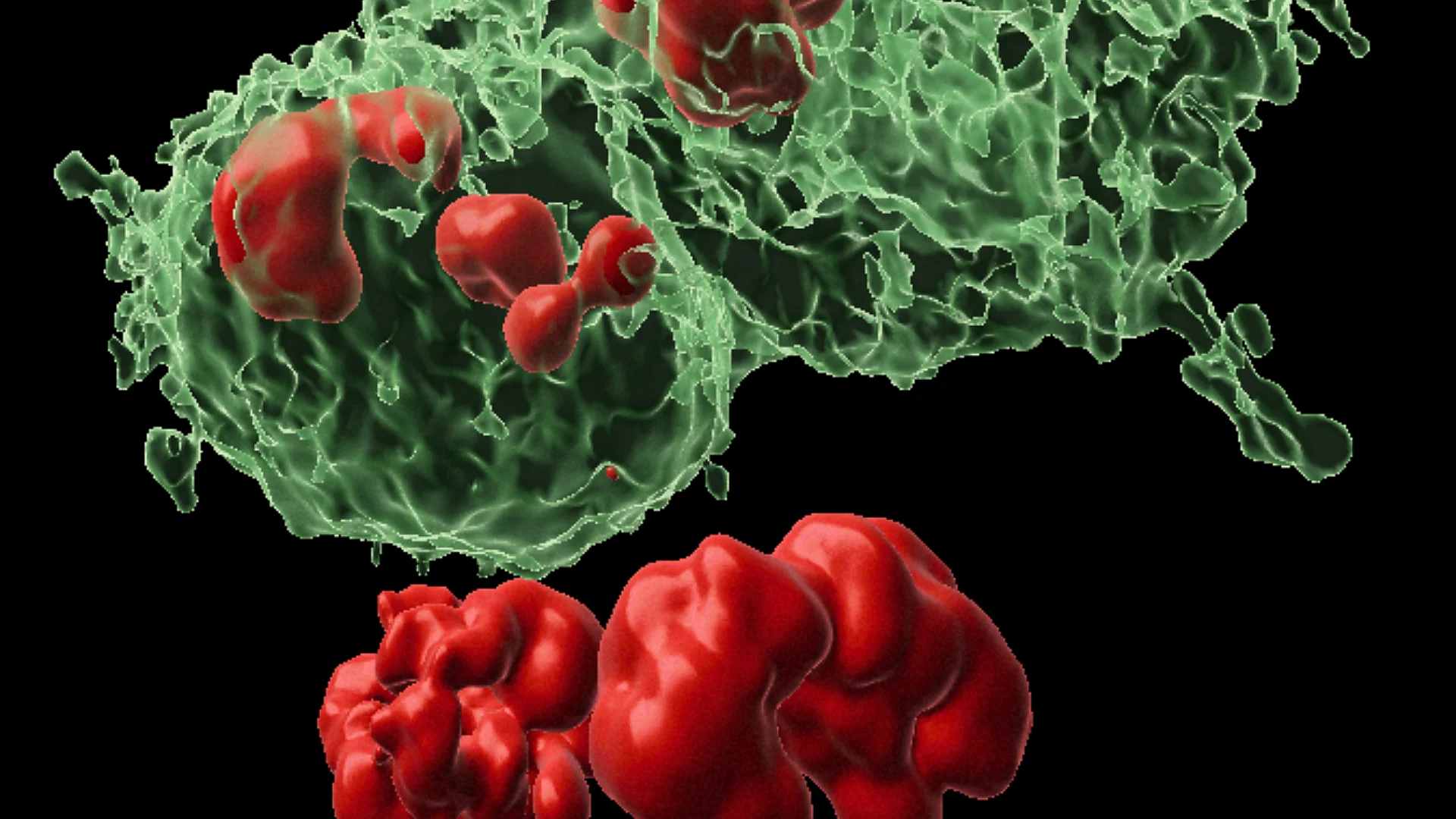
Cell-Death Enzyme Dronc Drives Regrowth of Irradiated Fly Wing Tissue, Study Finds
Dronc-activating DARE cells grew from about 10% to nearly 50% of irradiated fruit fly wing disc area within 48 hours, a Weizmann Institute-led study reports.

Burnt Grass Phytoliths Trace GunaiKurnai Fire Rituals Back 25,000 Years at Cloggs Cave
A phytolith study at Cloggs Cave in southeastern Australia found GunaiKurnai Old Ancestors burned whole grasses in ash layers for at least 25,000 years.
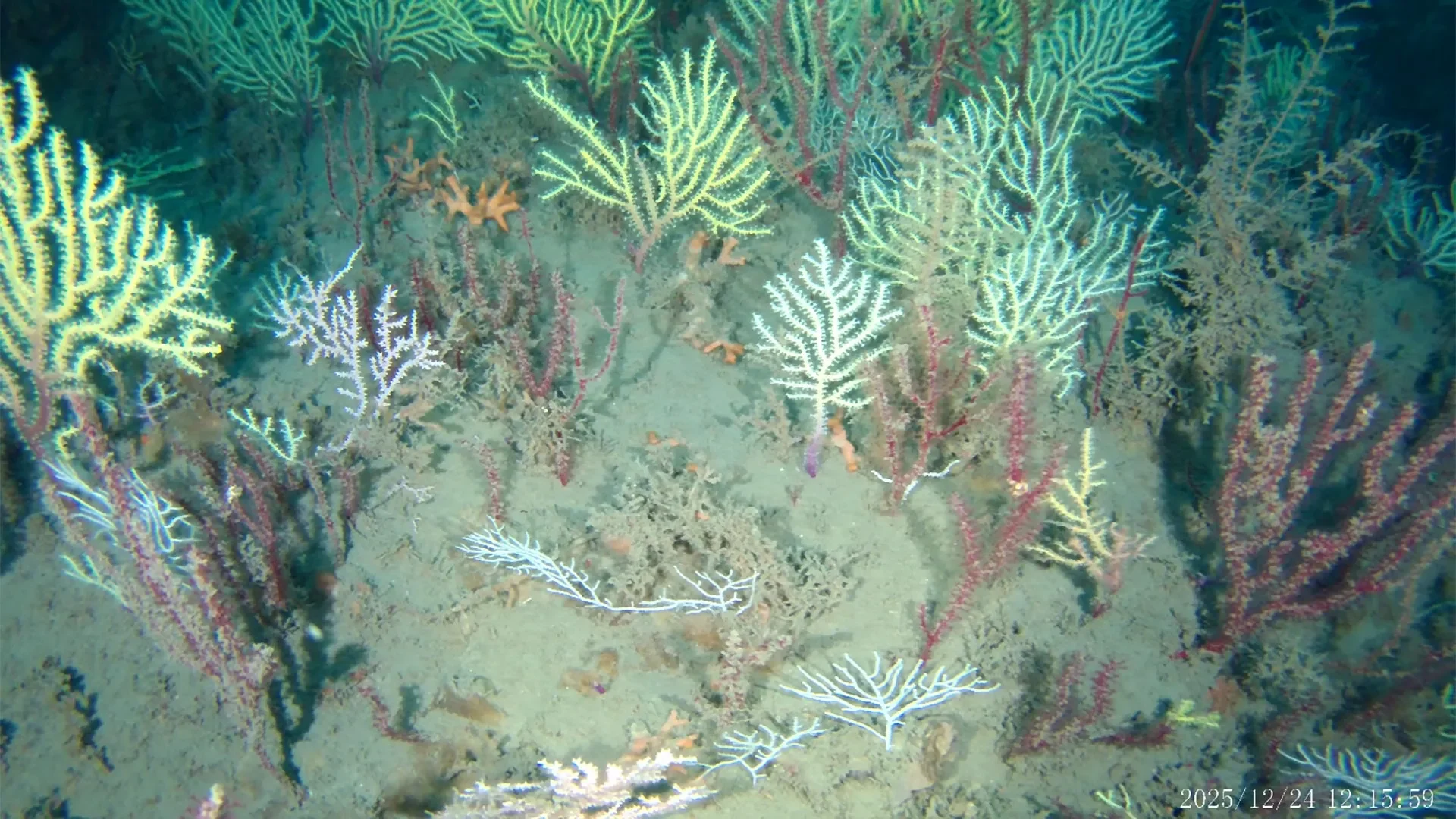
Benin's Coral Reef, Presumed Dead in 1966, Is Alive at 54 Meters
Sonar and a tethered drone found living octocoral gardens 54 meters deep off Benin, West Africa, reversing a 1966 verdict that had declared the reef dead.
Comments (0)
Please sign in to join the discussion.
No comments yet.
Be the first to share your perspective on this topic.