
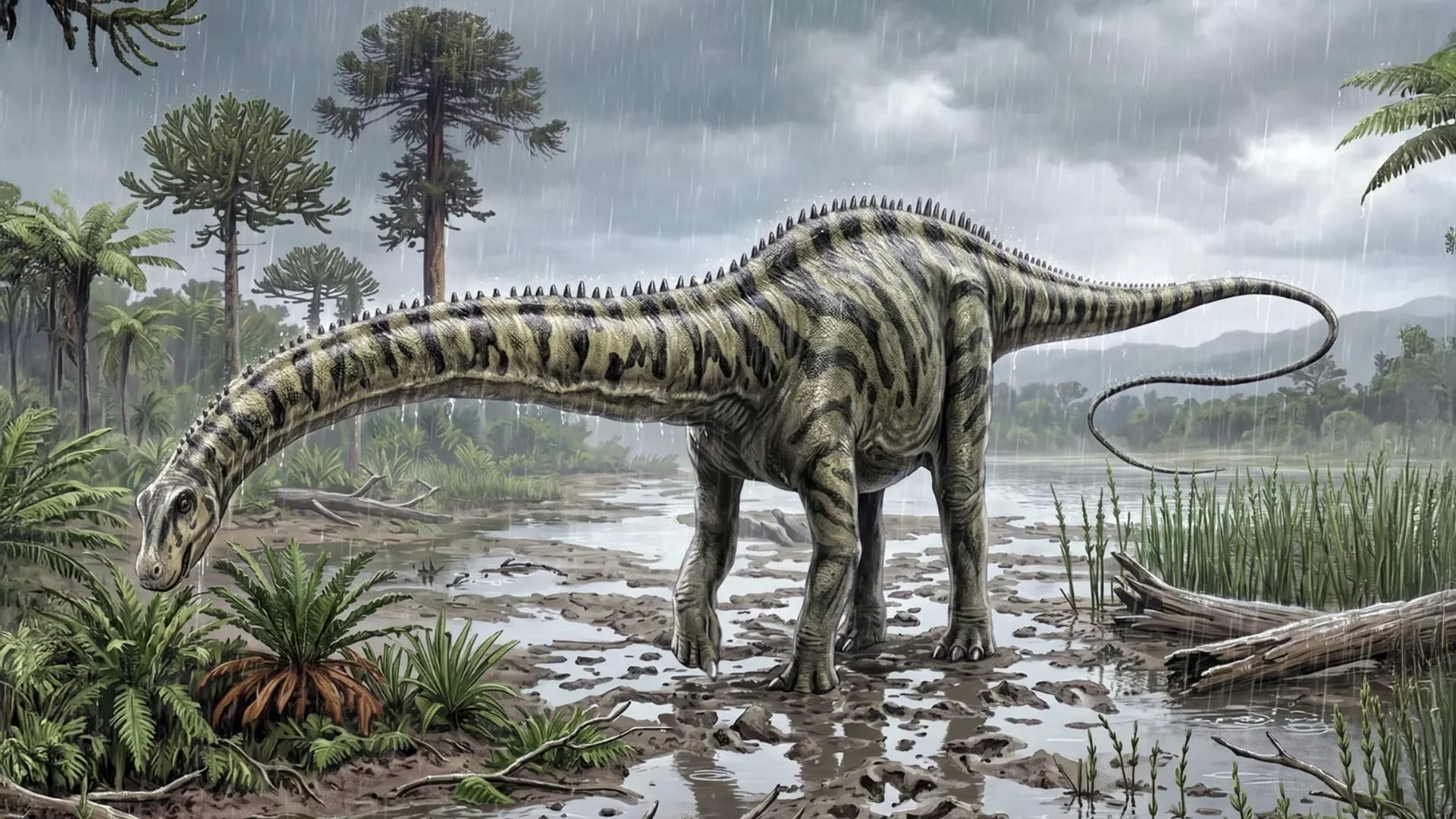
Fourteen tail vertebrae from the La Tejería site in El Castellar, Teruel, have been assigned to Diplodocus, the first formally published record of the genus outside North America. The specimen, catalogued as CT-30, comes from the Villar del Arzobispo Formation (upper Kimmeridgian–Tithonian) and is described in the peer-reviewed paper on specimen CT-30, published online on 14 September 2026. Five independent paleontologists commented on it: three endorse the genus-level identification, and two say a tail alone is too thin to be certain.
Grooved centra and forked chevrons behind the Diplodocus label
The authors count 14 caudal vertebrae plus several mid and posterior chevrons, which they estimate span the 22nd to 35th positions in the tail. Five vertebrae (26th to 30th) were found articulated and the rest were found associated. Coverage of the excavation history says the site yielded five vertebrae when it was found in 2008 and nine more during digs in 2014 and 2015, which sums to the 14 in the paper.
The identification rests on a combination of traits rather than a single bone. The publisher's release on the study lists large pneumatic cavities in the vertebrae, elongated centra without lateral ridges, deep longitudinal grooves on the underside of the tail bones and forked chevrons with medial fossae. The paper reports centra longer than tall, with a length 1.7 to 2.5 times the height of the articular face, and facets nearly as tall as wide.
Several traits resemble Diplodocus hallorum, a species from the Morrison Formation of the western United States. The skeleton lacks enough distinctive anatomy for a species call, so the authors label it Diplodocus sp. The foundation puts the animal at about 25 meters long in its own announcement, published in Spanish. All three authors work for Fundación Dinópolis, which also displays the bones in its Museo Aragonés de Paleontología, so the research team and the museum belong to one organization.
The timeline below places the field seasons beside the journal's recorded dates.
A 489-character matrix, 23 scored characters and a Supersaurus rival
The team added CT-30 to a character-taxon matrix of 489 characters across 36 taxa, built on a species-level diplodocid matrix published in 2017. A summary of the analysis reports that only 23 characters could be scored for the fossil. Calculated here, that is 4.7% of the matrix, a share that fits a specimen preserving one region of the skeleton. Everything the trees say about CT-30 therefore comes from tail characters.
The paper's figure caption reports a single most parsimonious tree under implied weighting (k = 3), with a consistency index of 0.347 and a retention index of 0.530. CT-30 falls inside Diplodocus in that tree, next to D. hallorum. The same coverage says parsimony runs consistently made D. hallorum its closest tested relative, and that Bayesian inference, which produced 8,986 trees, also grouped it with D. hallorum inside the genus.
The main rival was a Portuguese animal. A 2015 specimen-level revision of Diplodocidae recommended folding Dinheirosaurus lourinhanensis into Supersaurus. According to the coverage, a test that forced CT-30 next to that Supersaurus species was rejected as significantly less parsimonious. That removes one named alternative from the matrix. It leaves open another known genus or a new one, which one reviewer raises below.
Tail material has a long history in this genus. The same 2015 revision describes the type specimen of Diplodocus longus as highly incomplete, with two nearly complete caudal vertebrae and some fragments, and lists incomplete holotypes among the obstacles to identifying diplodocid species. A narrow anatomical base is a familiar condition for Diplodocus, which frames the reviewers' disagreement.
Three endorsements and two reservations from independent paleontologists
The Science Media Centre Spain collected reactions from five paleontologists on 15 September 2026. Their positions differ mainly on how much a tail can settle.
| Independent expert positions on the genus-level identification, as recorded on 15 September 2026 | |||
|---|---|---|---|
| Expert | Institution | Position on the genus-level ID | Stated context or reservation |
| Francisco Ortega | UNED | Endorses; notes the assignment reaches genus only | Adds to Iberia–North America links; material is incomplete |
| Pedro Mocho | University of Lisbon | Endorses with reasonable confidence | Supports recent suggestions of a very close relative in Portugal's Upper Jurassic |
| Xabier Pereda Suberbiola | University of the Basque Country | Endorses; rates the work high quality | Intercontinental status of Camptosaurus and Supersaurus is debated |
| Fabien Knoll | MNCN-CSIC | Reserves judgment | Compatible with Diplodocus, yet Supersaurus/Dinheirosaurus, another known genus or a new one remain possible |
| José Ignacio Canudo | University of Zaragoza | Doubts the genus-level call | Caudals alone are too fragmentary; the biogeographic point did not need such precision |
Two reviewers call the work high quality and still reserve judgment on the genus. Knoll says compatibility with Diplodocus does not establish membership in it. Canudo adds that the paleobiogeographic conclusion could have been proposed without such a precise classification. Mocho attributes the fossil to Diplodocus with reasonable confidence, and says it supports recent suggestions of a very close relative in Portugal.
Disclosures matter here. Knoll has worked at the same institution as the authors, and Pereda Suberbiola knows them through other projects. Mocho and Canudo did not respond to the request for a conflict-of-interest statement, and Ortega declared none. Knoll also notes that Diplodocus in Portugal had been suggested several times without formal publication, so "first" here means first formally documented.
Overlapping ages, shared genera and the limits of a single European record
Radiometric dates put the Morrison Formation at roughly 148 to 155 million years, and the paper places the Spanish unit in the upper Kimmeridgian–Tithonian, so the two overlap at stage level. Mocho and Pereda Suberbiola list Allosaurus, Ceratosaurus, Torvosaurus and Stegosaurus as genera shared between the Morrison Formation and Iberia. Canudo points out that the link has been argued for years, and that CT-30 would be the first case demonstrated with a sauropod.
The authors argue for episodic dispersal across the proto-North Atlantic in the late Kimmeridgian to early Tithonian, likely over temporary land connections that appeared during sea-level falls, as the publisher's release puts it. The coverage of the paper adds that the study does not show whether Diplodocus moved from North America into Europe or the reverse, or how widespread it became after arriving.
Sampling is lopsided. The 2015 revision says the Morrison Formation has yielded about three-quarters of reported diplodocid genera, and a 2017 osteology paper counts 12 valid named Morrison species among 15 accepted diplodocid species worldwide, or 80% by arithmetic done here (counts may have shifted since). With that imbalance, a single European record shows presence in Iberia and says little about how widely the genus ranged.
The diagram strings the argument together and marks where the two limits enter.
What tail-only material leaves open about Diplodocus in Iberia
The paper secures a genus-level label for CT-30 and leaves the species unresolved. Knoll's route to a firmer answer is further field surveys in Spain and Portugal plus formal publication of Portuguese fossils already collected, which would let researchers confirm or reject Diplodocus against Supersaurus, Dinheirosaurus, another known genus or a new one. Canudo expects later finds to test the classification.
A specimen preserving more than the tail would score more of the 489 characters, which suggests the 4.7% coverage figure is the quantity most likely to change as new material appears. The bones are on display at the Museo Aragonés de Paleontología in Teruel and are available for further study, according to the publisher's release.
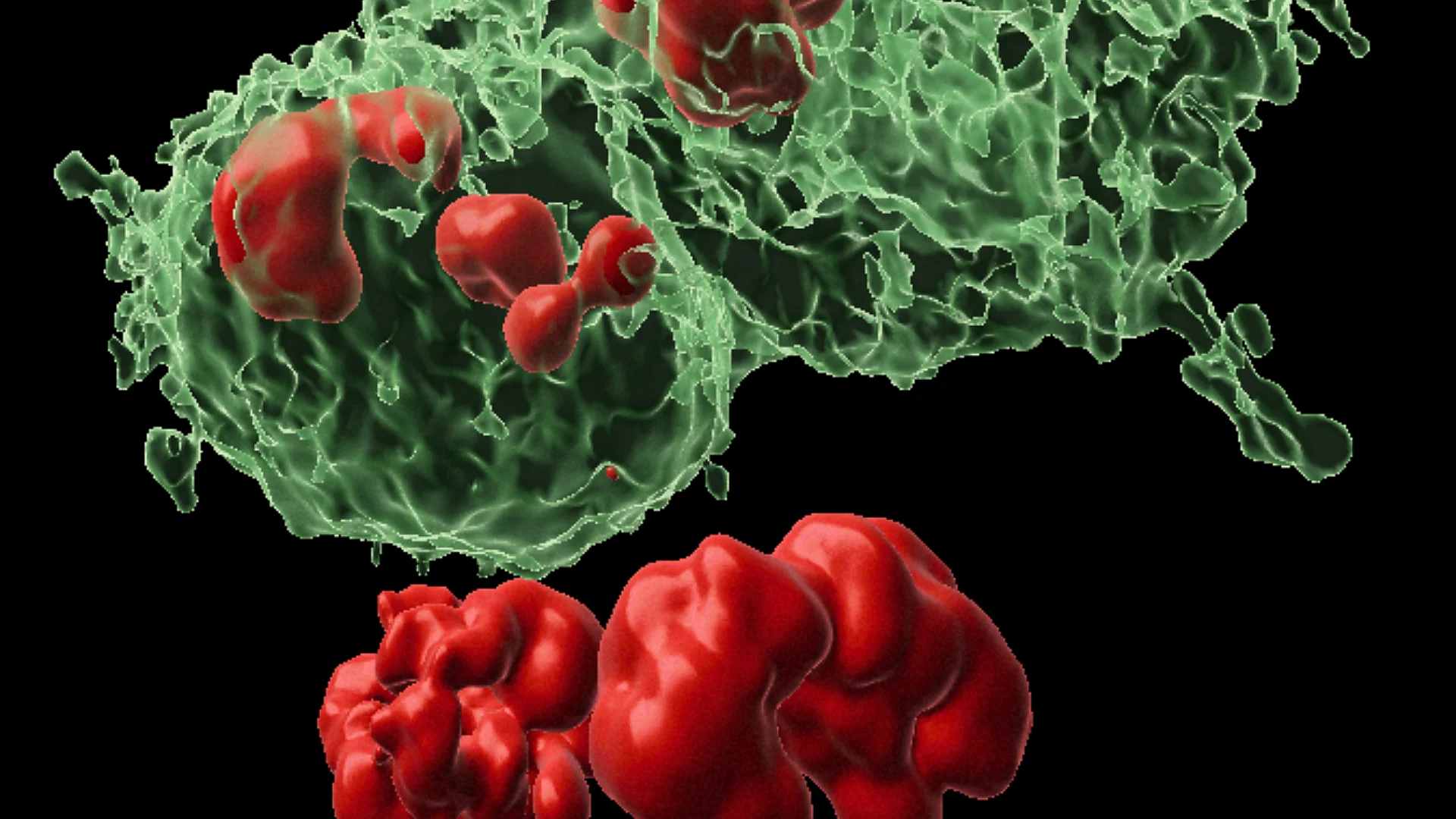
Cell-Death Enzyme Dronc Drives Regrowth of Irradiated Fly Wing Tissue, Study Finds
Dronc-activating DARE cells grew from about 10% to nearly 50% of irradiated fruit fly wing disc area within 48 hours, a Weizmann Institute-led study reports.
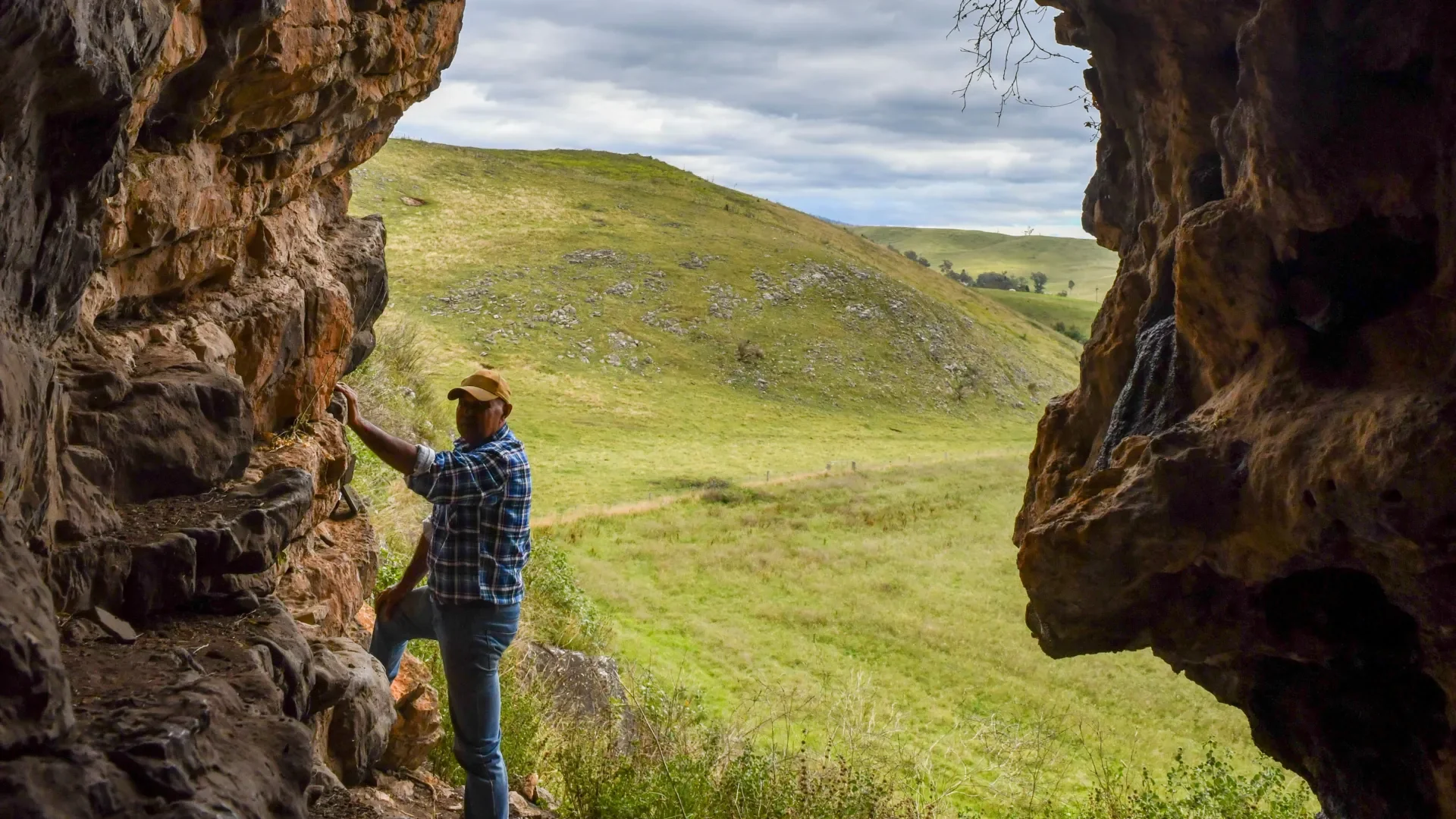
Burnt Grass Phytoliths Trace GunaiKurnai Fire Rituals Back 25,000 Years at Cloggs Cave
A phytolith study at Cloggs Cave in southeastern Australia found GunaiKurnai Old Ancestors burned whole grasses in ash layers for at least 25,000 years.
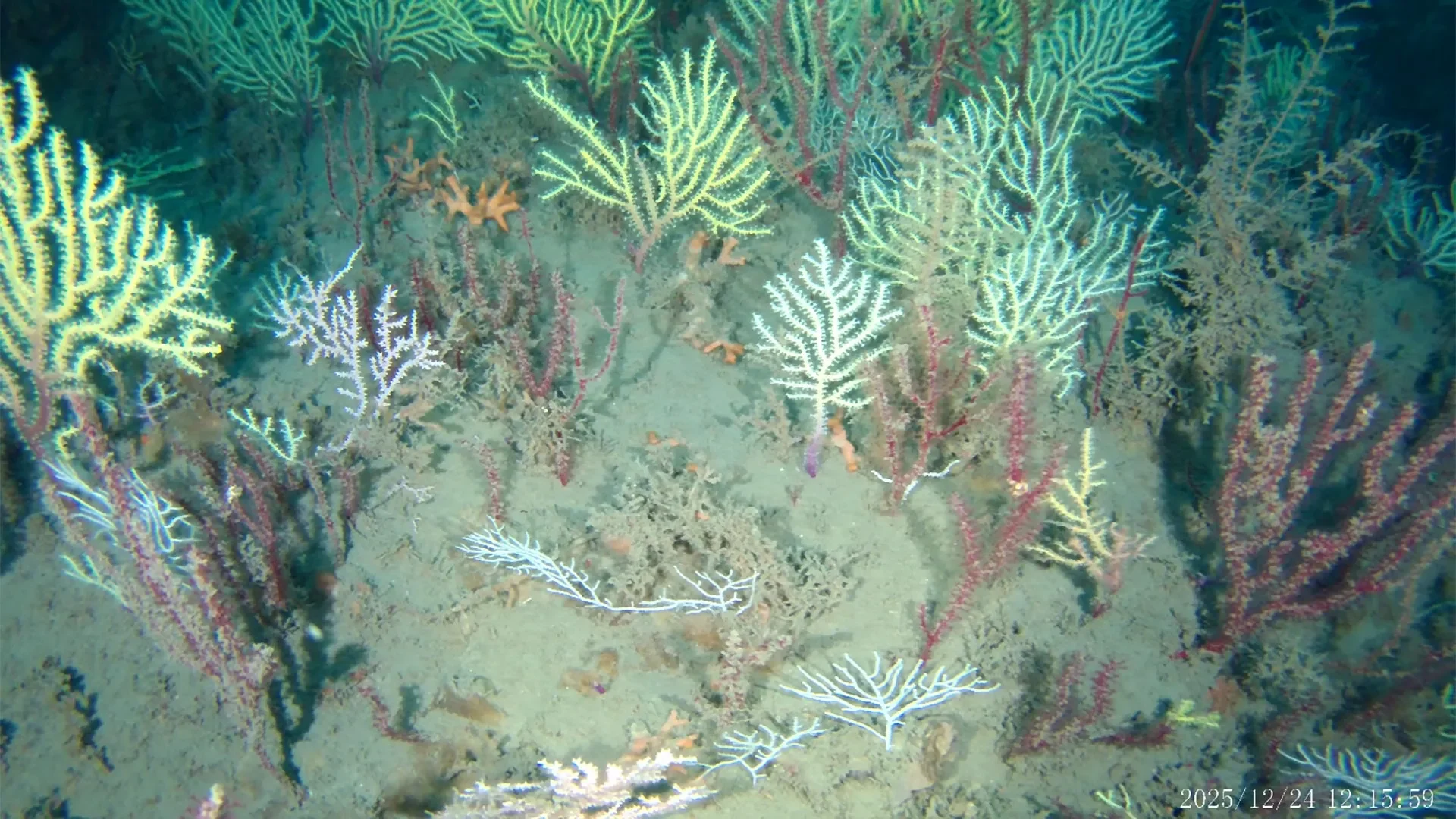
Benin's Coral Reef, Presumed Dead in 1966, Is Alive at 54 Meters
Sonar and a tethered drone found living octocoral gardens 54 meters deep off Benin, West Africa, reversing a 1966 verdict that had declared the reef dead.
25,000-Year-Old Teeth From Indonesia Reveal the Oldest Known Drug Habit
Grooved teeth from Sulawesi show foragers sucked betel nuts as early as 25,000 years ago, releasing arecoline in the mouth long before farming began.
Comments (0)
Please sign in to join the discussion.
No comments yet.
Be the first to share your perspective on this topic.