
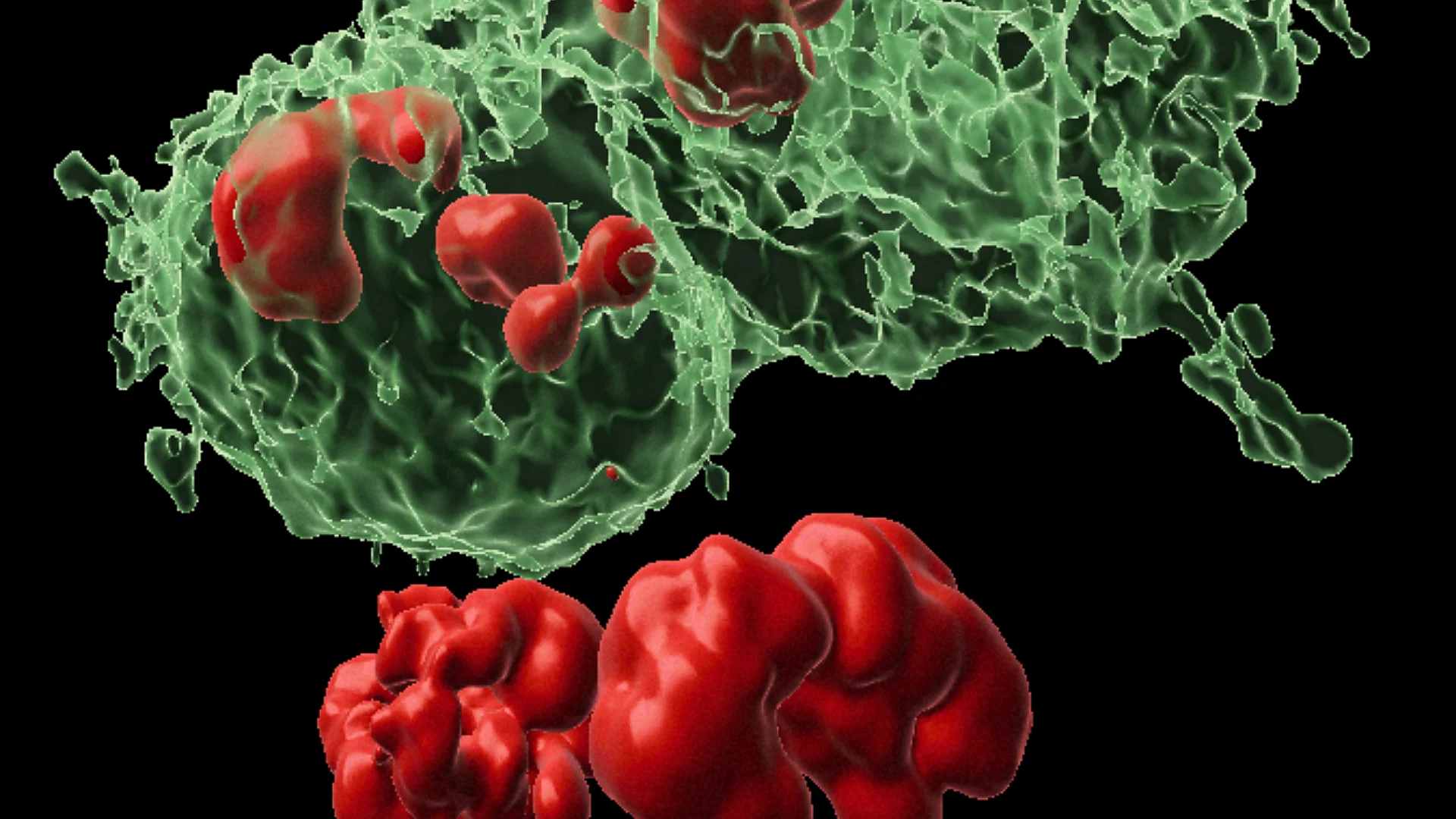
Twenty-four hours after a 20 Gy dose of X-rays, a delayed sensor for the enzyme Dronc labeled cells that were mostly alive: only about 30% of them carried a death marker, compared with about 70% for a faster sensor of the same enzyme. That gap let Weizmann Institute of Science researchers find the cells that rebuild irradiated fruit fly wing tissue, according to an open-access paper published on 4 December 2025.
Dronc is the fly counterpart of caspase-9, an initiator of apoptosis. The paper describes two survivor populations, DARE cells (Dronc-activating, radiation-induced apoptosis-resistant epithelial cells) and NARE cells (survivors that give no reporter signal). Its central claim is that Dronc activity in DARE cells drives regrowth without the partner protein and downstream enzymes that normally make Dronc lethal. All experiments used Drosophila melanogaster larval wing discs.
A delayed Dronc reporter picks out survivors among dying cells
In wing discs given 20 Gy, dying cells peak and discs are smallest about 24 hours post-irradiation (hpi). By 48 hpi most dead cells are cleared and disc size is back to normal, so regrowth falls mostly between 24 and 48 hpi.
Both sensors are built from a Drice fragment that Dronc cuts. The fast one moves a fluorescent histone into the nucleus on cleavage. The delayed one releases a transcription factor that needs two rounds of transcription and translation before any fluorescent protein appears. The authors reasoned that dying cells generally suppress transcription and translation, so a delayed readout should favor survivors. The overlap with a TUNEL death stain at 24 hpi supports that: about 70% for the fast sensor (44 discs) versus about 30% for the delayed one (13 discs, p < 0.0001). Cells flagged by the delayed sensor formed clones that mostly lacked the cDcp-1 death marker and kept growing to 48 hpi.
DARE descendants expand from about 10% to nearly 50% of the disc
To follow descendants without the fluorescent signal fading at each division, the team combined the delayed sensor with the G-TRACE lineage system. DARE cells and their descendants covered about 10% of disc area at 4 hpi, about 30% at 24 hpi and nearly 50% at 48 hpi, (202, 178 and 224 discs).
The chart plots the averages stated in the text.
Killing DARE cells with a constitutively active Drice transgene left smaller discs at 48 hpi (p = 0.0002). Only 60% of those larvae had pupated by 72 hpi, against all wild-type larvae, yet disc size was unchanged at 72 hpi and lower at 96 hpi, so extra time did not let NARE cells fill the gap.
Dronc, Myo1D and p38 separate failed regrowth from compensated regrowth
Knocking down dronc in DARE cells shrank DARE clones and the disc at 48 hpi. Overexpressing Diap1, which inhibits Dronc and effector caspases, did the same. P35, which blocks effector caspases but leaves Dronc alone, changed nothing, and neither did knocking down the apoptosome adapter Dark. The authors conclude that Dronc's catalytic activity is required while Dark and effector caspases are dispensable. One design detail matters: the knockdown transgene switches on only after Dronc has cut the reporter, so it acts late, and the authors say their effects probably understate the true requirement for Dronc.
Most DARE cells showed low or no effector caspase activity. Knocking down myo1D, a Dronc-binding myosin, raised it (p = 0.0012) and shrank discs (p < 0.0001). Knocking down crinkled, another Dronc-binding myosin, lowered the already low activity, which the authors suggest may explain why some DARE cells still die.
The table regroups knockdown results from Figures 3 to 8 by outcome, with the paper's reported p-values against controls.
| Manipulation in DARE cells | Target | DARE-lineage area at 48 hpi | Disc size at 48 hpi |
|---|---|---|---|
| Ablation (active Drice) | DARE cells | Clones gone (p < 0.0001) | Smaller (p = 0.0002) |
| dronc knockdown | Initiator caspase | Smaller (p = 0.0001) | Smaller (p = 0.0022) |
| Diap1 overexpression | Dronc and effector caspases | Few small clones | Smaller (p < 0.0001) |
| p38a knockdown | MAP kinase | Smaller (p = 0.0004) | Smaller (p < 0.0001) |
| myo1D knockdown | Dronc-binding myosin | No significant change on average (p = 0.1914) | Smaller (p < 0.0001) |
| wgn knockdown | TNF receptor | Smaller (p < 0.0001) | No significant change (p = 0.384) |
| jnk (bsk) knockdown | JNK kinase | Modestly smaller (p = 0.0252) | No significant change (p = 0.446) |
| Dap overexpression | Cyclin E/Cdk2 inhibitor | Smaller (p < 0.0001) | No significant change (p = 0.1067) |
| grnd knockdown | TNF receptor | No significant change (p = 0.1108) | No significant change (p > 0.9999) |
| P35 overexpression | Effector caspases | Normal clone formation | No change (p = 0.7721) |
| dark knockdown | Apoptosome adapter | No significant change (p = 0.7519) | No change (p = 0.9994) |
Two patterns stand out. Ablation and the dronc, p38a and myo1D perturbations leave smaller discs. Reducing DARE growth through wgn, jnk or Dap leaves disc size statistically unchanged, because NARE cells proliferate more to compensate. The authors infer that the growth signal DARE cells send to NARE cells runs downstream of Dronc and p38 and needs at least some DARE cells: NARE proliferation rose after dronc or myo1D knockdown but stayed flat after full ablation. At 24 hpi, 60 to 70% of dividing cells were NARE cells, mostly within one cell diameter of a DARE cell, though that count comes from four discs.
Overexpressing Dap kept disc size normal at 48 hpi, yet adult wings from larvae sampled at 4 and 48 hpi were smaller, so a restored disc did not guarantee a restored wing.
Among TNF receptors, Wengen promoted DARE growth while Grindelwald, answering the ligand Eiger that the authors infer comes from NARE cells, modestly restrained it. The authors propose that reactive oxygen species from Duox and Nox inside DARE cells activate Wengen. That fits earlier work showing that ROS activate Wengen and lead to p38-dependent regeneration, although that study pointed to dying cells as the ROS source.
DARE progeny resisted a second dose, but tumor relevance remains a hypothesis
When larvae were irradiated again 48 hours later, dying-cell area four hours afterward fell from about 25% of the disc after one dose to about 13% (8 and 12 discs, p < 0.0001). Fewer than 30% of the dying cells were DARE cells, even though DARE-lineage cells covered roughly half the tissue. The authors estimate 7-fold lower sensitivity to radiation-induced death for DARE cells and 3-fold for NARE cells, and describe a molecular memory of resistance. The mechanism is unknown.
The authors note that about two-thirds of cancer patients receive radiotherapy and that MYO1D and MYO7A expression has been linked to tumor growth in earlier studies. An apoptosis researcher at Rockefeller University who was not involved called the work elegant and important and said it could guide therapies for wound healing and for overcoming tumor resistance to radiation. The senior author said the leap from flies to mammals remains large. The paper reports no tumor or mammalian data.
Open items the authors name include the signal from dying cells that induces DARE cells and how Dronc is activated without Dark. NARE cells are also defined by missing reporter signal, so some may simply lack transgene elements after radiation-induced recombination, and the knockdowns are partial by design.
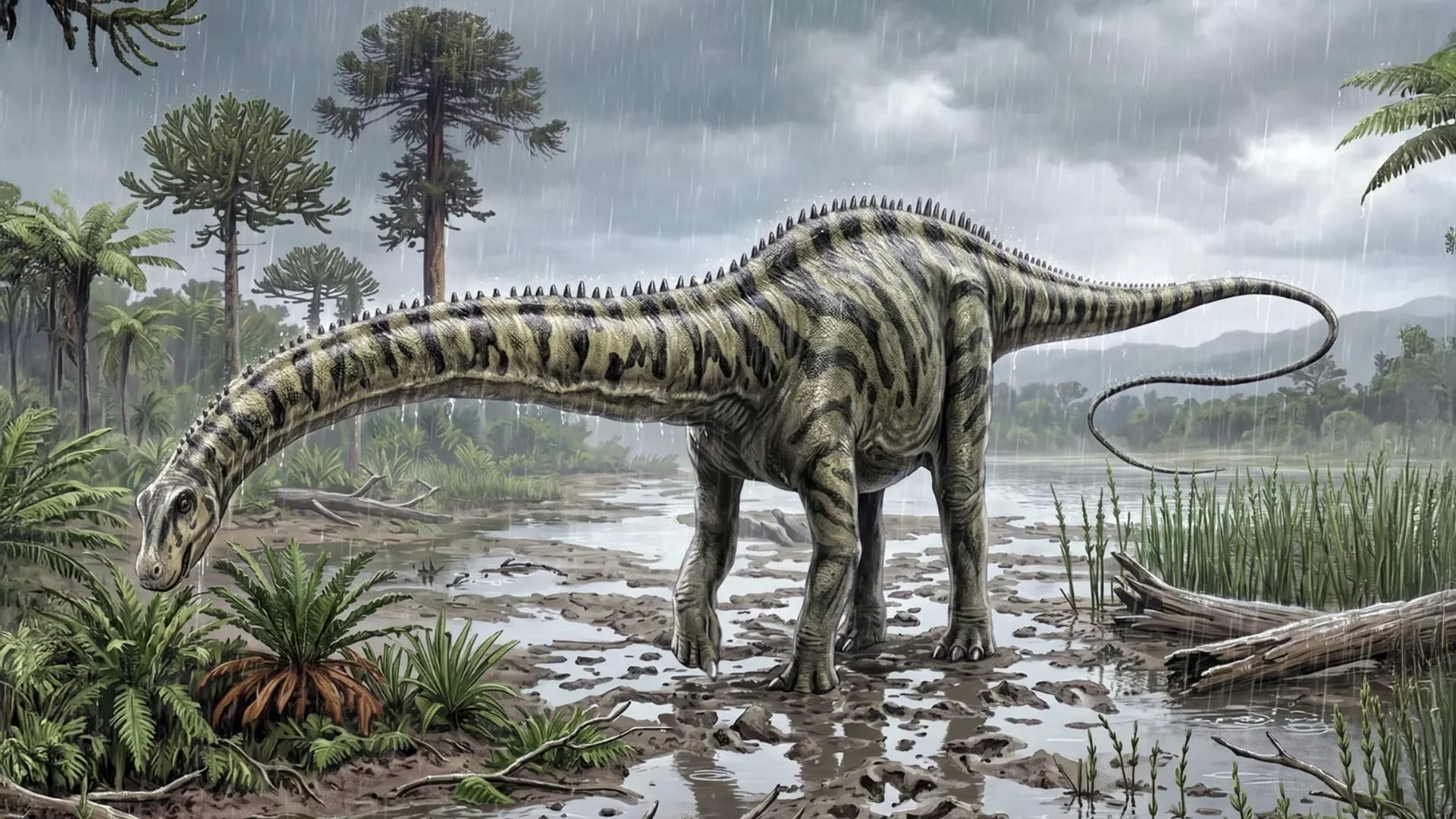
14 Tail Vertebrae Put Diplodocus in Spain. Experts Split on Certainty
Diplodocus in Spain: 14 tail vertebrae from Teruel are the first formal European record. Three of five experts back the ID; two call the tail too thin.

Burnt Grass Phytoliths Trace GunaiKurnai Fire Rituals Back 25,000 Years at Cloggs Cave
A phytolith study at Cloggs Cave in southeastern Australia found GunaiKurnai Old Ancestors burned whole grasses in ash layers for at least 25,000 years.
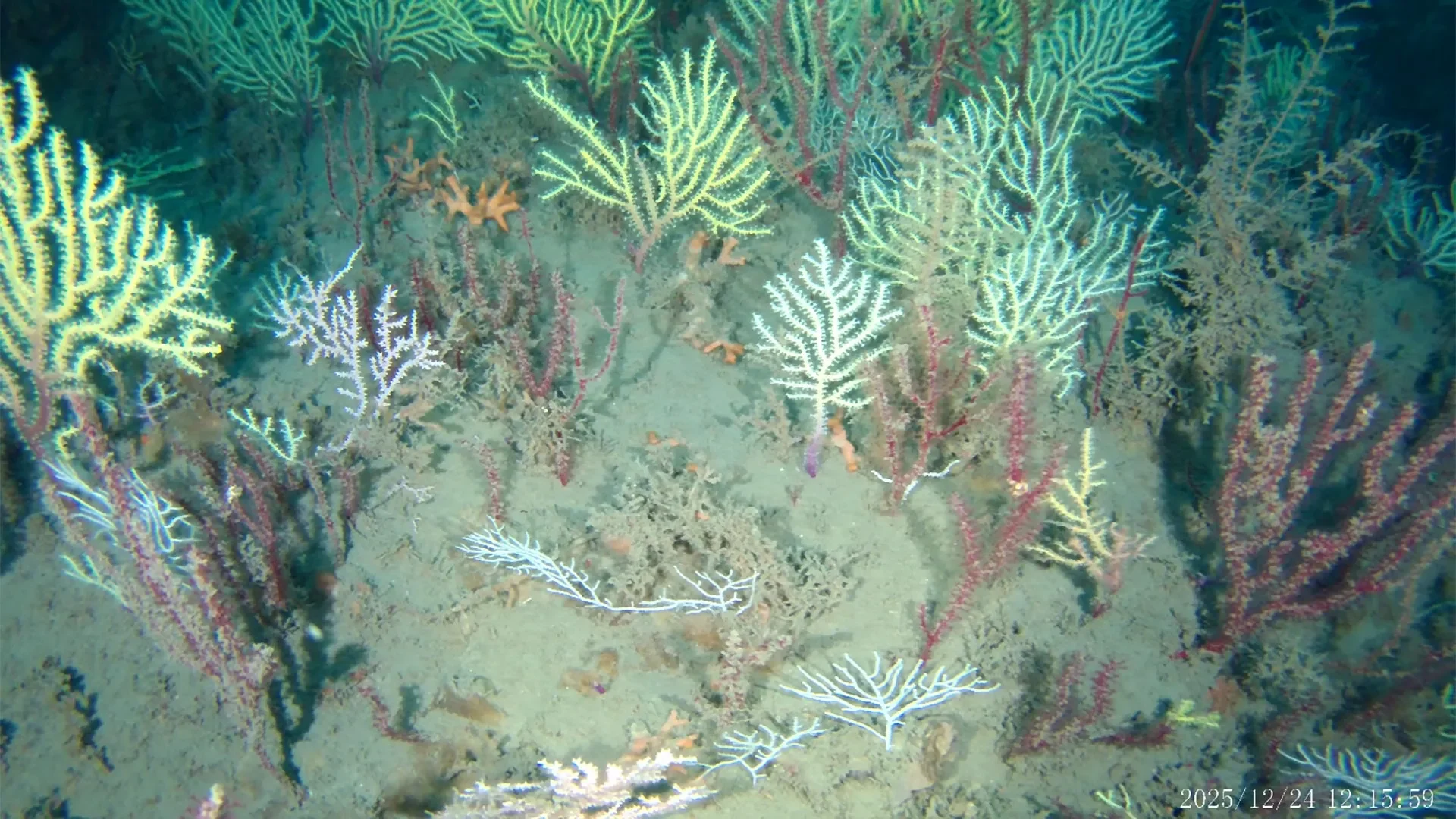
Benin's Coral Reef, Presumed Dead in 1966, Is Alive at 54 Meters
Sonar and a tethered drone found living octocoral gardens 54 meters deep off Benin, West Africa, reversing a 1966 verdict that had declared the reef dead.
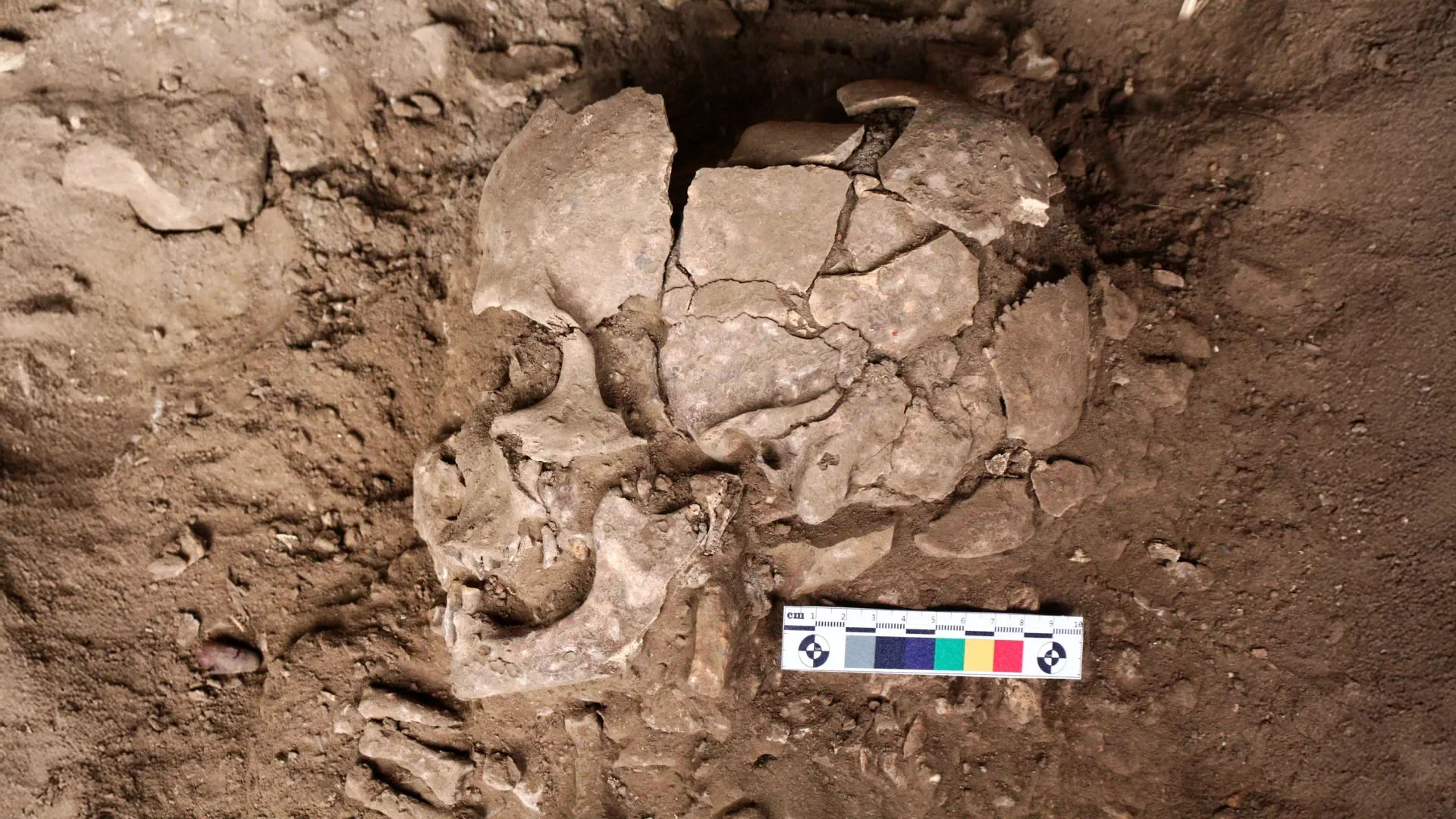
25,000-Year-Old Teeth From Indonesia Reveal the Oldest Known Drug Habit
Grooved teeth from Sulawesi show foragers sucked betel nuts as early as 25,000 years ago, releasing arecoline in the mouth long before farming began.
Comments (0)
Please sign in to join the discussion.
No comments yet.
Be the first to share your perspective on this topic.