
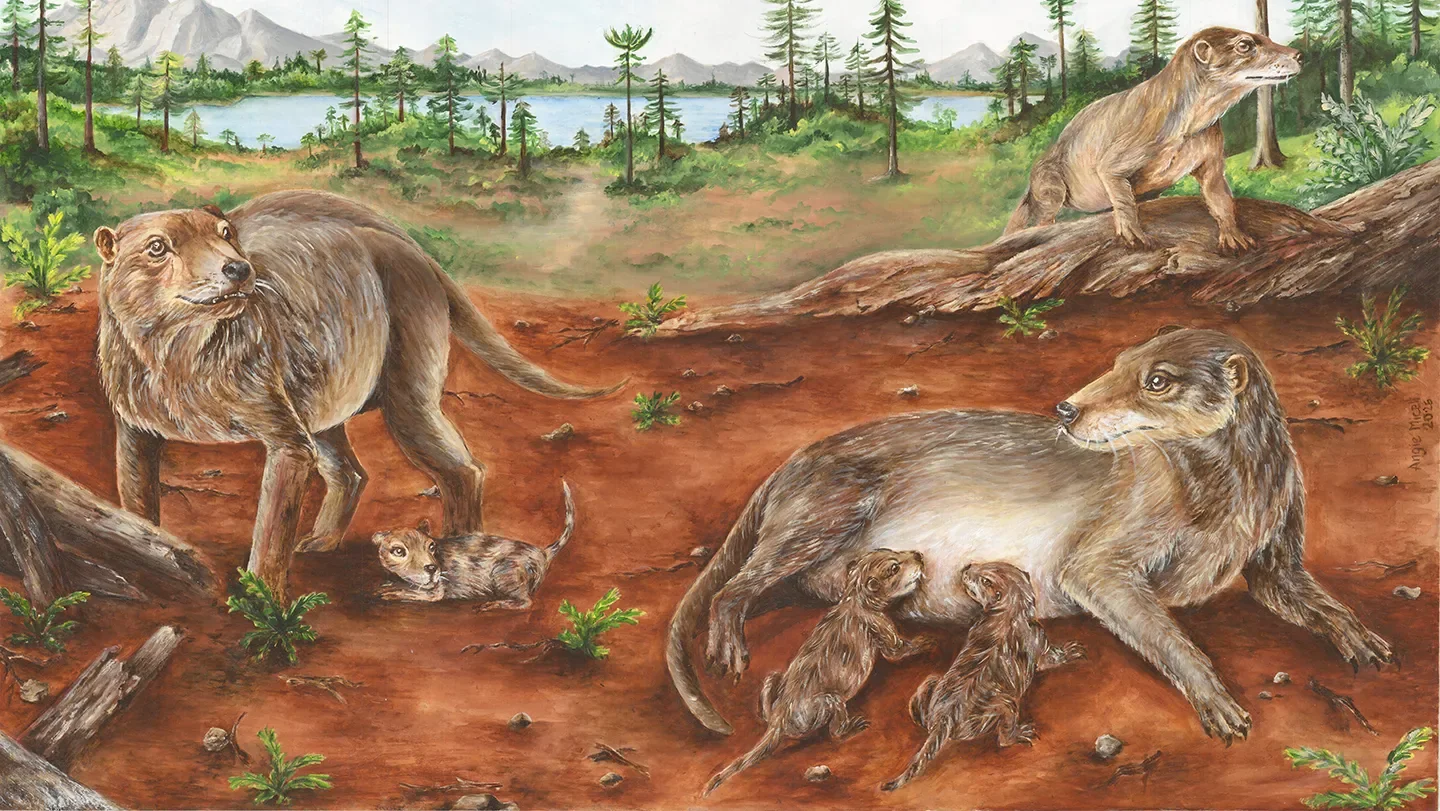
A growth line preserved inside the leg bones of a 236-million-year-old cynodont indicates it was born at roughly the same relative size as a modern placental mammal, offering the first fossil evidence that live birth existed in the mammalian lineage tens of millions of years before the origin of Theria.
A Growth Line Inside the Bone Marks the Moment of Birth
Researchers from Argentina and South Africa examined thin sections of the femur and ulna from specimen CRILAR-PV109, a Chiniquodon theotonicus skeleton recovered from the Chañares Formation in north-western Argentina. With a 160 mm skull and fully fused, fully erupted, completely ossified anatomy, the individual is interpreted as a fully grown adult, among the largest known members of the species.
Inside the innermost cortex of both bones, the team found an abrupt shift in tissue structure. Below the transition, the bone shows sparse, mostly lengthwise vascular canals, a pattern consistent with tissue laid down before birth. Above it, the canals are denser and run mostly outward from the center, the pattern typical of bone formed after birth accelerates growth. Researchers describe this transition as a neonatal line, a structure already documented in living placental mammals such as pigs and vizcachas. Whether a given line marks birth or hatching cannot be determined from histology alone; that distinction depends on comparing the animal's estimated size against known amniote data.
The team cross-checked this figure with a second method, estimating body mass from skull length instead of leg-bone circumference. That approach independently predicted a birth-time skull length of 40 to 50 mm, matching the smallest known Chiniquodon theotonicus skulls in existing museum collections, which the authors now propose represent newborn or near-newborn individuals.
Chiniquodon's Newborn Size Matches Placental Mammals, Not Egg-Layers
A single ratio only becomes meaningful in context. The researchers built a comparison covering 1,869 extant mammals, 2,619 non-avian reptiles, and 782 birds, drawn from a published amniote life-history database, then measured where Chiniquodon's estimated birth-to-adult ratio would fall among them.
Reptile and crocodilian adults over 10 kg produce hatchlings that never exceed 0.62% of their own body mass. Birds of similar adult size do even less, with hatchlings representing between 0.002% and 0.024%. Monotremes and marsupials, despite belonging to the mammal lineage, stay under 0.15% at birth, since both groups invest comparatively little in the newborn before relying on external incubation or a pouch. Placental mammals of a broad range of adult sizes are the outlier, routinely producing newborns worth 10% to more than 22% of adult mass. A discriminant analysis and a K-nearest-neighbors classification test, run independently of the raw ratio comparison, placed Chiniquodon with placental mammals at high probability in every trial.
The Discovery Pushes Mammalian Live Birth Back Nearly 100 Million Years
The prevailing view has held that oviparity, egg-laying, was the ancestral condition for the mammal lineage, with viviparity emerging once, near the base of Theria, the clade containing marsupials and placentals, roughly 147.7 million years ago. Non-mammalian cynodonts, the broader group that includes Chiniquodon, have generally been assumed to have laid eggs, in part because no fossil eggs from this lineage have ever been recovered and because early synapsid eggs are thought to have been soft-shelled and poorly suited to fossilization.
If Chiniquodon's neonatal line and body-mass ratio do reflect live birth, viviparity was already present roughly 90 to 95 million years before the point at which the trait has traditionally been recognized in the lineage. The authors are explicit that their phylogenetic interpretation, a single origin of viviparity in early Probainognathia rather than two separate origins, is equally parsimonious with the traditional model rather than proven by it, and they describe that scenario as highly speculative in their own discussion.
Other cynodont-relative fossils complicate a tidy narrative rather than resolving it. A 2026 study by a different team found an embryo of the dicynodont Lystrosaurus preserved in an in ovo position, direct physical evidence that this separate, more distantly related synapsid lineage did lay eggs. Kayentatherium wellesi, a tritylodontid known from a mass grouping of small perinates, produced a body-mass ratio that does not closely match any single living group, placental, marsupial, or reptile, leaving its reproductive mode undetermined by this method. Lead author Leandro Gaetano told reporters the finding does not rule out that other cynodonts shared this trait, while cautioning that more fossils will be needed to test the idea broadly.
The body-mass equations underlying the estimate were built from measurements of living carnivorans, not calibrated specifically for early-growth-stage physiology in this extinct lineage, a limitation the authors acknowledge directly. They argue that any resulting bias should shift the birth and death estimates in the same direction, which would preserve the validity of the ratio between them even if the absolute kilogram figures carry some uncertainty.
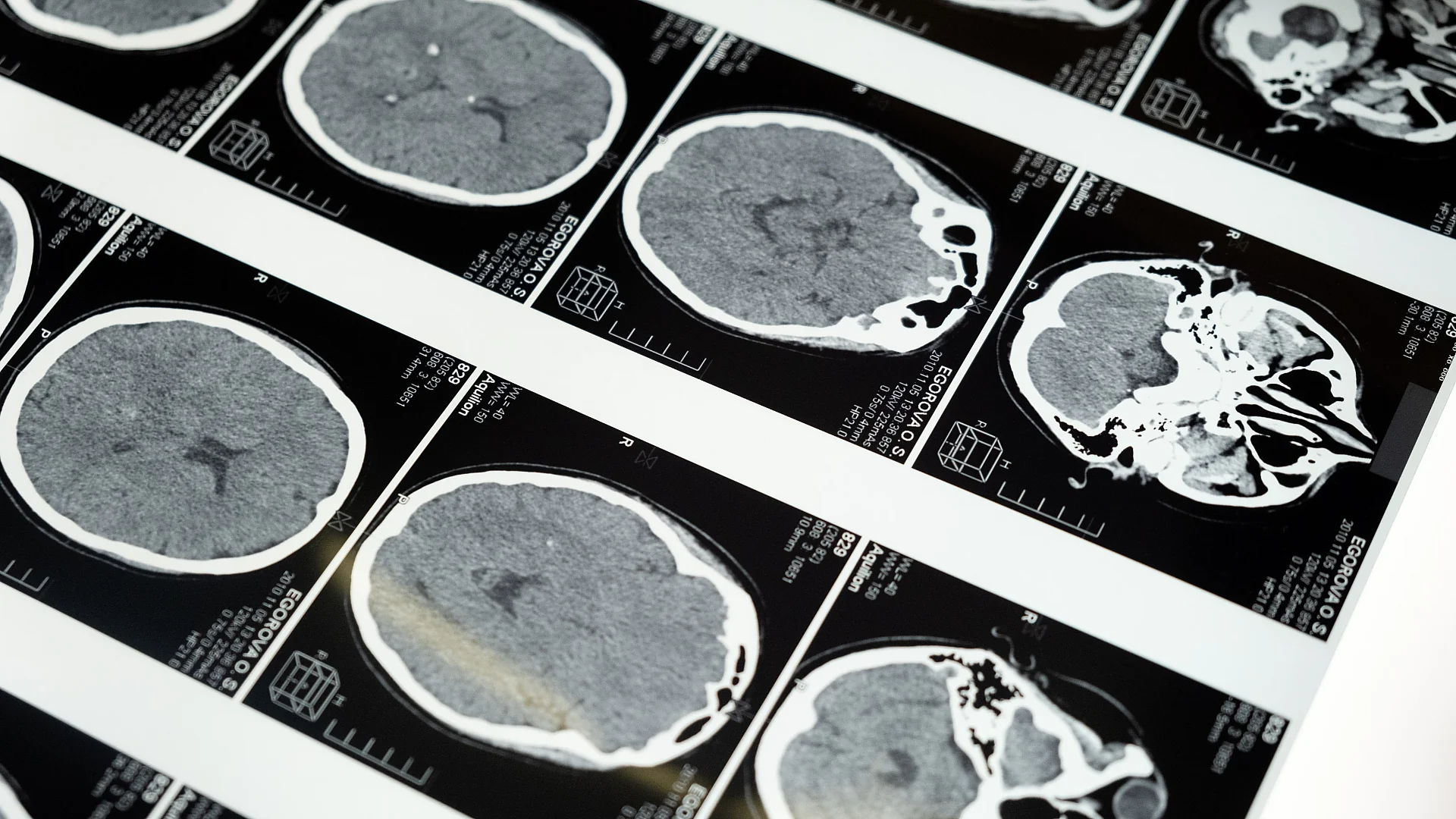
Five Candidate Depression Phenotypes Emerge From MEG Brain Oscillations
MEG depression phenotypes: 263 patients cluster into five oscillation profiles, yet brain–symptom links explain only 3–4% of shared variance in the cohort.
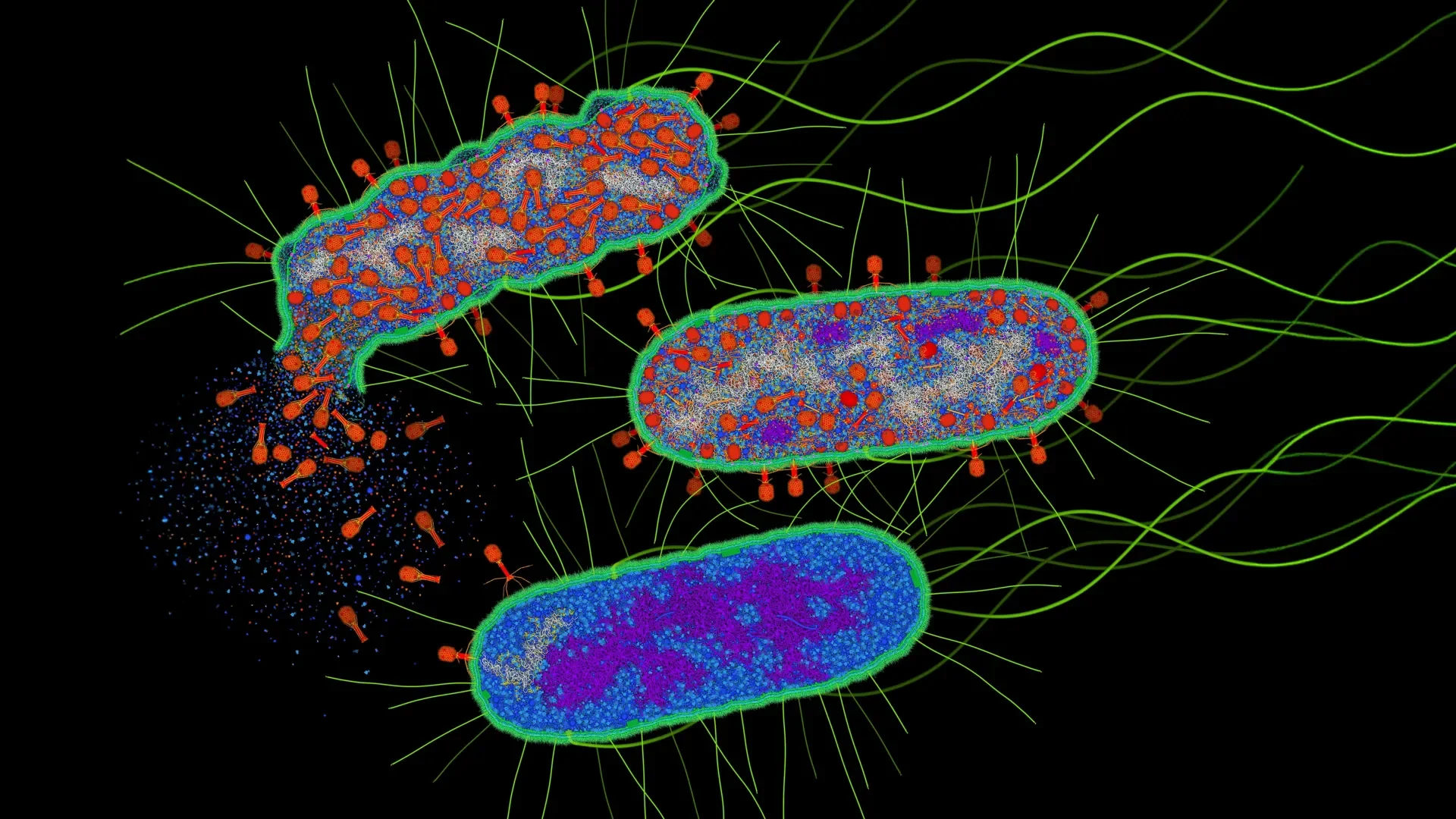
A 30-Amino-Acid Loop Lets Bacteria Detect Phage Proteases and Trigger CBASS Defense
Phage proteases activate CBASS by cutting a ~30-residue loop in bacterial CD-NTase enzymes; a Science study maps the loop across about 24% of operons.
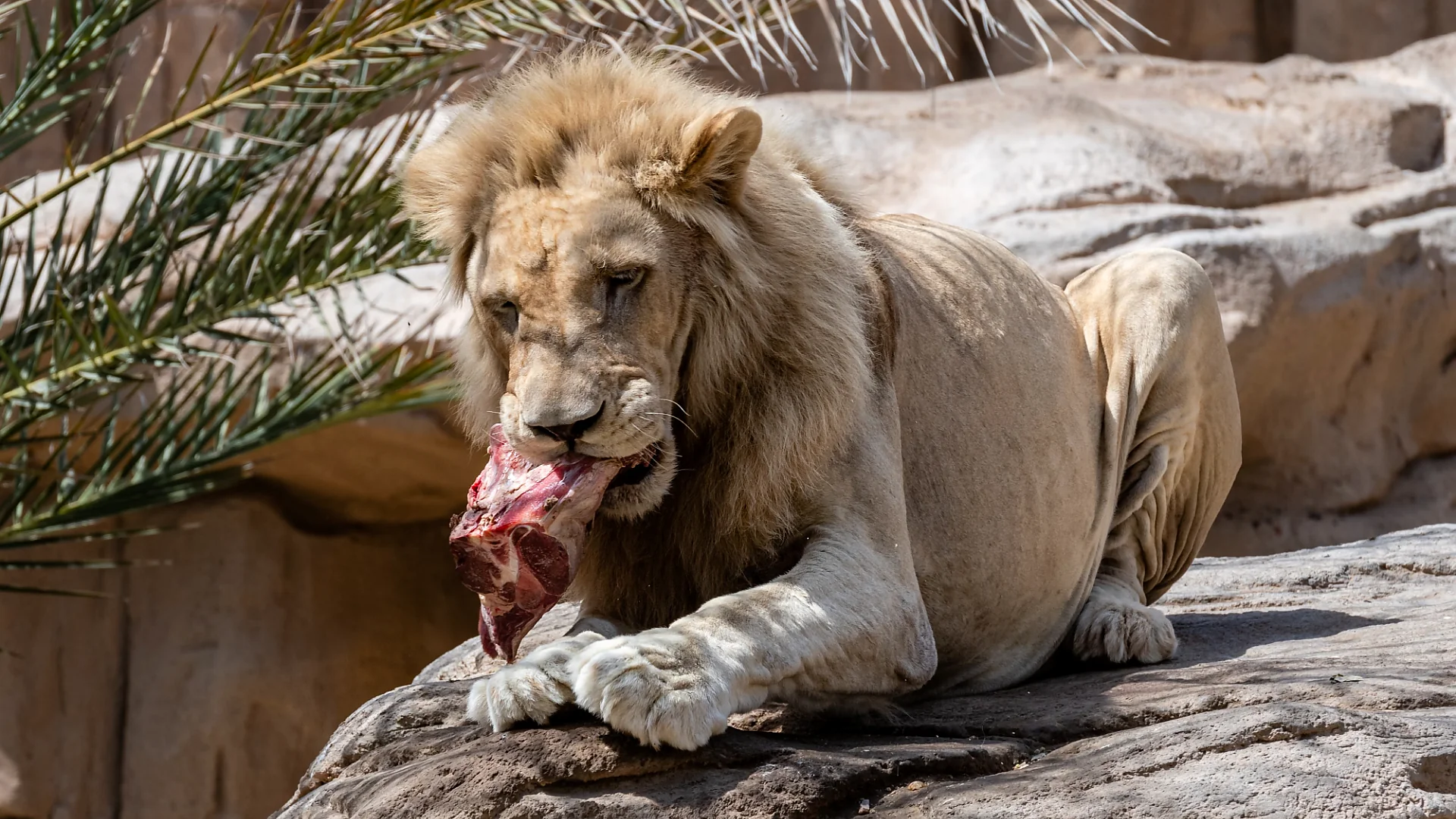
Nine-Day Carcass Feeding Nearly Tripled Zoo Lions' Eating Time and Raised Pacing
Lions at an Australian safari park fed whole carcasses every nine days ate nearly three times longer, rested more, and paced more in month two of a 2026 study.

A Seven-Day Water Fast Moved 1,044 Blood Proteins, and Day 3 Was the Turning Point
A 7-day water fast changed 1,044 blood proteins, few before day 3. A second 2025 cohort shared 49 significant hits with no conflicting direction of change.
Comments (0)
Please sign in to join the discussion.
No comments yet.
Be the first to share your perspective on this topic.