
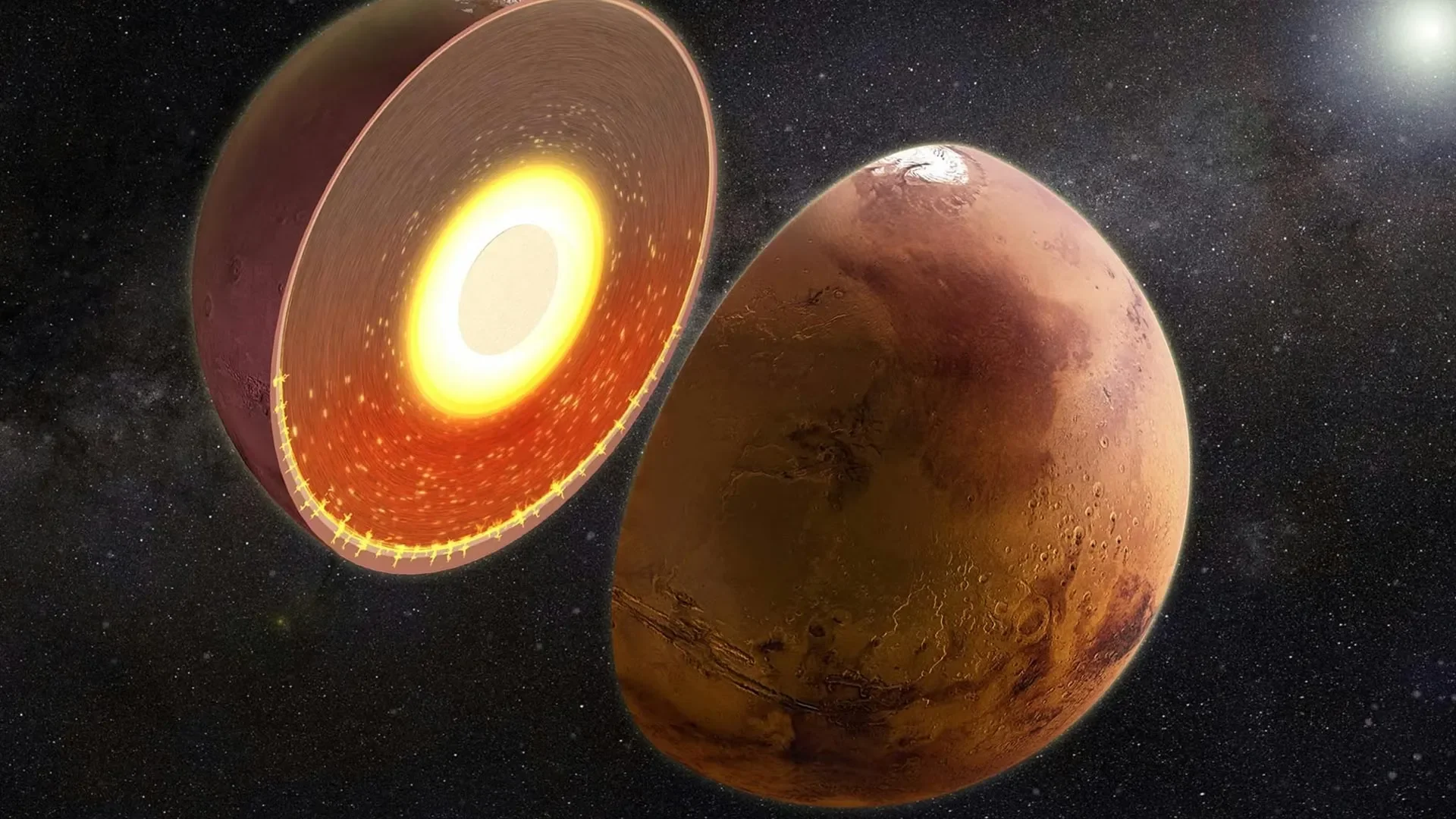
Mars's two hemispheres have never matched at the surface. The southern highlands sit several kilometers above the smooth northern lowlands, cratered and ancient where the north is young and flat. A study published August 27 in Nature finds that mismatch runs deep into the planet's interior: the mantle beneath the southern highlands is running 200 to 400 degrees Celsius hotter than the mantle beneath the north.
A Gravity Signal That Breaks the Spherical-Mars Assumption
The team, led by Alexander Berne, who completed the work as a Caltech doctoral student and is now a postdoctoral researcher at the University of Arizona, used decades of radio-tracking data from three NASA orbiters, Mars Global Surveyor, Mars Odyssey, and Mars Reconnaissance Orbiter, to measure tiny shifts in spacecraft velocity as they circled the planet. Because Mars follows an eccentric orbit on a tilted axis, the Sun's gravitational pull on it varies seasonally, and Mars's own gravity field responds to that pull in ways that depend on the physical structure of its interior. Tracking that response over time is the basis of tidal tomography, a technique already applied to Earth and the Moon but, until this study, never to Mars.
The researchers found that the degree-3 component of Mars's time-variable gravity field departs from what a spherically symmetric planet would produce by as much as 300 percent. The best explanation, according to the paper, is that the mantle's effective shear modulus, a measure of how strongly the rock resists deforming under stress, varies by more than 20 percent across a rough north-south boundary that lines up closely with the surface dichotomy, a boundary whose crust differs in average thickness by roughly 25 kilometers between the two hemispheres. Softer, more easily deformed rock generally means hotter rock, and the team used that relationship to estimate a present-day thermal anomaly of 200 to 400°C beneath the southern highlands, warm enough that some of the southern mantle may be partially molten.
The four figures below, drawn from the gravity model and from the crust's known geometry, size up how large that asymmetry actually is.
Two Independent Clues Already Pointed South
The gravity result is not the first hint that Mars's interior is lopsided. NASA's InSight lander, which ran seismometers on the Martian surface from 2018 to 2022, had already found that seismic waves crossing the southern hemisphere lose energy faster than waves crossing the north, a pattern consistent with warmer, softer rock damping the signal. Separately, magnetometer surveys have long shown that iron-bearing minerals in the southern crust carry a stronger magnetic imprint than minerals in the north, evidence of an ancient magnetic field that left its mark unevenly across the two hemispheres. Neither observation on its own established that the interior is thermally asymmetric today. Together with the new gravity result, they point toward a temperature difference old and large enough to have left traces in three separate kinds of data.
Amirhossein Bagheri, a Caltech postdoctoral scholar, co-author, and former member of the InSight science team, says the north-south divide matters beyond geophysics because it may help explain patterns in Mars's early hydrology, including where basins capable of holding water once formed.
Three Competing Explanations, None Yet Confirmed
What produced the anomaly is still unsettled. The paper's authors weigh three, non-exclusive possibilities: an ancient giant impact that released heat from the northern hemisphere and left the south comparatively warm; past convection localized to the southern mantle; and a thick southern crust acting as an insulating blanket, slowing the escape of heat that built up early in the planet's history. Nick Wagner, a planetary scientist at Brown University and co-author, told 404 Media, "This study doesn't provide an answer to it, but adds another line of evidence to figure out what is actually going on underneath Mars."
Berne has suggested the method may end up mattering as much as this particular result. Because tidal tomography works entirely from orbital tracking data, it does not require a lander, which makes it a candidate for probing the interiors of other bodies that are hard to reach with surface missions, including Mercury, Saturn's moon Enceladus, and Pluto. For Mars, the immediate takeaway is narrower: a 50-year-old debate over the origin of its most conspicuous surface feature now has to account for a matching divide hundreds of kilometers down, and none of the leading explanations can yet be ruled out.
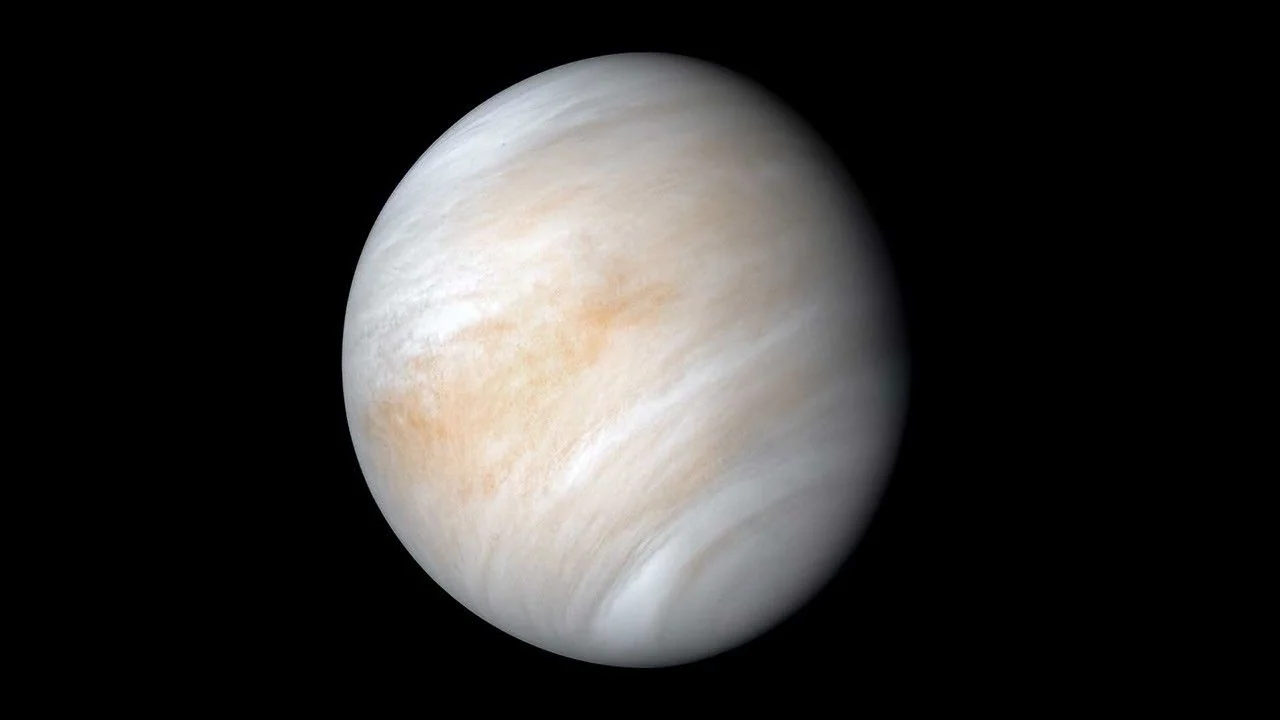
Why Venus's Pale Yellow Clouds Might Hide a Nearly Black Liquid
A new model finds Venus's cloud liquid must absorb UV light as strongly as concentrated pigments, narrowing the century-old 'unknown absorber' mystery.
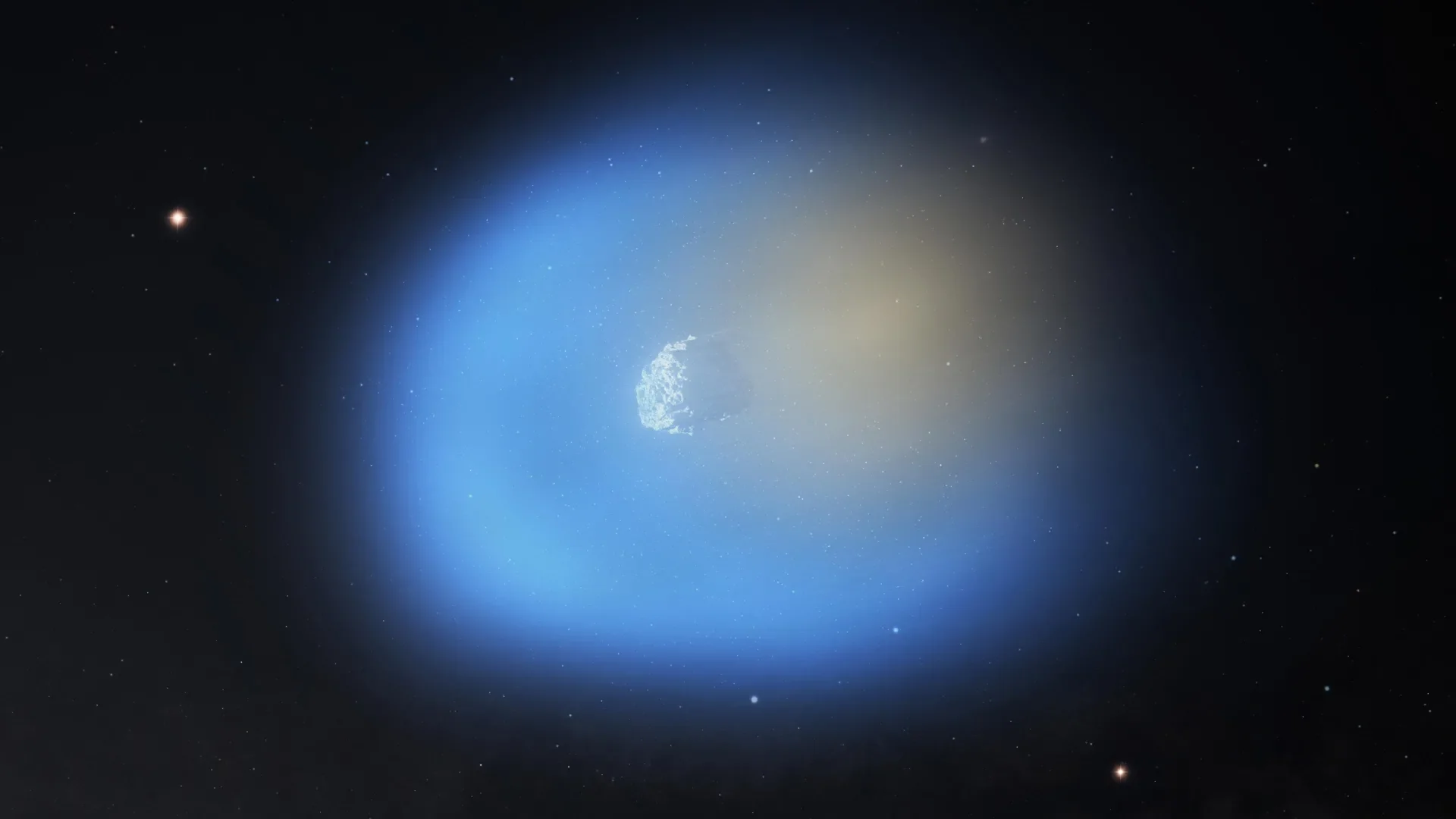
3I/ATLAS's Methanol-to-Hydrogen-Cyanide Ratio Reaches 124, ALMA Data Show
ALMA's Atacama Compact Array measured interstellar comet 3I/ATLAS's methanol-to-HCN ratio at 124 and 79 on two dates, among the highest recorded in a comet.
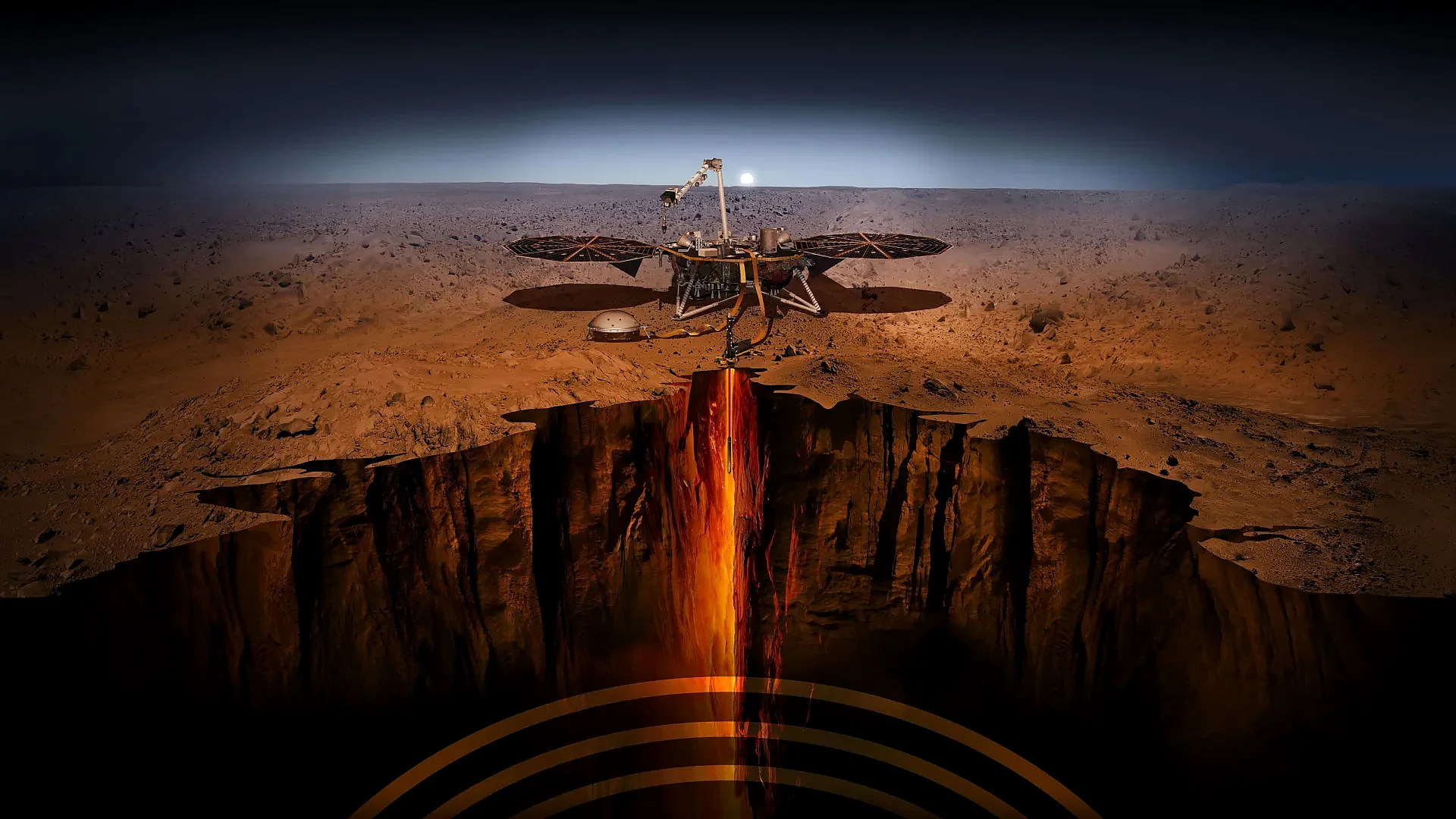
A Buried Ultramafic Layer Points to a Whole-Crust Magma System on Mars
NASA InSight data show a melt-depleted ultramafic layer 24–38 km down in Mars's crust, evidence of a magma system that once ran through the entire crust.
NASA's IXPE Measures 80% X-Ray Polarization From a Magnetar, Testing a 90-Year-Old Quantum Prediction
NASA's IXPE recorded up to 80% X-ray polarization from magnetar 1E 1547.0−5408, the strongest evidence yet for vacuum birefringence, a 1936 QED prediction.
Comments (0)
Please sign in to join the discussion.
No comments yet.
Be the first to share your perspective on this topic.