
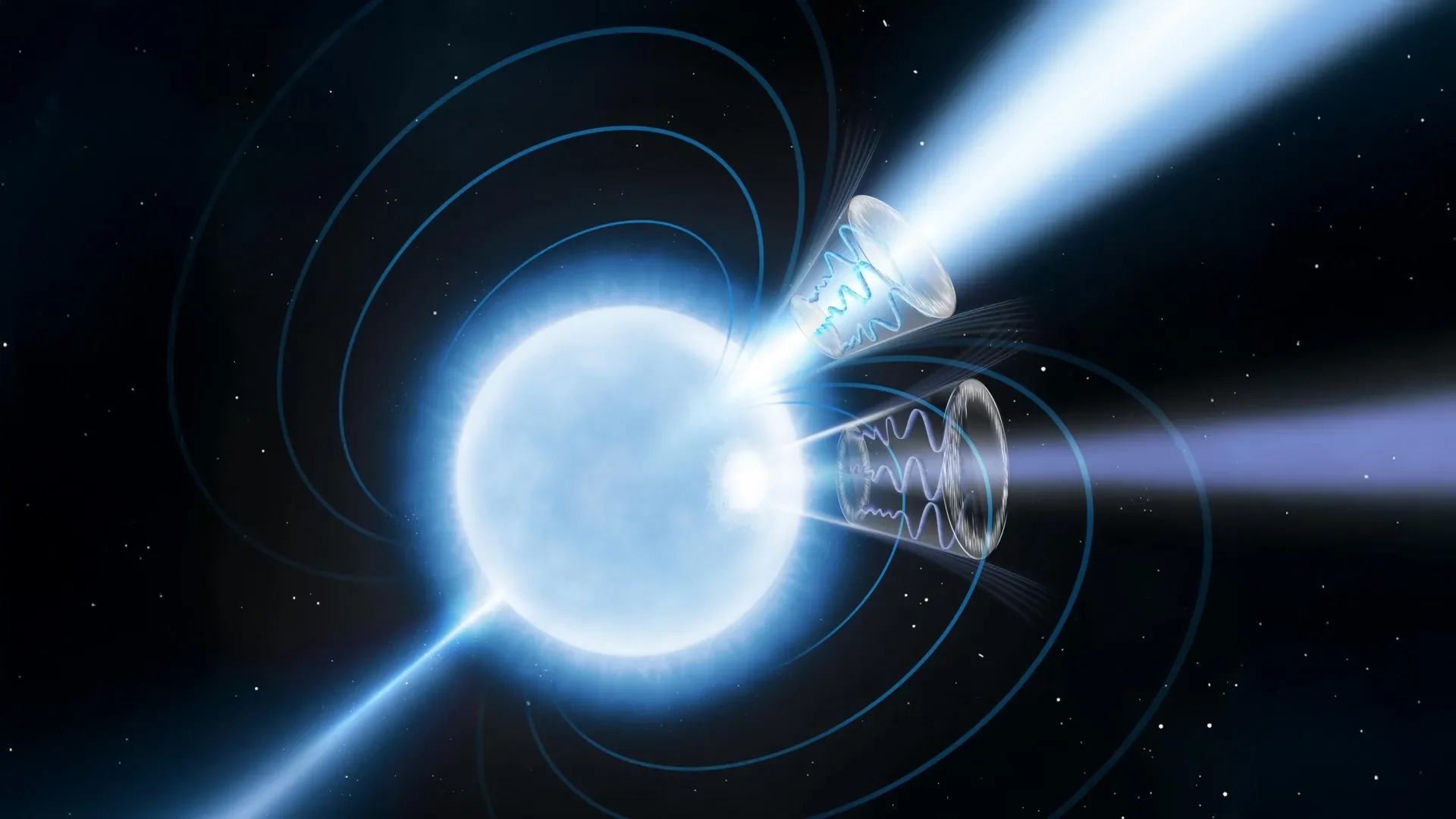
A 140-hour observing campaign found X-ray polarization from magnetar 1E 1547.0−5408 reaching 80 percent, a signal the observing team says points to vacuum birefringence. An independent analysis of overlapping data reaches a more cautious conclusion.
IXPE Measured X-Ray Polarization Up to 80 Percent From 1E 1547.0−5408
Researchers led by Rachael E. Stewart, Hoa Dinh Thi, George Younes, Marcus E. Lower and Matthew G. Baring report in Nature that the magnetar 1E 1547.0−5408 shows a phase-averaged X-ray polarization degree of 65% at 2 keV, dropping substantially as energy rises toward 4 keV. At certain points in the star's rotation, the 2–3 keV polarization degree climbs to nearly 80% and stays above roughly 40% for the full stretch of the radio beam crossing.
NASA's own summary of the result frames the two emission regions in similar terms: the upper and lower X-ray emission cones show polarization degrees of about 80% and 40%, according to the NASA Science description of the campaign, which calls the level "nearly three times greater than seen in similar sources." The paper's authors note that both the X-ray and radio polarization angles track the pattern expected from the star's large-scale magnetic field, a check known as the rotating vector model, and that this geometry is hard to reconcile with standard models in which light leaves the magnetar's surface without being bent by the surrounding field.
A 140-Hour Campaign Combined Two X-Ray Telescopes With a Radio Dish
The measurement came from coordinated observations across March and April 2025: NASA's IXPE, NASA's NICER instrument aboard the International Space Station, and Murriyang, CSIRO's Parkes radio telescope. NASA describes the pairing as the first coordinated radio and X-ray polarization measurement ever made of a magnetar. The target, 1E 1547.0−5408, completes a full rotation roughly every 2.069 seconds and is one of only a small number of known radio-emitting magnetars, a class first identified at this source by Fernando Camilo and colleagues using Parkes in 2007.
The Result Revives a Prediction Heisenberg and Euler Made in 1936
Vacuum birefringence is a consequence of quantum electrodynamics worked out by Werner Heisenberg and Hans Euler in 1936 and extended by Julian Schwinger in 1951: under an extremely strong magnetic field, the vacuum itself is predicted to behave as a polarization-dependent optical medium, bending light of different orientations by slightly different amounts. No laboratory field on Earth comes close to the strength needed to see it directly. "Detecting vacuum birefringence requires a magnetic field that is over 100 million times stronger than any we've ever made on Earth," said co-author Marcus Lower of Swinburne University of Technology, in comments distributed alongside the paper. "Thankfully, nature has provided us with magnetars, which are the perfect cosmic laboratories to go looking for this effect."
That is the case the Nature team is making with 1E 1547.0−5408: a magnetospheric propagation model that includes vacuum birefringence fits the observed polarization pattern better than surface-emission models that assume light travels to the observer unaffected by the field it passes through.
A Competing Analysis of the Same Observation Reaches a More Cautious Read
The picture is not unanimous. A separate paper by Roberto Taverna, Roberto Turolla, Lorenzo Marra and colleagues, published in The Astrophysical Journal after being posted in January 2026, analyzed a 500-kilosecond IXPE observation of the same magnetar and measured a 2–6 keV polarization degree of 47.7% ± 2.9%, with a polarization angle of 75.8° ± 1.8°. Fitting the rotating vector model to that data, their group infers an inclined rotator seen nearly perpendicular to its spin axis. The geometry the Nature team derives from its radio data instead points to an almost-aligned rotator seen close to the magnetic pole, a configuration Taverna's group calls unlikely based on the X-ray data alone, though they stop short of ruling it out.
Both groups agree that the phase modulation of the X-ray polarization angle hints at vacuum birefringence at work in the magnetosphere. What they disagree on is the underlying magnetic geometry of the star, and that disagreement is exactly what keeps the case open rather than closed. Taverna and colleagues titled their own paper around an "elusive smoking gun" for a reason: agreement on the general phenomenon has not yet produced agreement on the specific picture of the star producing it. Lower, addressing what comes next, said further data and refined simulations should help. "With these future data on hand and our updated simulations, we may finally be able to complete the quest started by Heisenberg nearly 90 years ago."
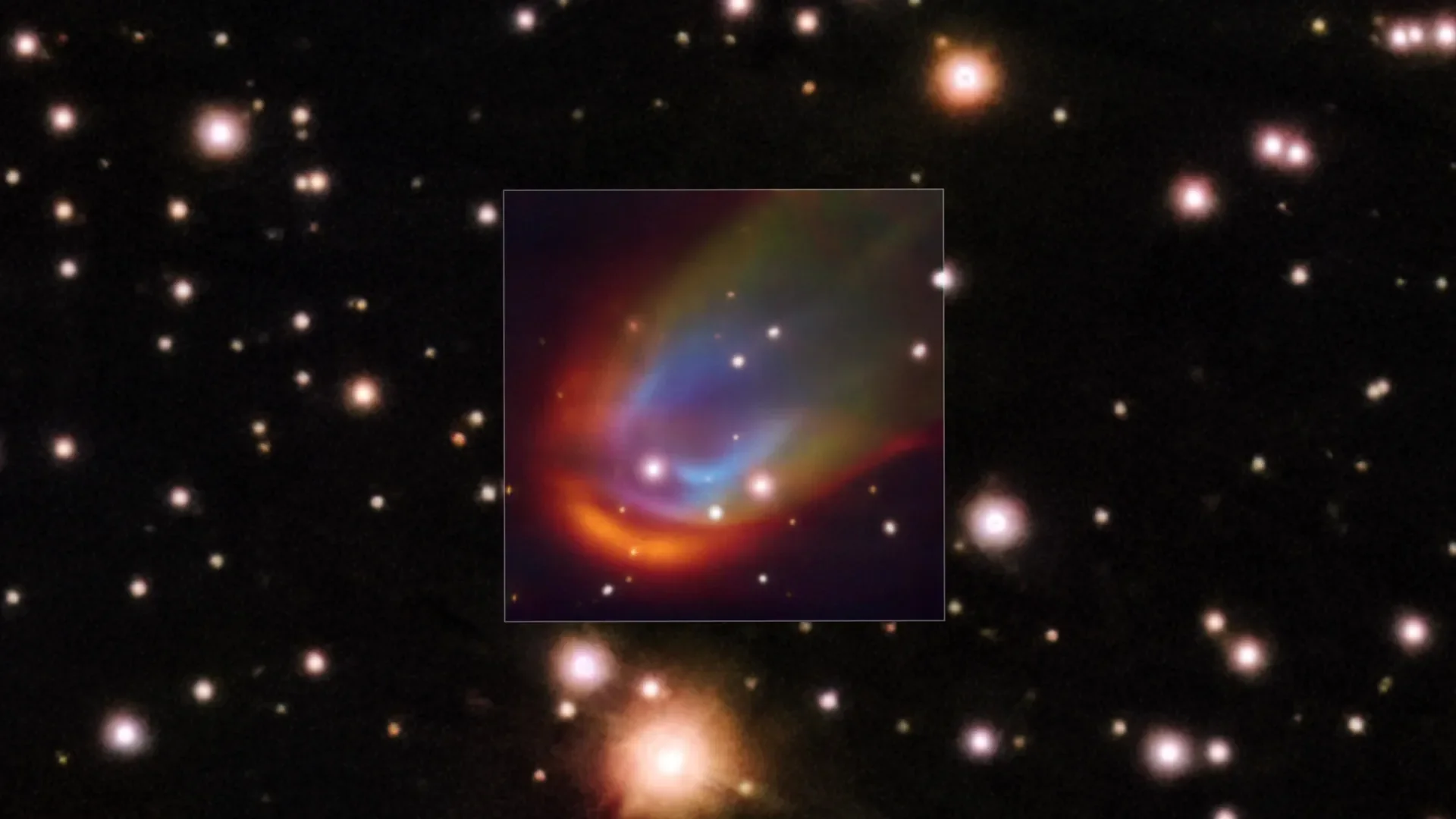
A Diskless White Dwarf's 1,000-Year Bow Shock Has No Known Power Source
Astronomers found a bow shock around white dwarf RXJ0528+2838 that no known mechanism explains: not a nova, not a disk wind, and not even its own 42-45 MG magnetic field.
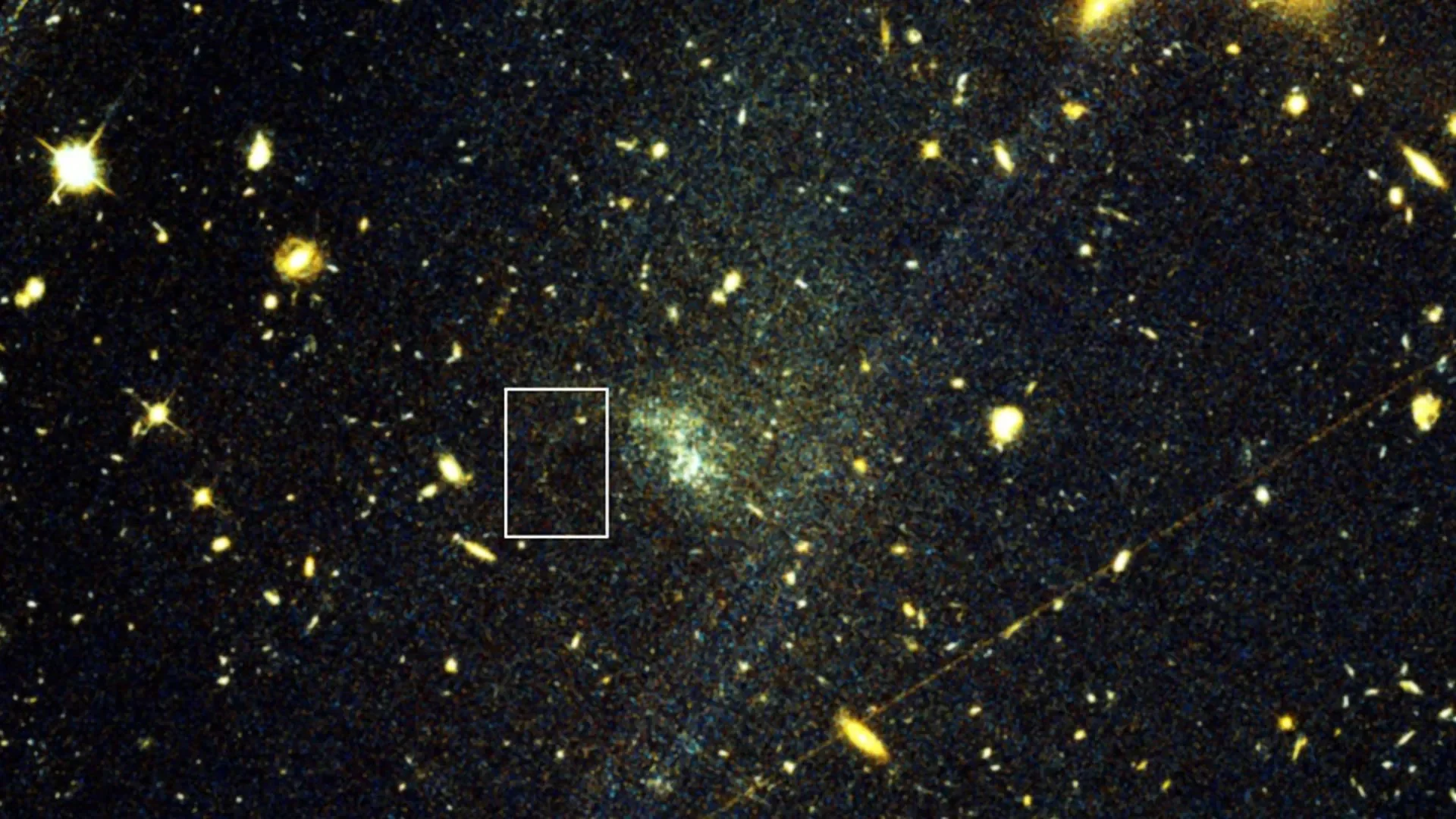
Oyashio: The First Candidate Globular Cluster Stream Beyond the Milky Way
Globular cluster stream candidate Oyashio is 72 pc wide, in galaxy UGC 9050-Dw1. Nature models cap the parent cluster's mass at 2.5 million solar masses.
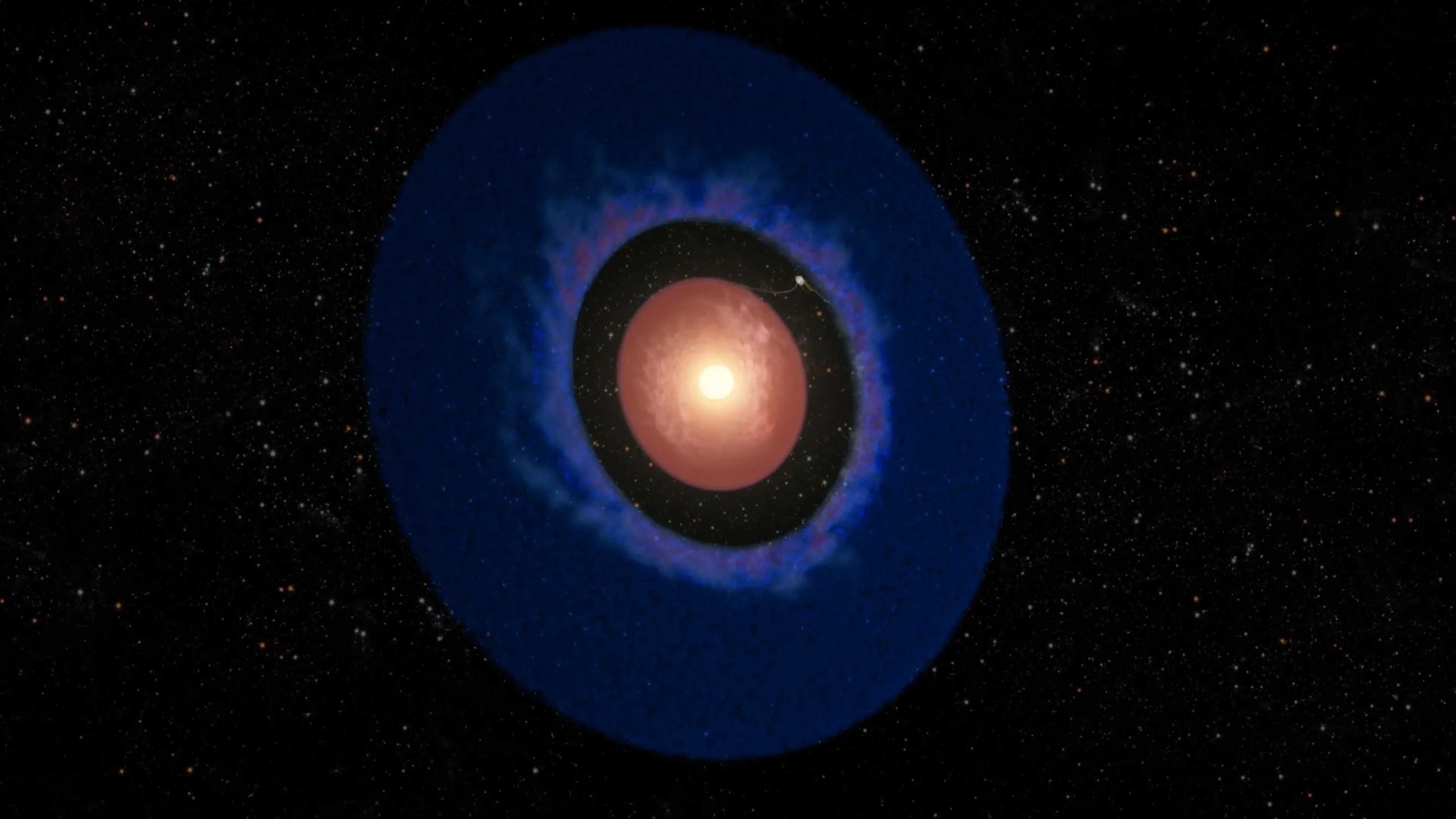
Elias 2-24 b Confirmed as the Youngest Known Exoplanet
Elias 2-24 b, confirmed via Keck, ALMA and VLT data, is under 1 million years old, roughly five times younger than the previous exoplanet age record.
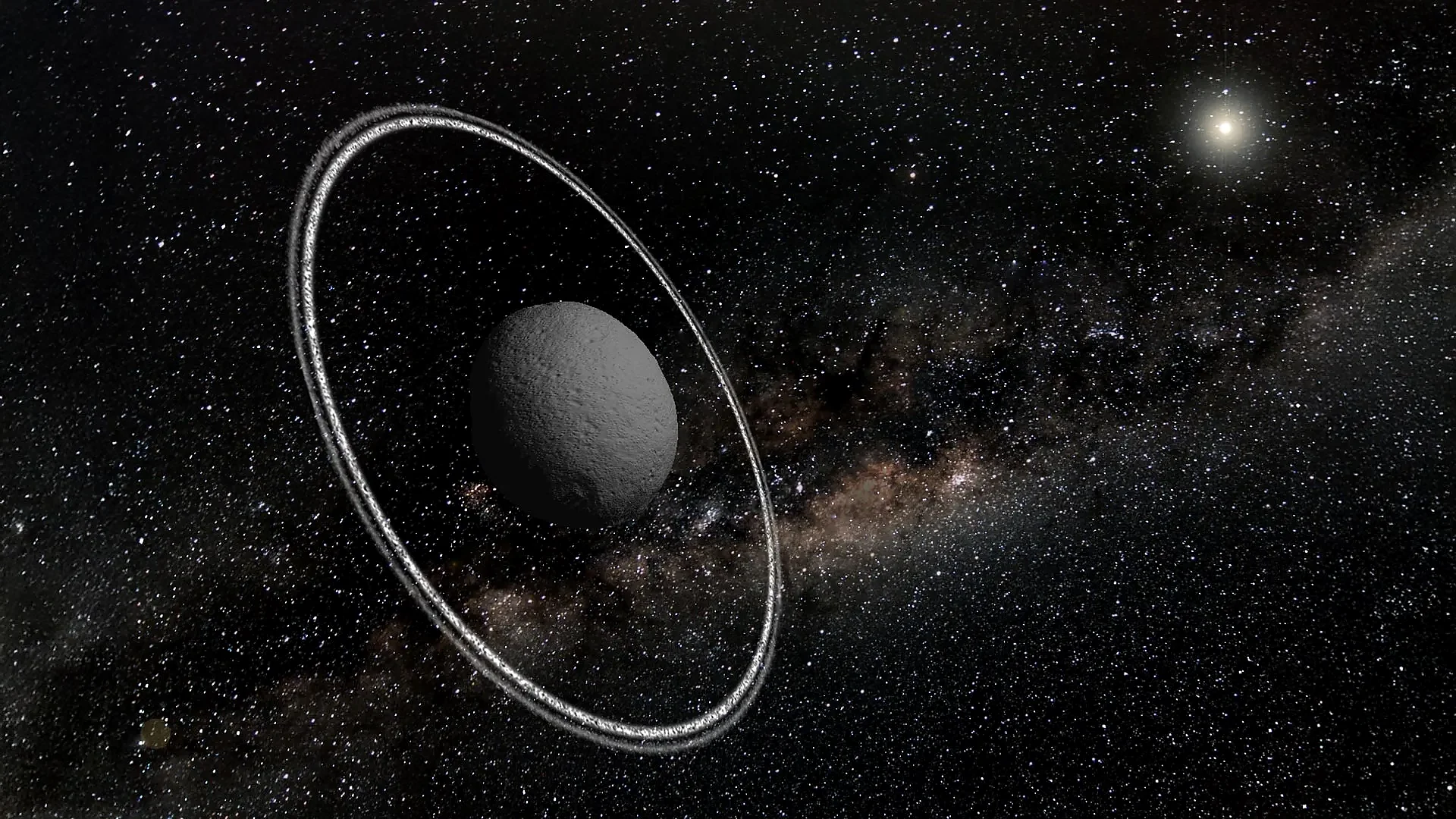
JWST Occultation Shows Chariklo's Two Rings Evolving in Opposite Directions
JWST's first predicted-and-observed stellar occultation reveals Chariklo's two rings changing in opposite directions within less than a decade.
Comments (0)
Please sign in to join the discussion.
No comments yet.
Be the first to share your perspective on this topic.