
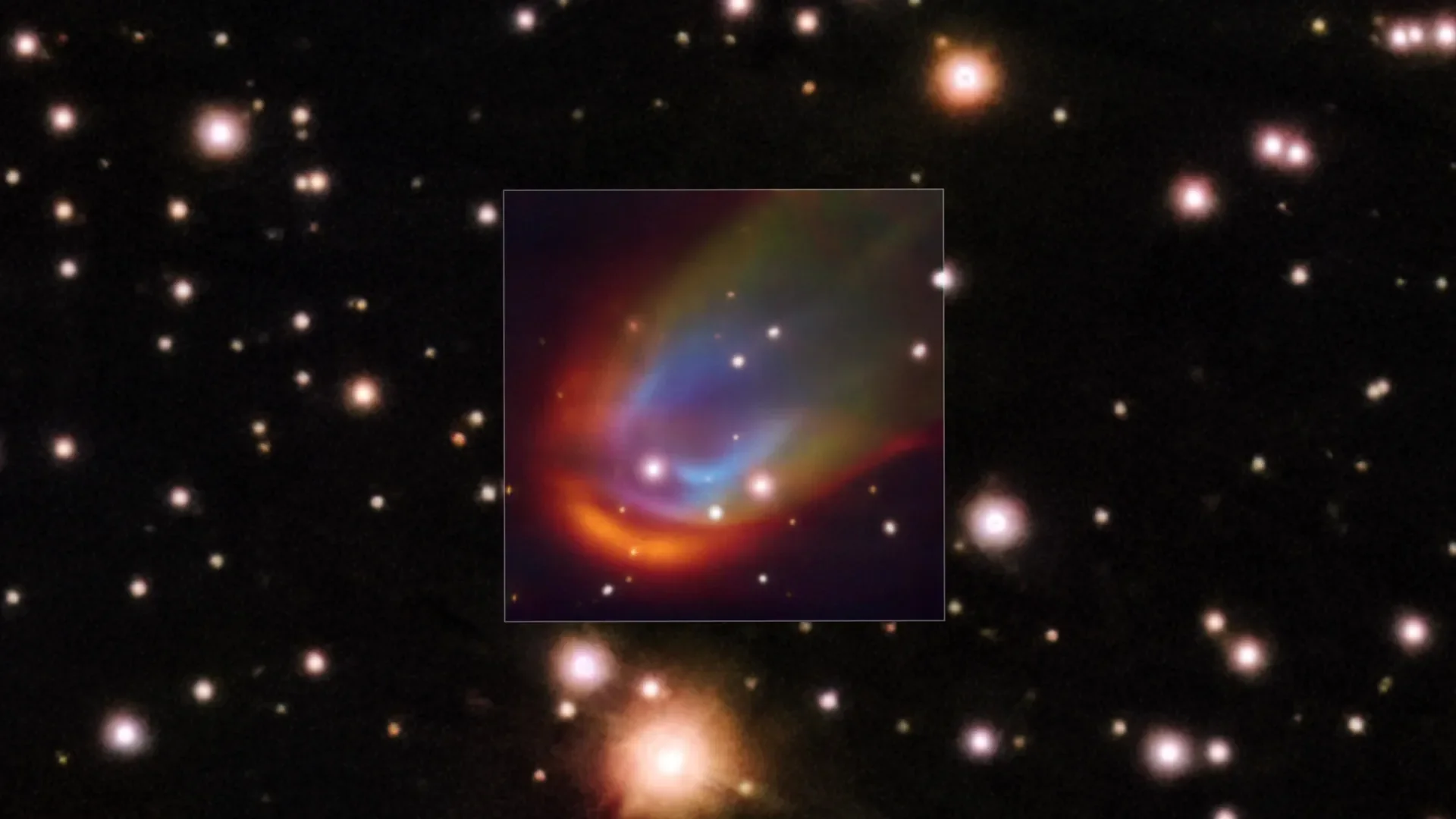
The white dwarf RXJ0528+2838 has no accretion disk and only a faint stellar companion, yet it has been driving a shock wave through interstellar gas for at least a millennium. A study published in Nature Astronomy rules out every mechanism known to produce that kind of structure, leaving the object's actual power source unidentified.
MUSE Spectroscopy Confirms the Bow Shock Belongs to RXJ0528+2838
The object sits about 730 light-years away in the constellation Auriga. It was first flagged as an odd patch of nebulosity in wide-field images from the Isaac Newton Telescope in Spain, spotted by final-year physics student Luke Parker during a search for old nova remnants. That single observation led the team to secure time on the MUSE integral-field spectrograph at ESO's Very Large Telescope, which mapped hydrogen, nitrogen and oxygen emission across the structure in detail.
That mapping did two things. It confirmed the nebula is physically attached to RXJ0528+2838 rather than an unrelated cloud along the same line of sight, and it let the team measure the white dwarf's magnetic field at 42 to 45 megagauss. TESS photometry pinned the binary's orbital period at 80.05169 minutes, with no detectable change across 761 days of observations. Together, the data classify RXJ0528+2838 as a polar: a magnetic cataclysmic variable whose field is strong enough to channel material from its companion straight onto the white dwarf's magnetic poles, skipping the accretion disk that most systems like it would form.
Eliminating Nova Ejecta, Donor Wind and Disk Wind as the Driver
A bow shock forms when material streaming off a star piles up against the surrounding interstellar gas, building a curved wall ahead of the star's motion, much the way a moving ship pushes up a wave at its bow. In accreting white dwarfs, that streaming material usually comes from one of three places: a thermonuclear nova explosion, a wind off the donor star, or a wind driven by the accretion disk itself.
None of the three fits RXJ0528+2838. The resolved shape and measured energetics of the shock don't match what a past nova explosion would leave behind. The companion star is too faint and too low-mass to drive an outflow capable of sustaining a shock this large for this long. And the disk-wind explanation fails on its own terms, because the polar's strong magnetic field prevents a disk from forming at all. Of the small number of accreting white dwarfs previously known to carry disk-wind-driven bow shocks unconnected to a nova, none of them lacks a disk. RXJ0528+2838 doesn't fit that group, and it doesn't fit any of the alternatives either.
"We found something never seen before and, more importantly, entirely unexpected," said Simone Scaringi, the study's co-lead author at Durham University.
The Energetics Gap Between 42-45 Megagauss and a 1,000-Year Shock
Ruling out the usual suspects still leaves the question of what is actually pushing the gas. The bow shock's standoff distance, roughly 3,800 times the Earth-Sun distance, and its overall shape indicate the outflow has been sustained for at least 1,000 years. Modeling the shock's energetics shows it needs a persistent power source whose luminosity significantly exceeds what the system's ordinary accretion process could supply.
The newly measured magnetic field was the team's best candidate for that power source, but the numbers don't close the gap. According to Durham University's release on the findings, the current field is only strong enough to power a bow shock lasting a few hundred years at most, well short of the shock's estimated age. RXJ0528+2838 isn't unique in showing an energy output that outruns simple models: the paper notes the prototypical polar AM Her has a reported radio luminosity of 1.8×10²⁵ erg per second, and the non-accreting white dwarf pulsar AR Sco reaches roughly 10²⁷ erg per second, both signatures the authors describe as energy losses that remain to be fully explained.
What an Unidentified Engine Could Mean for Binary Evolution
The authors stop short of naming the mechanism. Their working hypothesis is that magnetic activity, beyond what a static field strength alone would predict, is injecting energy into the surrounding medium over timescales long enough to shape how the binary evolves, not just how it looks today. That remains a hypothesis rather than a finding: the paper identifies what the energy source is not, and proposes what it might be tied to, without yet measuring the mechanism directly.
A separate preprint from March 2026 revisited RXJ0528+2838 alongside two other cataclysmic-variable bow shocks, BZ Cam and V341 Ara, using archival infrared data to study how the shock layers are structured. It found RXJ0528+2838's proper motion, corrected for galactic rotation, works out to about 128.5 kilometers per second, and that infrared emission traces the outer edge of the shock in all three systems. That comparison adds structural context; it doesn't identify the power source either. The research team's stated next step is to search for more systems like RXJ0528+2838, since a single example can't establish whether a hidden energy-loss channel in diskless magnetic white dwarfs is rare or has simply gone unnoticed until now.
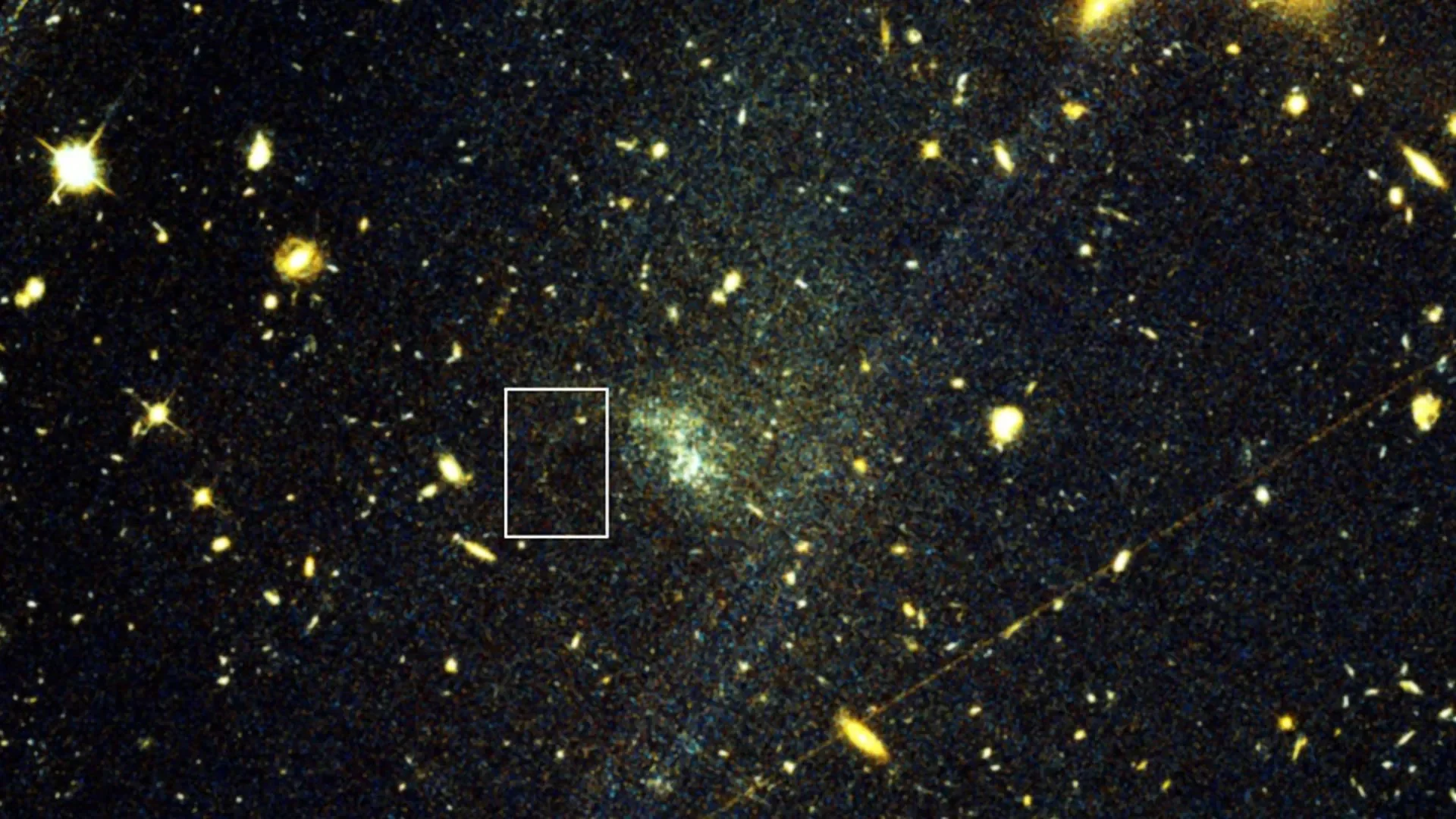
Oyashio: The First Candidate Globular Cluster Stream Beyond the Milky Way
Globular cluster stream candidate Oyashio is 72 pc wide, in galaxy UGC 9050-Dw1. Nature models cap the parent cluster's mass at 2.5 million solar masses.
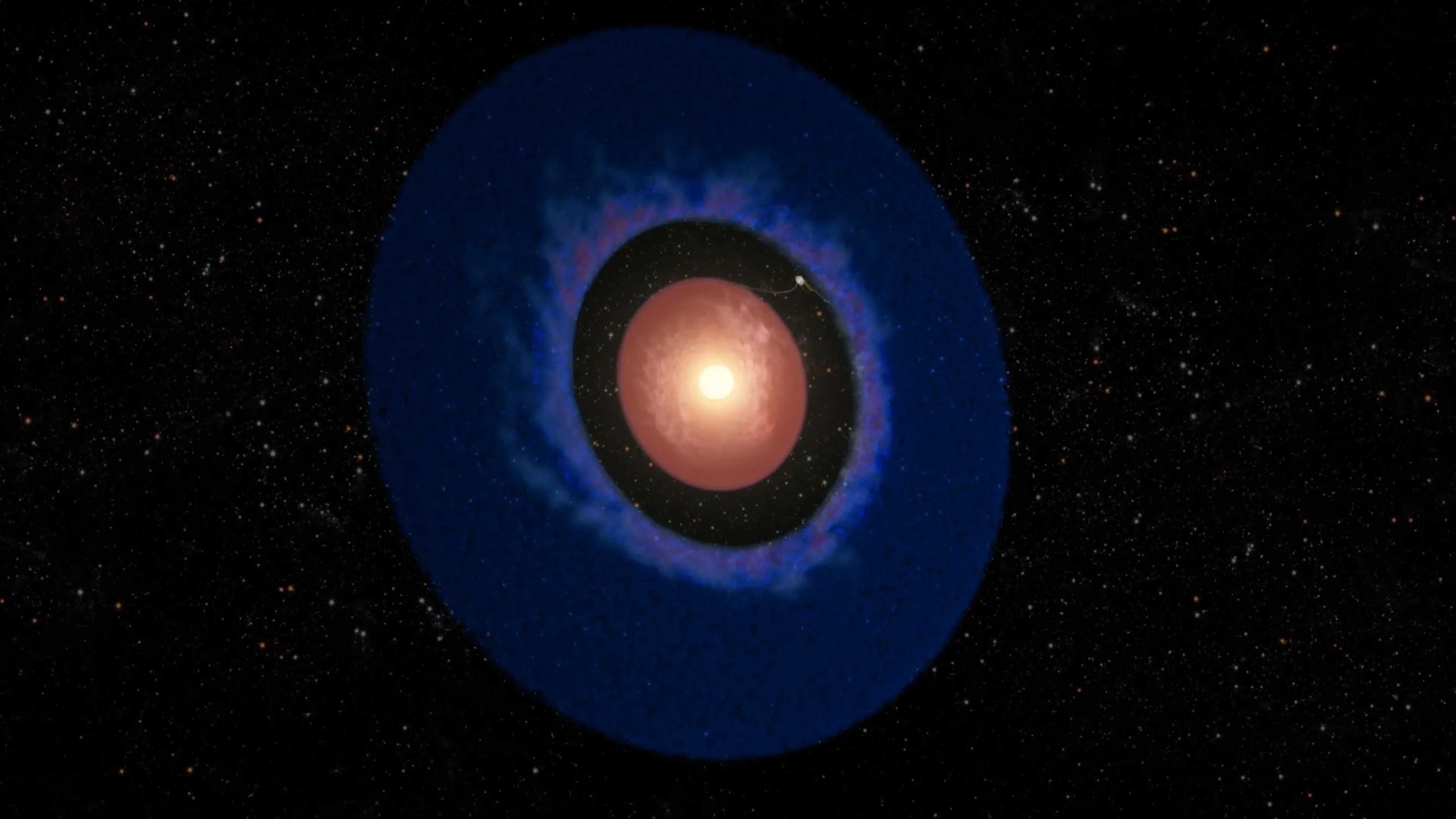
Elias 2-24 b Confirmed as the Youngest Known Exoplanet
Elias 2-24 b, confirmed via Keck, ALMA and VLT data, is under 1 million years old, roughly five times younger than the previous exoplanet age record.
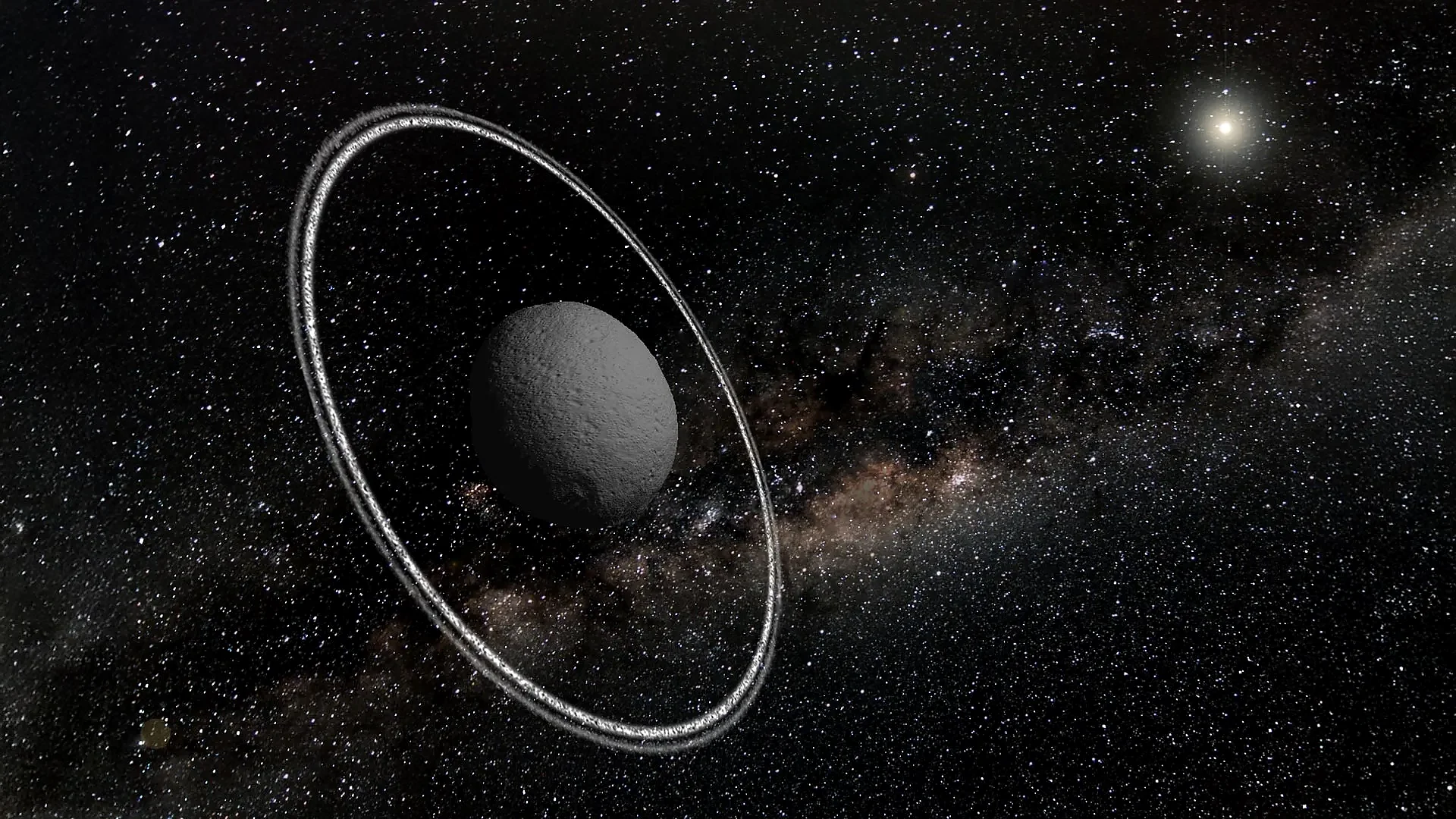
JWST Occultation Shows Chariklo's Two Rings Evolving in Opposite Directions
JWST's first predicted-and-observed stellar occultation reveals Chariklo's two rings changing in opposite directions within less than a decade.
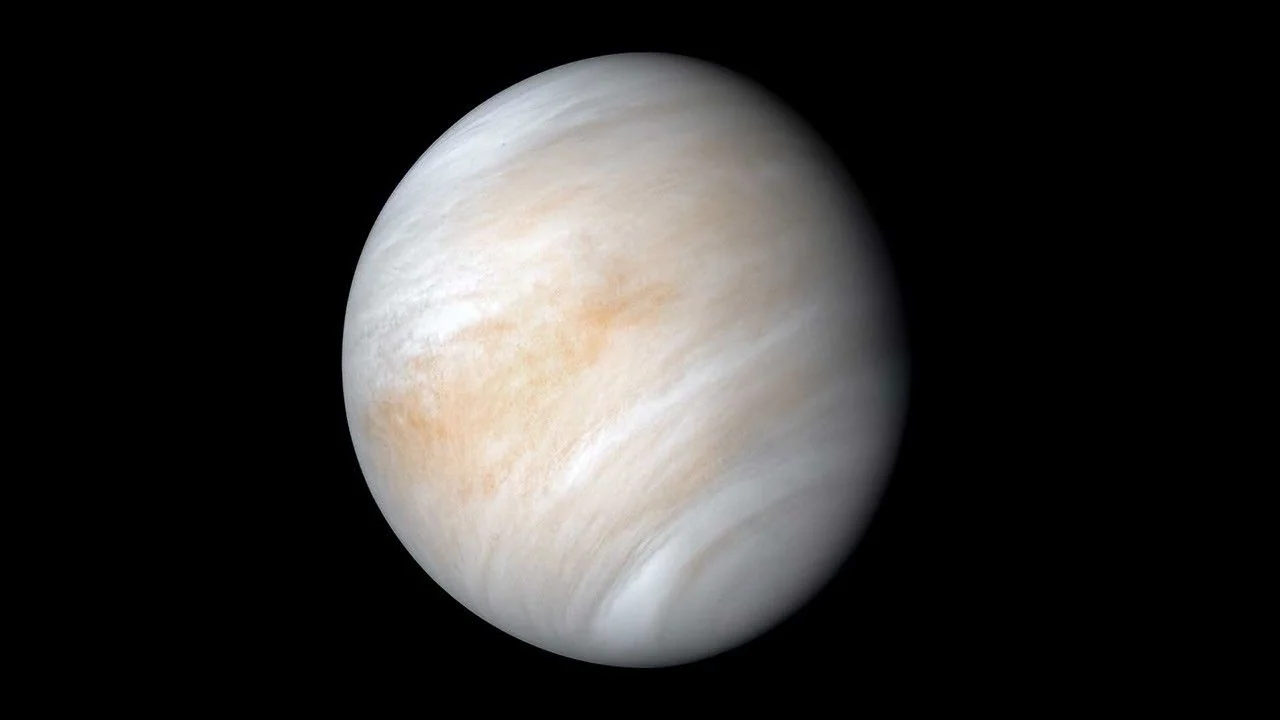
Why Venus's Pale Yellow Clouds Might Hide a Nearly Black Liquid
A new model finds Venus's cloud liquid must absorb UV light as strongly as concentrated pigments, narrowing the century-old 'unknown absorber' mystery.
Comments (0)
Please sign in to join the discussion.
No comments yet.
Be the first to share your perspective on this topic.