
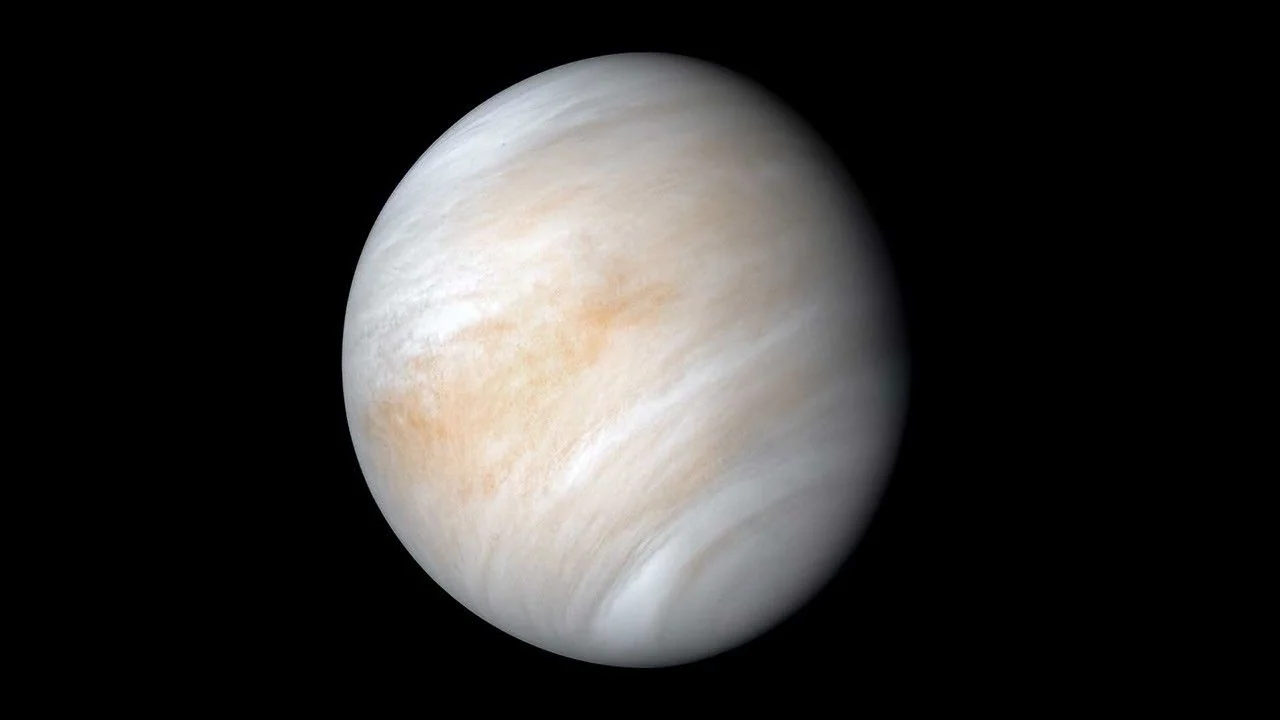
Every spacecraft image of Venus shows a smooth, pale yellow globe. A radiative-transfer model of Venus's cloud liquid calculates that the liquid inside its cloud droplets would need a decadic absorption coefficient of 1,278 per centimeter at 375 nanometers to explain what ultraviolet cameras actually see there, a figure high enough that a one-centimeter sample of that liquid would look close to opaque.
A Century of Dark Streaks Still Has No Chemical Owner
Ground-based astronomers first noticed dark, shifting patches on Venus's disk in ultraviolet light in the 1920s. The patches track the planet's roughly four-day upper-atmosphere superrotation and have never lined up cleanly with any single known gas or mineral. Researchers have proposed more than 20 candidates over the decades, including the sulfur compound OSSO, disulfur monoxide, ferric iron, and iron-sulfur minerals, and each has run into the same problem: none fully reproduces the 280-to-500-nanometer absorption band that instruments from Pioneer Venus to Akatsuki to the Hubble Space Telescope have recorded. The substance is still called, in the technical literature, the unknown absorber. The new paper, by Jan Spacek of the Foundation for Applied Molecular Evolution with Paul Rimmer, Janusz Petkowski, and Yeon Joo Lee of South Korea's Institute for Basic Science, does not try to name it. Instead it asks a narrower, testable question: given how much sunlight Venus's cloud tops actually reflect, how strongly must the liquid inside the cloud droplets themselves be absorbing light, independent of any guess about its chemistry.
Why a Pale Cloud Can Still Contain a Dark Liquid
The reason a model was needed at all is that reflected brightness and bulk absorbance are not the same measurement. Venus's cloud droplets are small enough to scatter incoming sunlight efficiently on their own, regardless of how dark the liquid inside them is. Spacek illustrated the effect with cigarette smoke: it looks pale from across a room because its particles scatter light well, but collecting that same smoke into a jar produces a dark, tar-like residue. Lee, who ran the radiative-transfer calculations at the Institute for Basic Science, built a multiple-scattering model of Venus's two known cloud-particle populations and its known absorbing gases, then calculated how absorbing the remaining liquid would have to be to match 2020 Akatsuki dayside reflectance data between 365 and 455 nanometers, a method described in the institute's research summary as separating what scattering explains from what the liquid itself must account for. The gap between the observed brightness and what gas absorption alone can explain is where the unknown absorber lives.
What Concentration a Real Absorber Would Need
The model's headline number, 1,278 per centimeter at 375 nanometers, translates into a concentration requirement once a specific molecule type is assumed. The authors compared it against several well-characterized light absorbers with published molar absorption coefficients. Small, efficient conjugated organic pigments come out cheapest: beta-carotene would need roughly 4.9 grams per liter, vitamin A about 7.2, chlorophyll a about 9.7, and quinine, a comparatively weaker absorber, about 73. A protein-bound porphyrin such as the heme in oxygenated hemoglobin would need around 158 grams per liter, in the same range as hemoglobin's own physiological concentration in human blood. An inorganic candidate such as ferric chloride, extrapolated linearly from a measured reference solution, would need roughly 1,300 grams per liter, a bulk fraction the authors call implausible for a cloud droplet that is mostly sulfuric acid and water. Plotted on a log scale, because the six figures span nearly three orders of magnitude, the gap between organic and inorganic candidates becomes easy to see at a glance.
The pattern holds across every entry. Molecules with large, conjugated electron systems, the kind chemists associate with strong pi-to-pi* transitions, need far less material to hit the same absorbance target than a diffuse inorganic species does.
Why Ferric Chloride and Tar-Like Mixtures Still Don't Fit
Ferric chloride has drawn attention before because its absorption spectrum has roughly the right shape relative to Venus's observed curve, according to laboratory measurements published last year. Spacek's team argues shape is not enough on its own. Even under a best-case linear extrapolation, matching the modeled coefficient would require ferric chloride to make up more than its own weight in liquid per liter, a concentration the authors call chemically implausible for an aerosol that is overwhelmingly sulfuric acid and water. Organic material runs into a different problem. The same research group previously showed in laboratory experiments that simple molecules such as formaldehyde, dissolved in concentrated sulfuric acid, do not stay simple. Over hours to weeks they react further into dark, tar-like mixtures whose absorption spreads evenly across the entire visible spectrum, resembling graphene oxide or crude oil. That broad, featureless absorption does not match Venus's observed curve, which drops sharply past roughly 455 nanometers. Whatever produces the unknown absorber, the model implies, is more likely a defined, chemically stable molecule or a narrow family of them than an undifferentiated tar.
What the Rocket Lab Fluorescence Probe Can and Can't Settle
The model rests on assumptions the authors state directly: that the absorber sits in a six-kilometer layer just below the 65-kilometer cloud tops, and that it is mixed evenly between the atmosphere's two main particle-size populations. Loosening either assumption would shift the required absorption coefficient, and the authors present their version as a conservative starting estimate rather than a final answer. The paper also cannot say from remote data alone whether the collected liquid would look pale yellow, deep amber, or close to black to the human eye, only that its absorption across the 365-to-455-nanometer window has to be extreme. A planned Rocket Lab mission carrying an autofluorescence nephelometer is designed to test part of this picture directly, shining a 440-nanometer laser into Venus's cloud droplets and watching for the fluorescence that conjugated organic molecules, but no known inorganic candidate, would produce. A positive signal would support the organic hypothesis. It would not, by itself, identify which molecule is responsible, a question the authors say will likely require an atmospheric sample-return mission to answer.
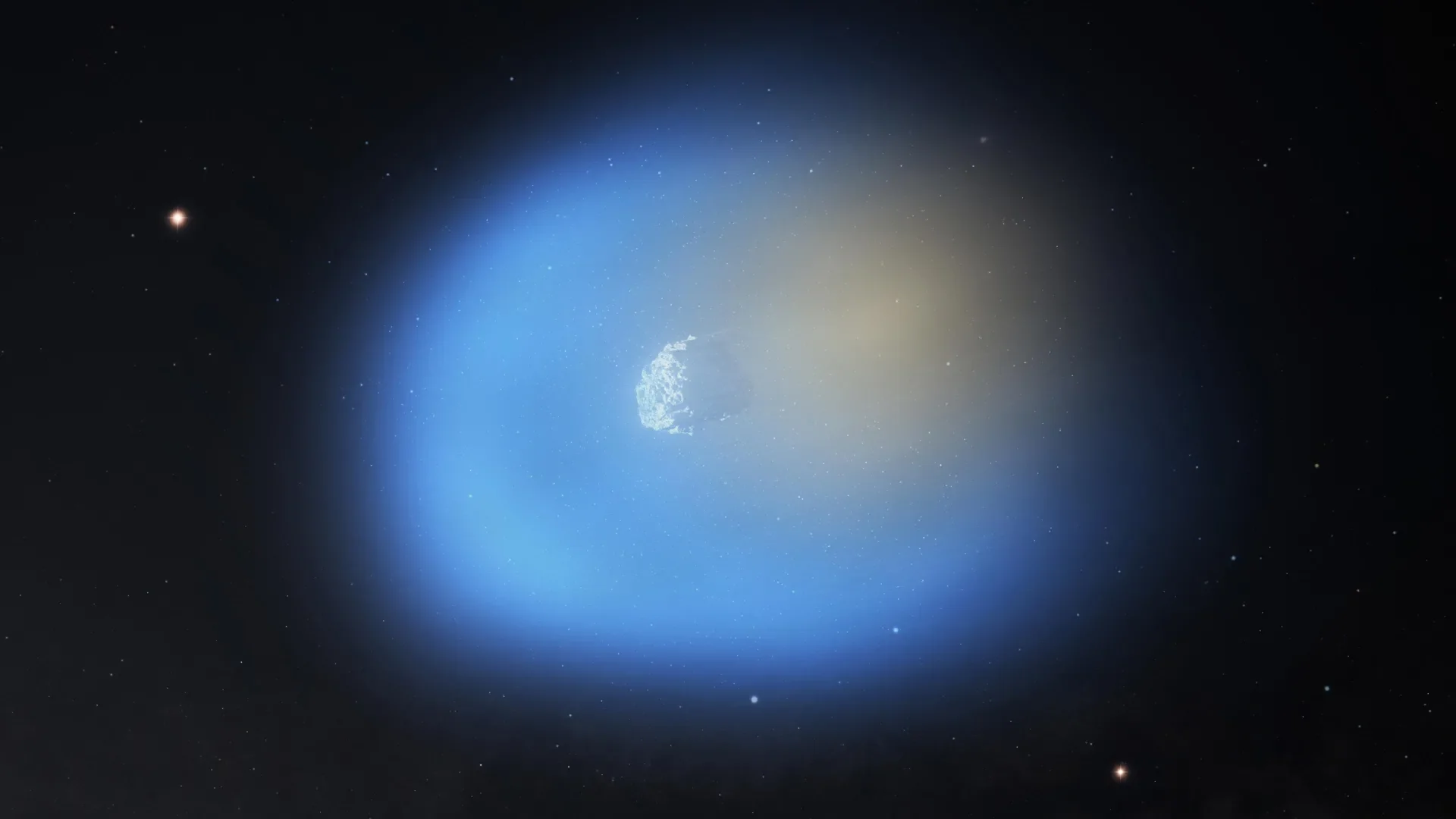
3I/ATLAS's Methanol-to-Hydrogen-Cyanide Ratio Reaches 124, ALMA Data Show
ALMA's Atacama Compact Array measured interstellar comet 3I/ATLAS's methanol-to-HCN ratio at 124 and 79 on two dates, among the highest recorded in a comet.

A Buried Ultramafic Layer Points to a Whole-Crust Magma System on Mars
NASA InSight data show a melt-depleted ultramafic layer 24–38 km down in Mars's crust, evidence of a magma system that once ran through the entire crust.
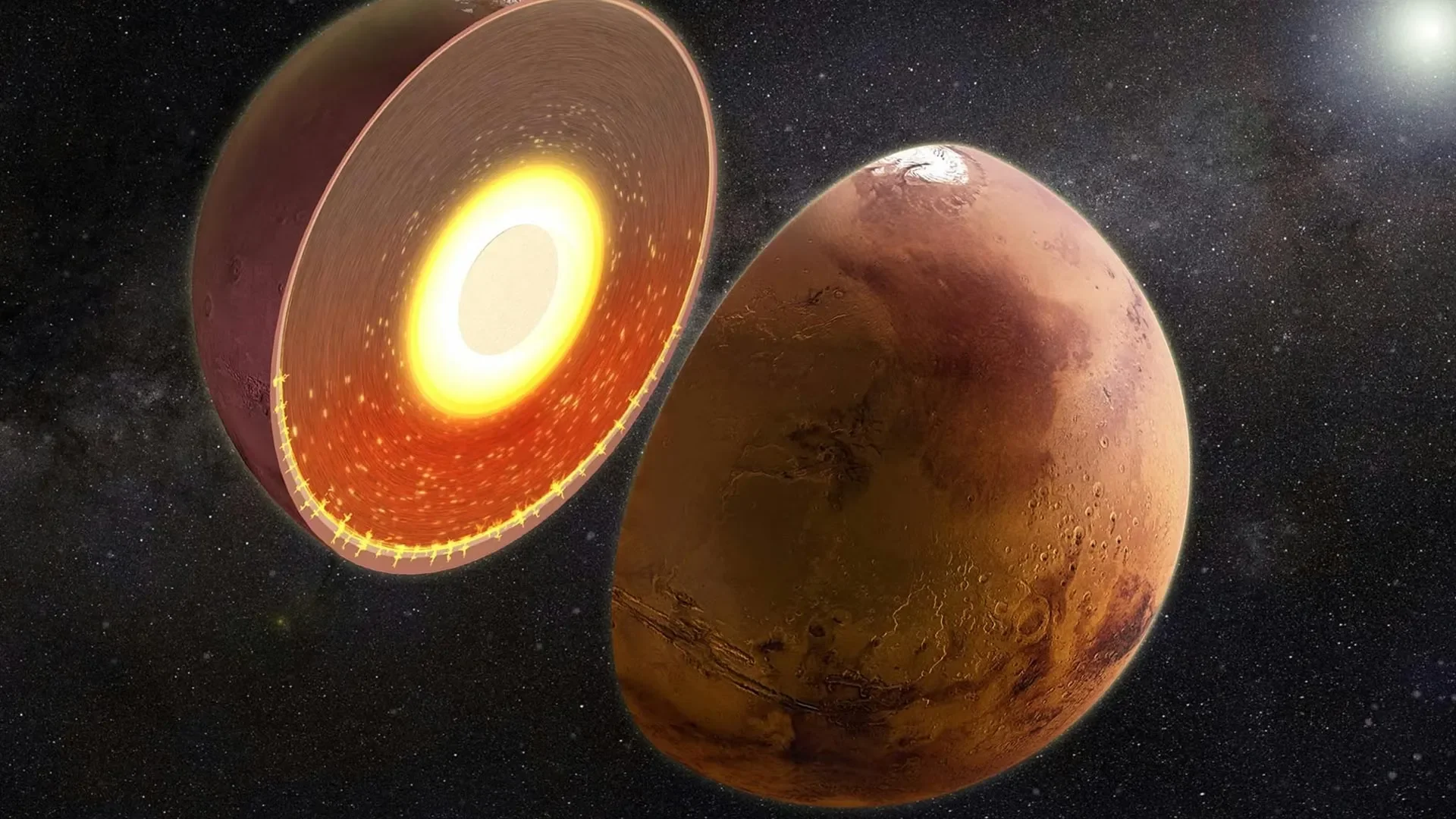
Mars's Southern Mantle Is Hundreds of Degrees Hotter Than Its North, New Gravity Study Finds
New tidal-tomography analysis of Mars orbiter data finds its southern mantle runs 200–400°C hotter than the north, tied to the ancient crustal dichotomy.
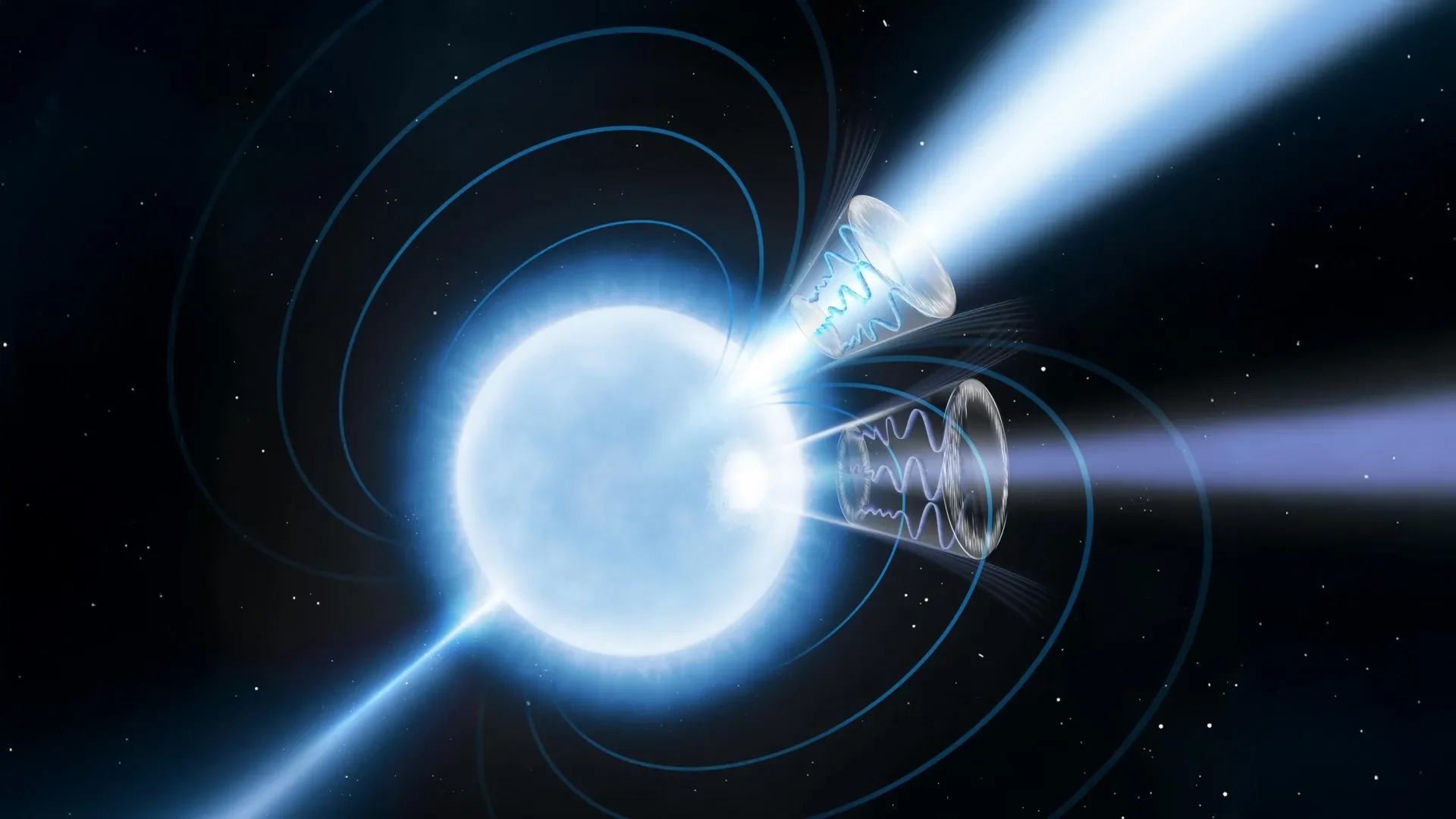
NASA's IXPE Measures 80% X-Ray Polarization From a Magnetar, Testing a 90-Year-Old Quantum Prediction
NASA's IXPE recorded up to 80% X-ray polarization from magnetar 1E 1547.0−5408, the strongest evidence yet for vacuum birefringence, a 1936 QED prediction.
Comments (0)
Please sign in to join the discussion.
No comments yet.
Be the first to share your perspective on this topic.