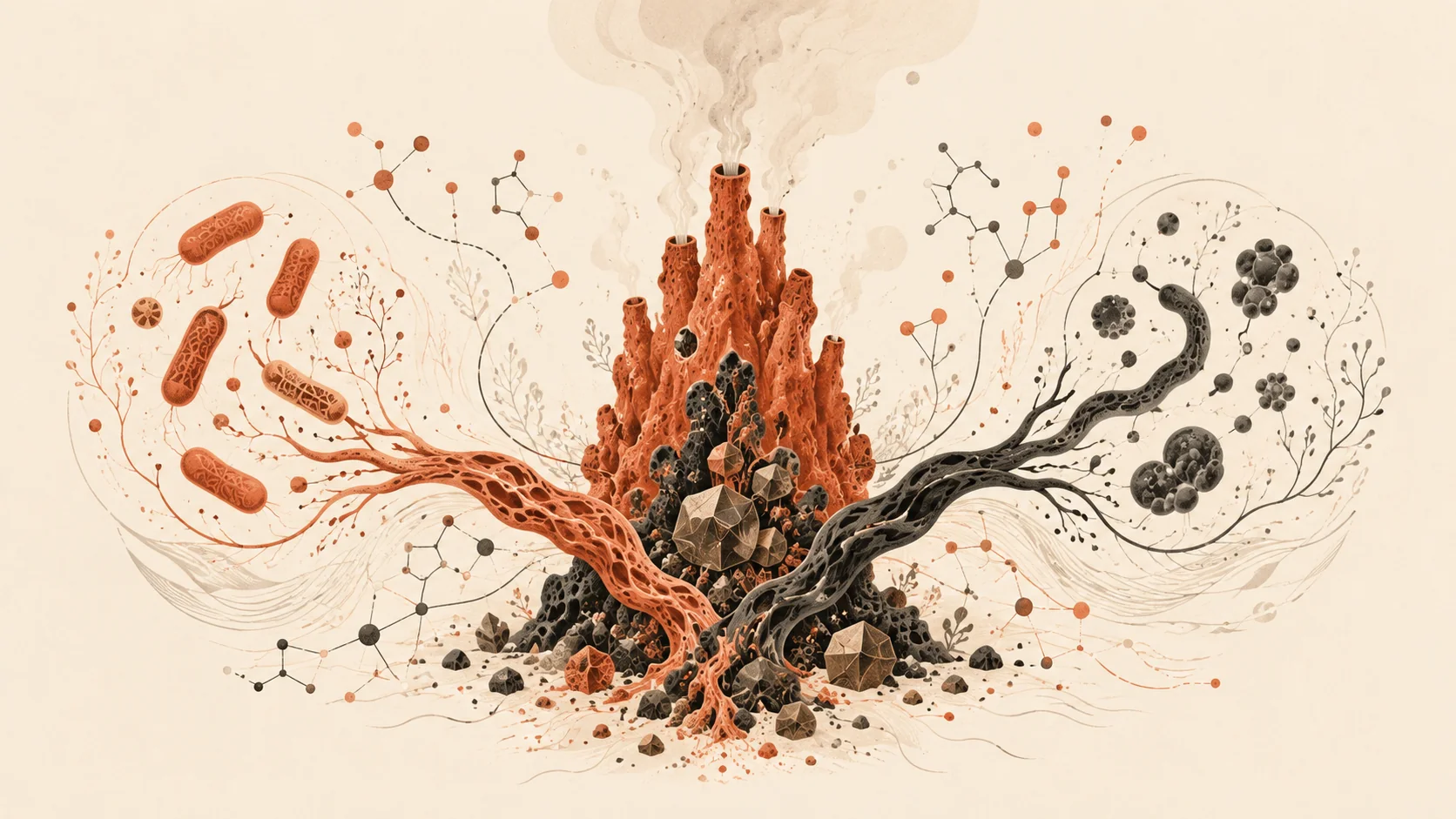
A team led by biologists at Heinrich Heine University Düsseldorf has reconstructed which of roughly 400 core metabolic reactions the last universal common ancestor, or LUCA, could actually run with enzymes. The reconstruction, described in the peer-reviewed enzyme-mapping study in Science Advances, finds that LUCA's metabolism was missing large stretches of amino acid and cofactor synthesis, and that bacteria and archaea each filled those gaps on their own after splitting apart. The authors read that pattern as evidence for two separate transitions into free-living cellular life, not one.
LUCA's Enzyme Toolkit Covered Nucleotides but Not Amino Acids or Cofactors
To trace enzyme origins, the researchers clustered protein sequences and structures from 552 bacterial and 401 archaeal genomes into families and mapped them onto the reactions that build amino acids, nucleotides, and cofactors from simple gases and mineral salts. Of the resulting enzyme families, 166 could be traced back to LUCA itself. Another 89 arose independently on the branch leading to the last bacterial common ancestor, and 38 arose independently on the branch leading to the last archaeal common ancestor, with 37 more too thinly distributed to assign confidently. Nucleotide synthesis came out essentially complete in LUCA. Amino acid and cofactor synthesis did not, requiring enzyme inventions that came later and separately in each lineage. The pattern echoes an earlier, independent finding about the ribosome itself, which also grew from a simpler shared core through separate additions in bacteria and archaea.
That split matters because it sets up the paper's central question: if enzymes weren't there yet, what filled the gap? The answer the authors propose is native metals such as iron, cobalt, and nickel, deposited naturally in serpentinizing hydrothermal vents, which can catalyze water-based reactions that chemically mimic what the missing enzymes would eventually do.
Phosphite Reacting Over Palladium Stands in for ATP
Modern cells run on ATP, but ATP itself is a complex molecule built by enzymes, so it can't have supplied energy before those enzymes existed. The paper's new contribution is showing a plausible substitute: phosphite, a reduced form of phosphorus that occurs in serpentinizing rock, phosphorylating biological molecules directly over metal catalysts in water. Nickel converted phosphite to phosphate at roughly 75 percent yield overnight, while iron, cobalt, and magnetite did not. Nickel alone could nudge AMP toward ADP, but only to a concentration of about 6.74 micromolar after four days. Switching to palladium, also native to serpentinizing systems, raised that yield to roughly 8 millimolar ADP after three days, a jump of well over a thousandfold from the nickel result, and palladium also converted serine to phosphoserine at 42 percent yield in under a day. No ammonium, cyanide, or other condensing agents were needed.
The gap between nickel and palladium is a detail the paper reports in passing, but it matters for the argument: if the vent-metal explanation depends specifically on palladium, then it depends on a metal that's genuinely rare in Earth's crust, a point the authors address directly by noting that selenium is comparably rare yet still made it into the genetic code as selenocysteine.
Five Enzymes Evolved Twice, Once in Bacteria and Once in Archaea
The strongest direct evidence for separate post-LUCA assembly comes from cases where bacteria and archaea catalyze the identical reaction using enzymes with unrelated protein folds, meaning the gene wasn't simply inherited and modified but invented from scratch on each branch. The team found five such pairs: alanine dehydrogenase, shikimate kinase, 3-dehydroquinate dehydratase, a diphosphokinase involved in pterin cofactor synthesis, and riboflavin synthase. Structural alignment scores for each pair fell at or below the threshold normally used to call two folds unrelated, and the broader bacterial-versus-archaeal split in enzyme distribution was unlikely to have arisen by chance, according to a permutation test the authors ran across a million resamples.
The Metal-Catalysis Evidence Is Suggestive, Not a Replay of Deep Time
Only a fraction of the reaction network has been tested this closely. Among the sampled core reactions, 37 have been reproduced exactly under metal-catalyzed, vent-like conditions in a lab. A further 106 show the correct reaction type without matching the specific substrates studied here, and 23 more proceed from the same starting materials to the same products but through a different number of steps or a different order. Counting every category together, the authors put the current tally at 46 percent of core reactions with some demonstrated or plausible nonenzymatic parallel, which leaves more than half the network still unaccounted for by this mechanism.
That gap is also why the "two origins of life" framing needs a qualifier. The claim rests on which enzymes living microbes share today and on flask chemistry standing in for a vent that no longer exists in its original form, not on anything preserved directly from 4 billion years ago. Archaeal enzymes are also less thoroughly annotated than bacterial ones in current databases, which the authors acknowledge could be inflating the apparent excess of bacteria-specific inventions. The team's stated next step is to try running a connected stretch of the reaction network on metal catalysts alone, rather than testing one reaction at a time, which would be a more direct test of whether serpentinizing vent chemistry could have carried a real cell's worth of metabolism rather than isolated steps of it.
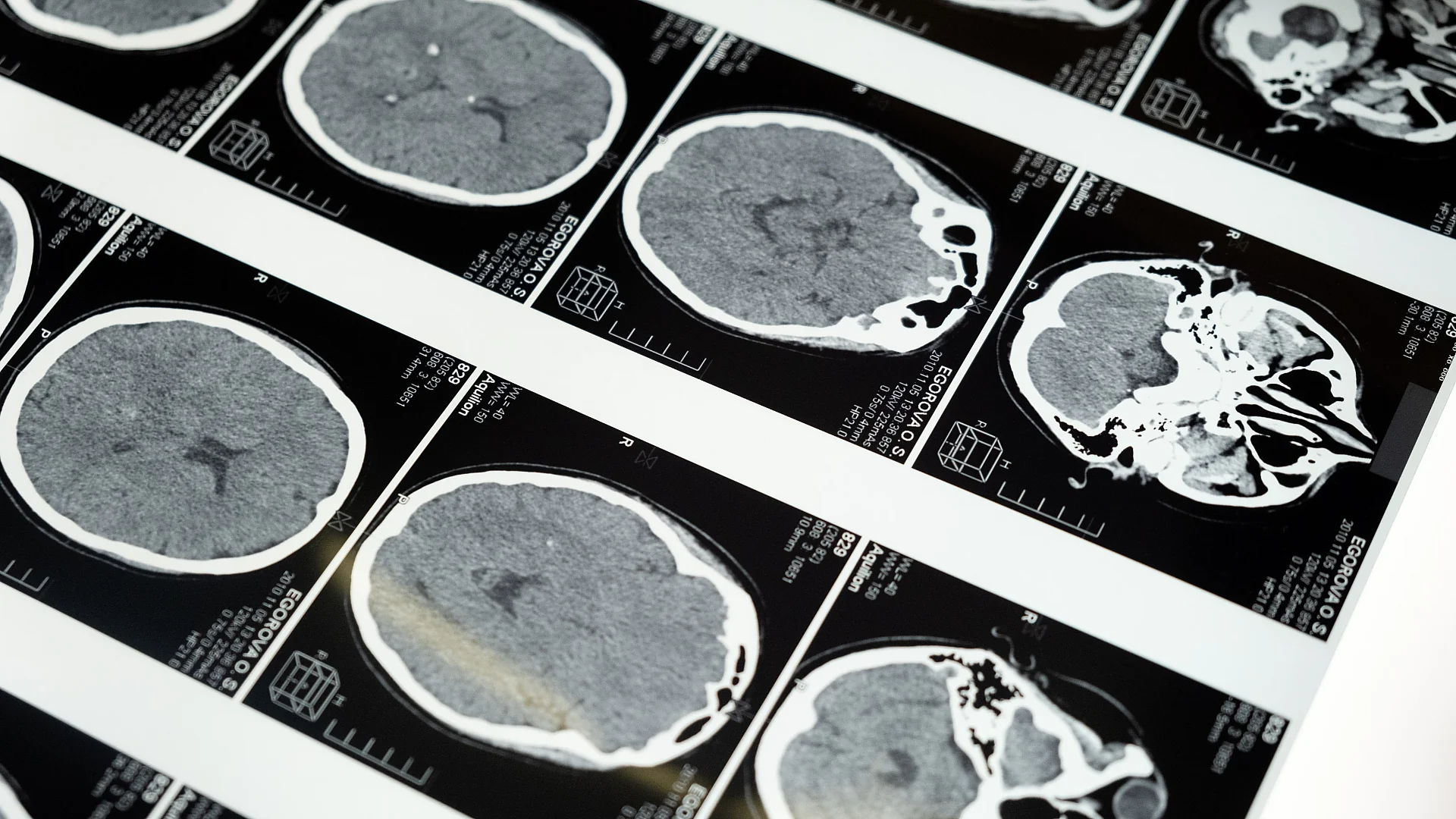
Five Candidate Depression Phenotypes Emerge From MEG Brain Oscillations
MEG depression phenotypes: 263 patients cluster into five oscillation profiles, yet brain–symptom links explain only 3–4% of shared variance in the cohort.
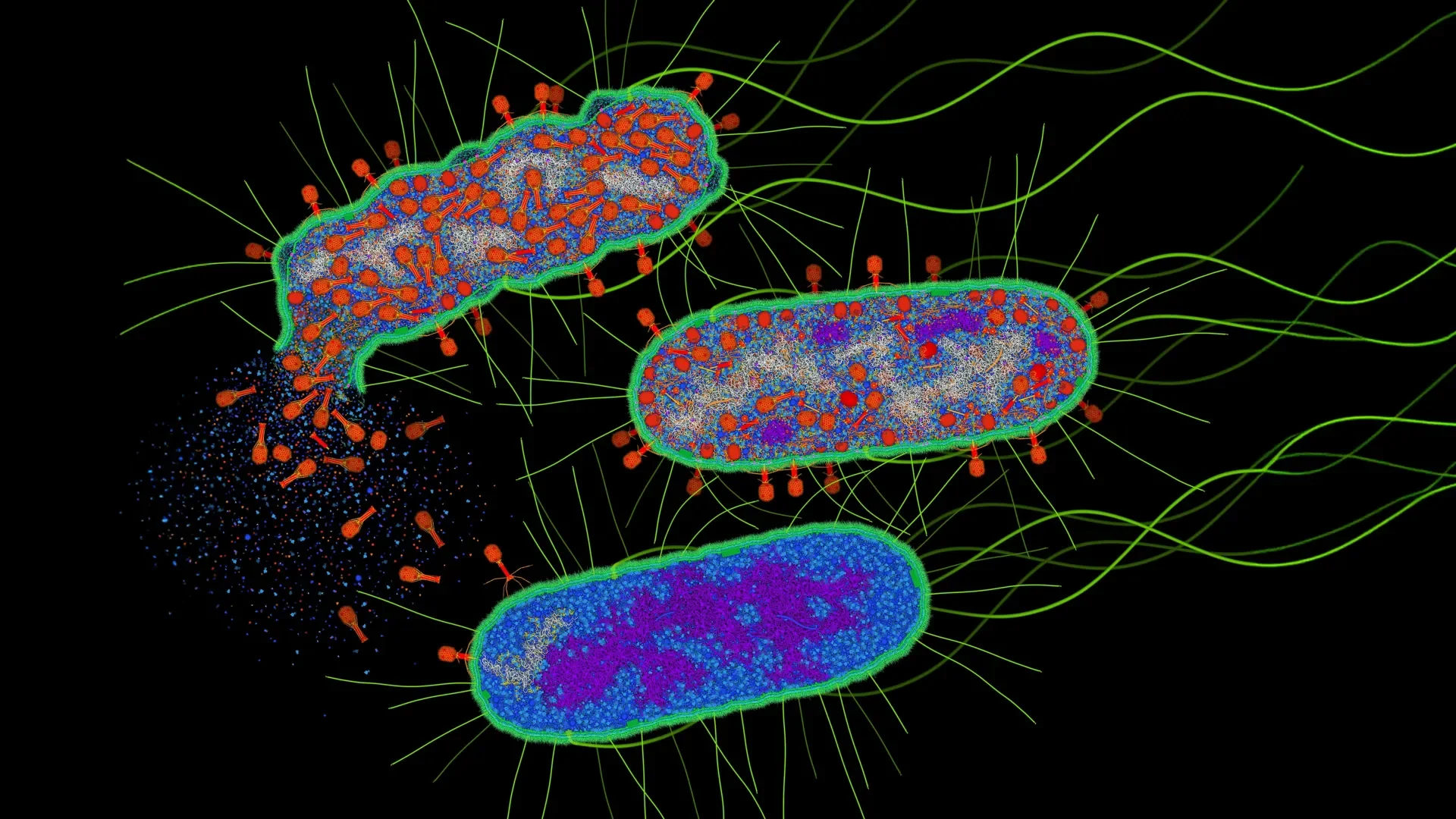
A 30-Amino-Acid Loop Lets Bacteria Detect Phage Proteases and Trigger CBASS Defense
Phage proteases activate CBASS by cutting a ~30-residue loop in bacterial CD-NTase enzymes; a Science study maps the loop across about 24% of operons.
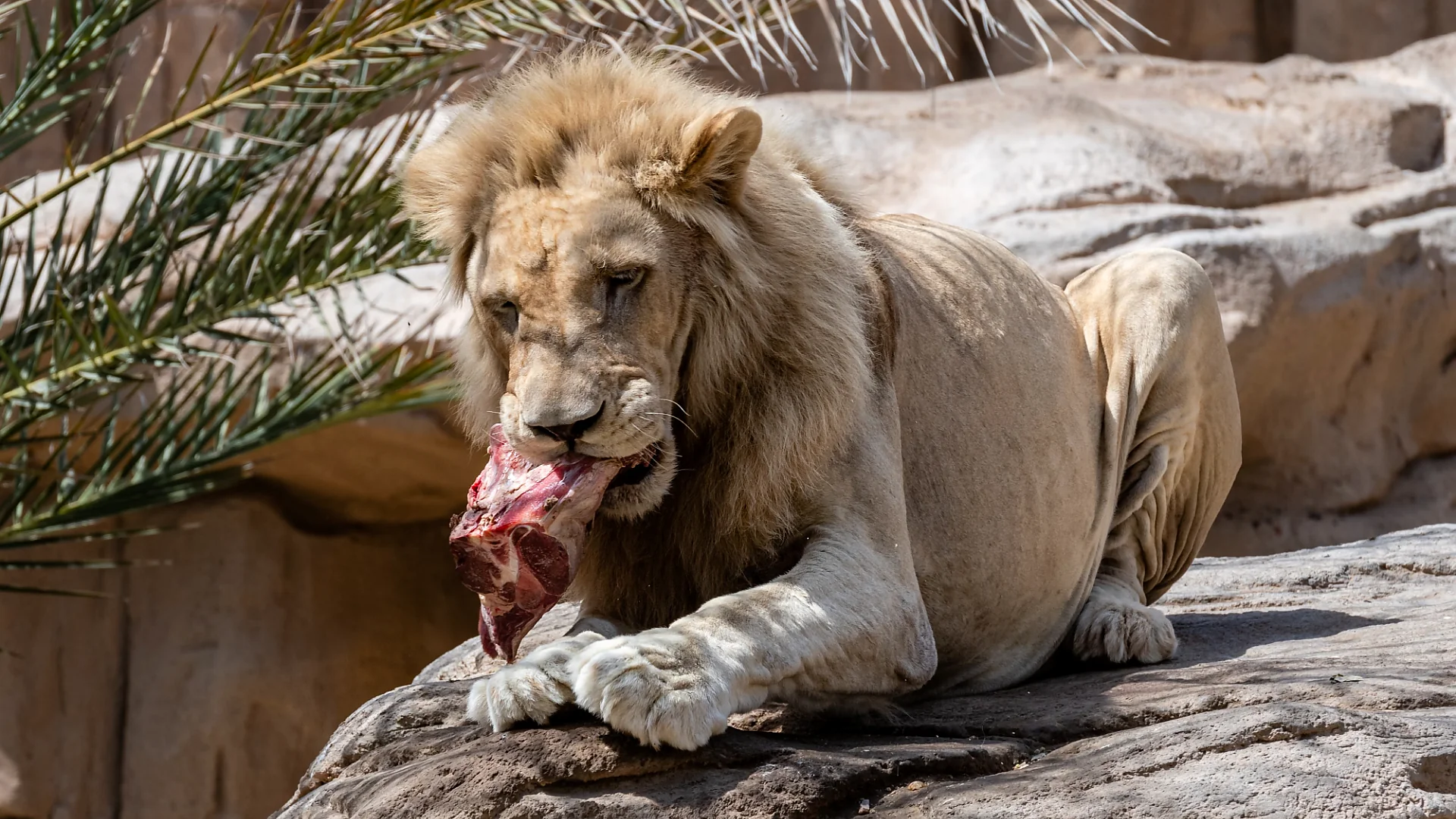
Nine-Day Carcass Feeding Nearly Tripled Zoo Lions' Eating Time and Raised Pacing
Lions at an Australian safari park fed whole carcasses every nine days ate nearly three times longer, rested more, and paced more in month two of a 2026 study.
A Seven-Day Water Fast Moved 1,044 Blood Proteins, and Day 3 Was the Turning Point
A 7-day water fast changed 1,044 blood proteins, few before day 3. A second 2025 cohort shared 49 significant hits with no conflicting direction of change.
Comments (0)
Please sign in to join the discussion.
No comments yet.
Be the first to share your perspective on this topic.