
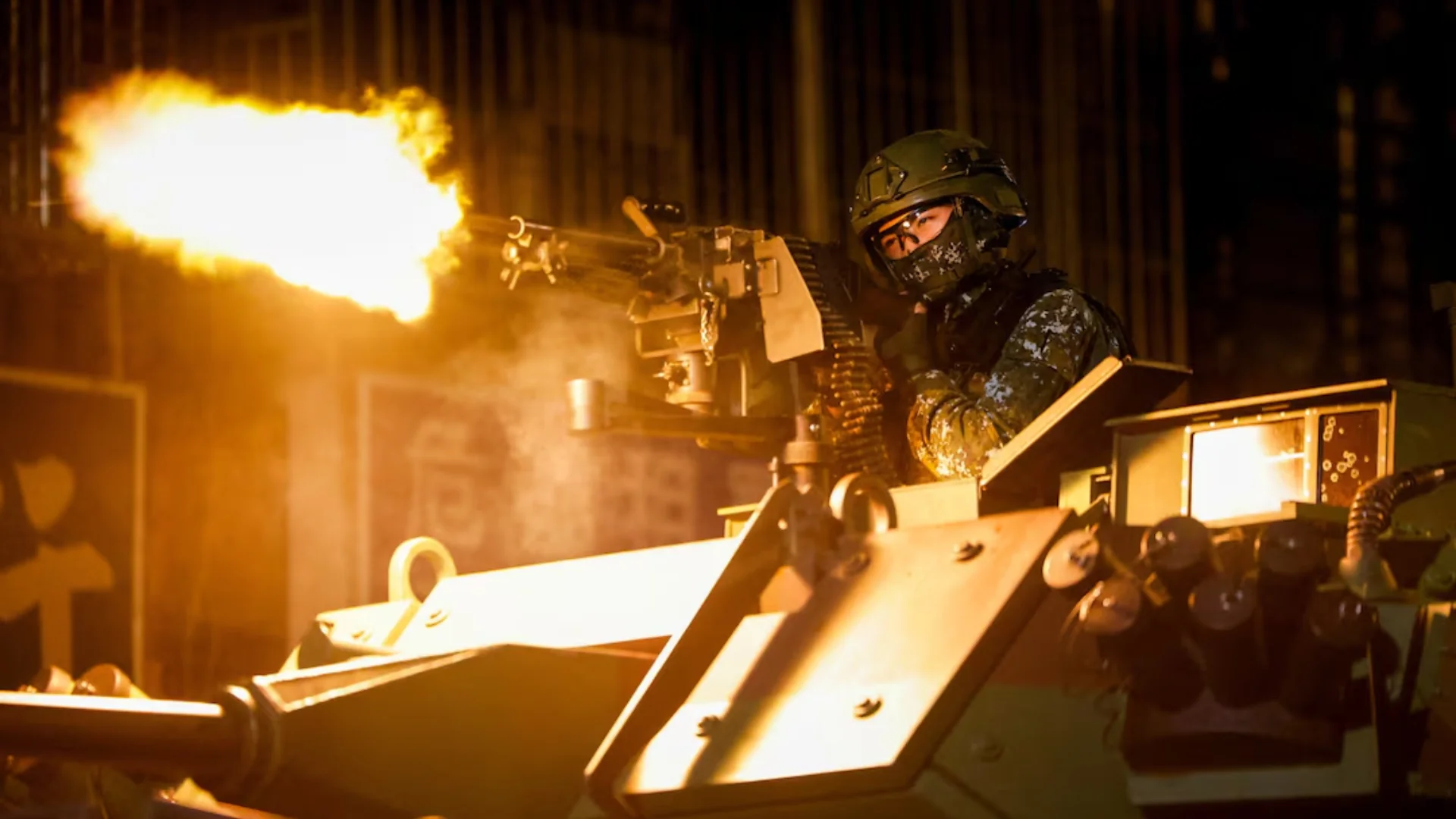
Taiwan closed its 10-day Han Kuang 42 war games this week having tested, for the first time, a joint navy-coast guard drill to break a Chinese blockade, alongside tank crews hiding in construction yards and a fast-scaling drone program modeled on Ukraine.
China's radio queries are building a "quasi-quarantine" picture
Chinese coast guard vessels queried roughly 200 merchant ships east of Taiwan over a recent month, and Taiwan's Coast Guard Administration recorded 55 Chinese government vessel sightings in June, an 83 percent jump from the 30 recorded in May and a 120 percent increase over the 25 recorded in June 2025. A Tamkang University researcher writing for the Jamestown Foundation calls the emerging pattern a "quasi-quarantine": Beijing does not need a single ship to change course for the operation to succeed, since the radio queries on the maritime distress channel build a traffic-intelligence archive of vessel identities, cargo and flag states that would have direct value in an actual blockade. Taiwan's coast guard, which folds into the navy in wartime, is expanding to answer that pressure, with a target of 141 new ships by the end of 2027 and new stealth-capable Anping-class corvettes carrying land-attack missiles. President Lai Ching-te has called for over $13 billion in coast guard and military spending that includes new "kamikaze" sea drones.
Han Kuang 42 rehearses the invasion Taiwan fears most
This year's drill integrated counter-blockade drills with the traditional invasion scenarios that Han Kuang has run for decades, plus urban resilience elements, and mobilized more than 5,000 reservists across the exercise period from August 5 to 14.
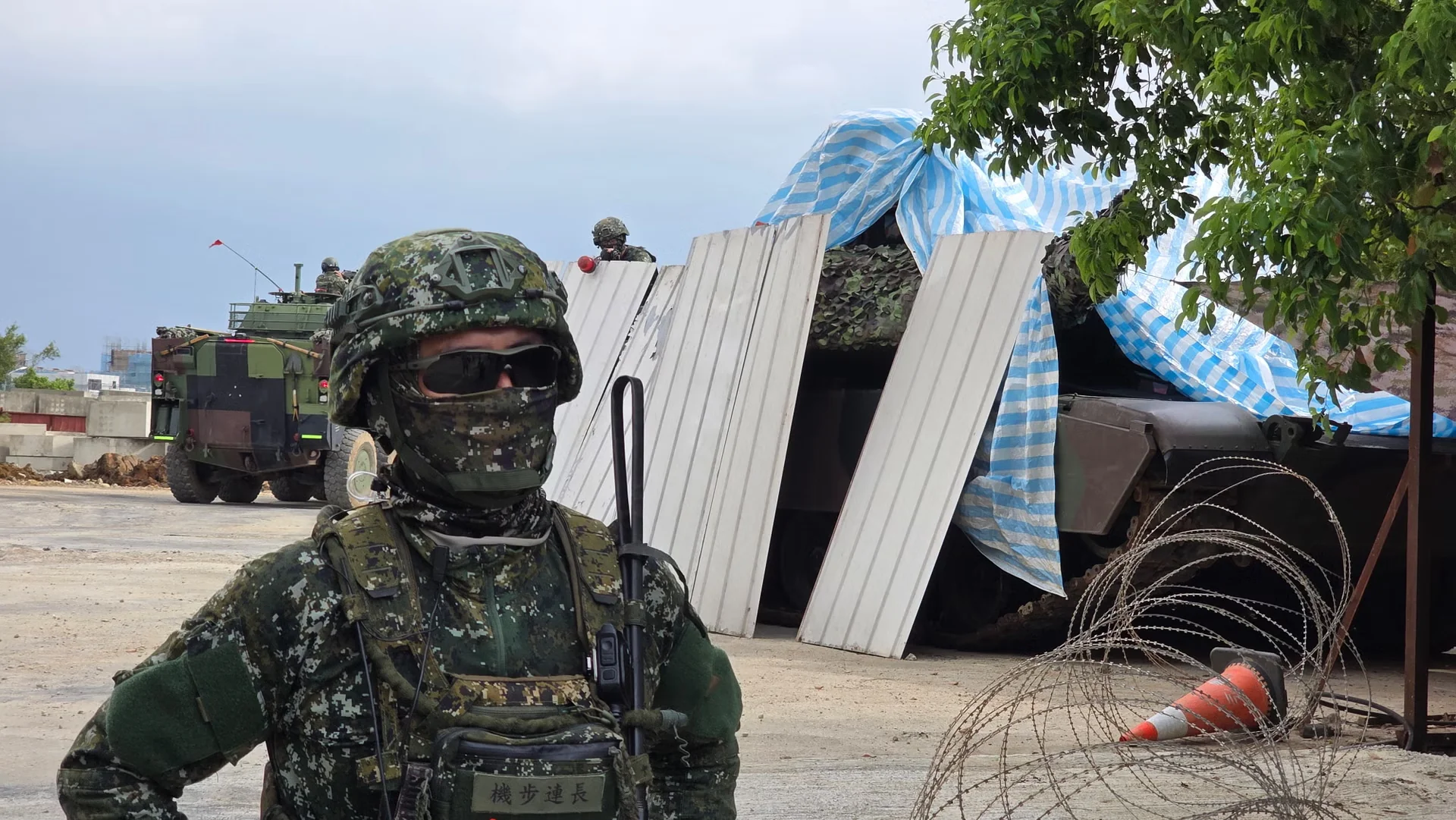
On its third day, four M1A2T Abrams tanks and six CM-32 Yunpao armored vehicles rolled onto the tarmac at Taiwan Taoyuan International Airport, rehearsing a scenario built directly on Russia's failed 2022 attempt to seize Ukraine's Hostomel Airport as an airbridge. Five days later, on Kaohsiung's waterfront, the military deployed special-operations assault boats and a reconnaissance drone alongside a missile-capable Coast Guard vessel to simulate stopping an amphibious landing, with President Lai inspecting from the bridge of an attack missile boat. The exercise closed with two firsts on consecutive days: soldiers erected metal barricades and concrete obstacles on routes leading to a Taipei bridge expected to be a target in any assault on the capital, and the navy worked with coast guard vessels for the first time in an anti-blockade escort drill, with a minesweeper clearing a channel to guide a simulated merchant ship into an east-coast port.
A hidden armored reserve and a drone "hellscape"
Rather than massing tanks for open-field battle, Taiwan is dispersing them. In a Taoyuan construction yard, a platoon of M1A2T Abrams sat under tarps and debris while crews refueled the tanks' gas-turbine engines with civilian traffic passing a few feet away, only months after Taiwan received the last of 108 tanks from the United States in April. The logic is asymmetric rather than head-on: China fields roughly 6,000 tanks, including about 2,200 Type 96s and 500 Type 15 light tanks, plus more than 1,000 Type 5 amphibious assault vehicles, so going tank-for-tank against that mass is not the plan. The same asymmetric logic extends to the skies and the strait. Taiwan has stood up a Littoral Combat Command to integrate drones, mobile missiles and artillery into a coastal shield, aiming to locate and strike Chinese forces before they can reach shore, in a strategy US commanders call a "hellscape". Analysts tracking the rollout caution that doctrine, training and defenses against Chinese electronic warfare remain the open gaps behind the hardware buildout, a limitation this article's sourcing discloses rather than glosses over.
Record budgets try to keep pace with the buildout
None of this comes cheap, and the spending trend is the clearest measure of how seriously Taipei is treating the threat. SIPRI confirmed Taiwan's 2025 defense spending at $18.2 billion, up 14 percent in real terms, and Taiwan's FY2026 regular Ministry of National Defense budget hit a record NT$949.5 billion, about $30 billion. Lawmakers passed that alongside a separate special defense budget of NT$780 billion, about $24.8 billion, short of the NT$1.25 trillion the Lai government had sought but more than the opposition's initial counteroffer, pushing combined defense-related outlays above 3 percent of GDP for the first time. Cabinet is now weighing an even larger figure for next year: a semi-official outlet reported Taiwan plans to spend a record NT$1.1 trillion, about $34.1 billion, on its military in 2027, again above 3 percent of GDP, a figure the government has not yet formally enacted. Washington is pressing for more still; the head of US Indo-Pacific Command has tied a roughly $122 billion Pacific requirements request directly to the pace of China's own missile production, underscoring that Taipei's record budgets are being measured against a moving target, not a fixed one.
Taken together, the four tracks point in the same direction: Taiwan is no longer treating gray-zone pressure, invasion drills, hidden armor and drone acquisition as separate problems with separate budgets. Han Kuang 42 was the first exercise to rehearse them as one deterrence system, and the 2027 budget request is the clearest signal that Taipei expects to keep paying for it.
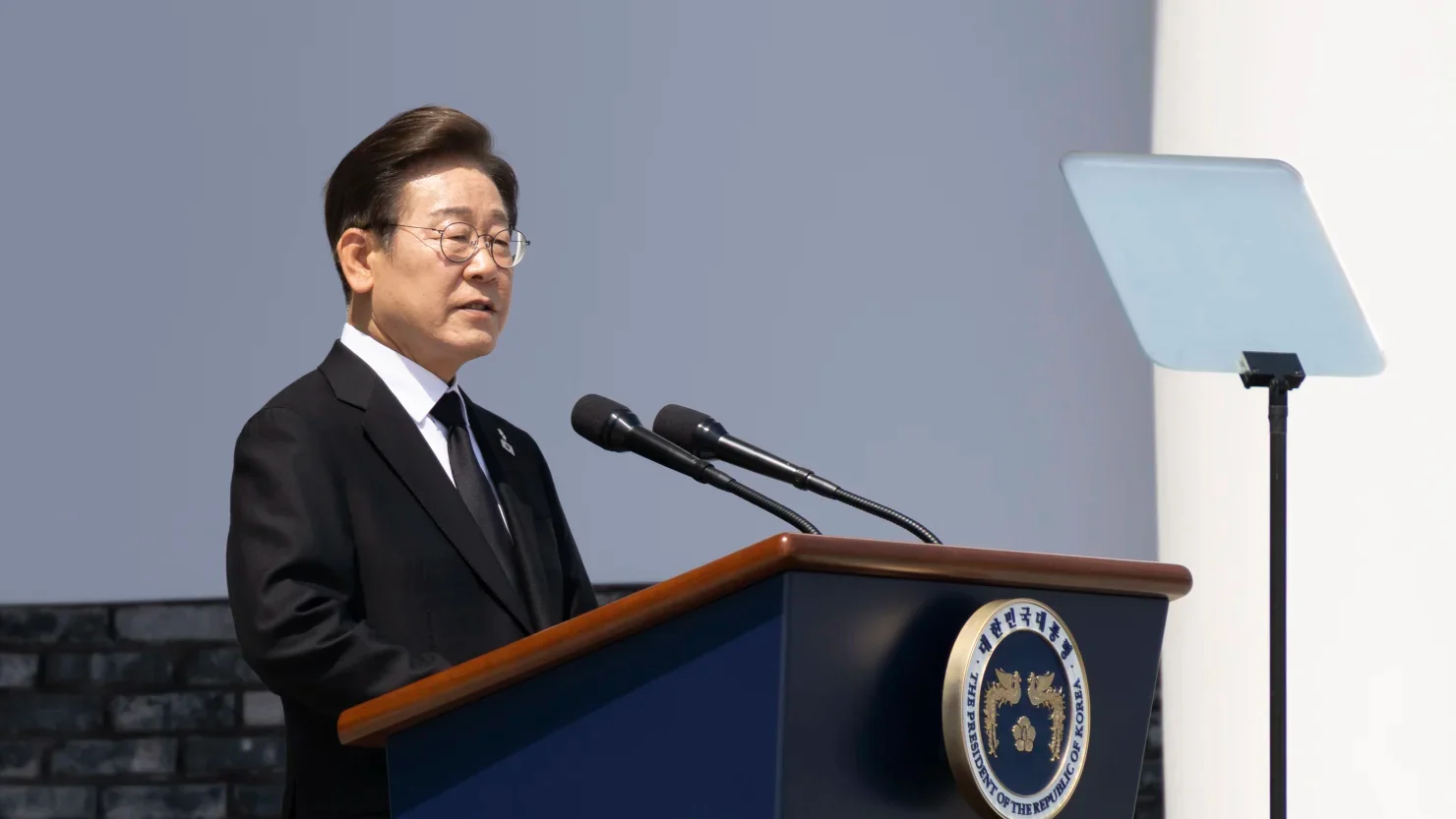
Trump Orders Korea Drill Cuts, Ties Move to Kim Ties and a Stalled $350 Billion Pledge
Trump scaled back Ulchi Freedom Shield citing North Korea ties and Iran refusal, as a new report links the cut to Seoul's slow $350 billion investment pledge.
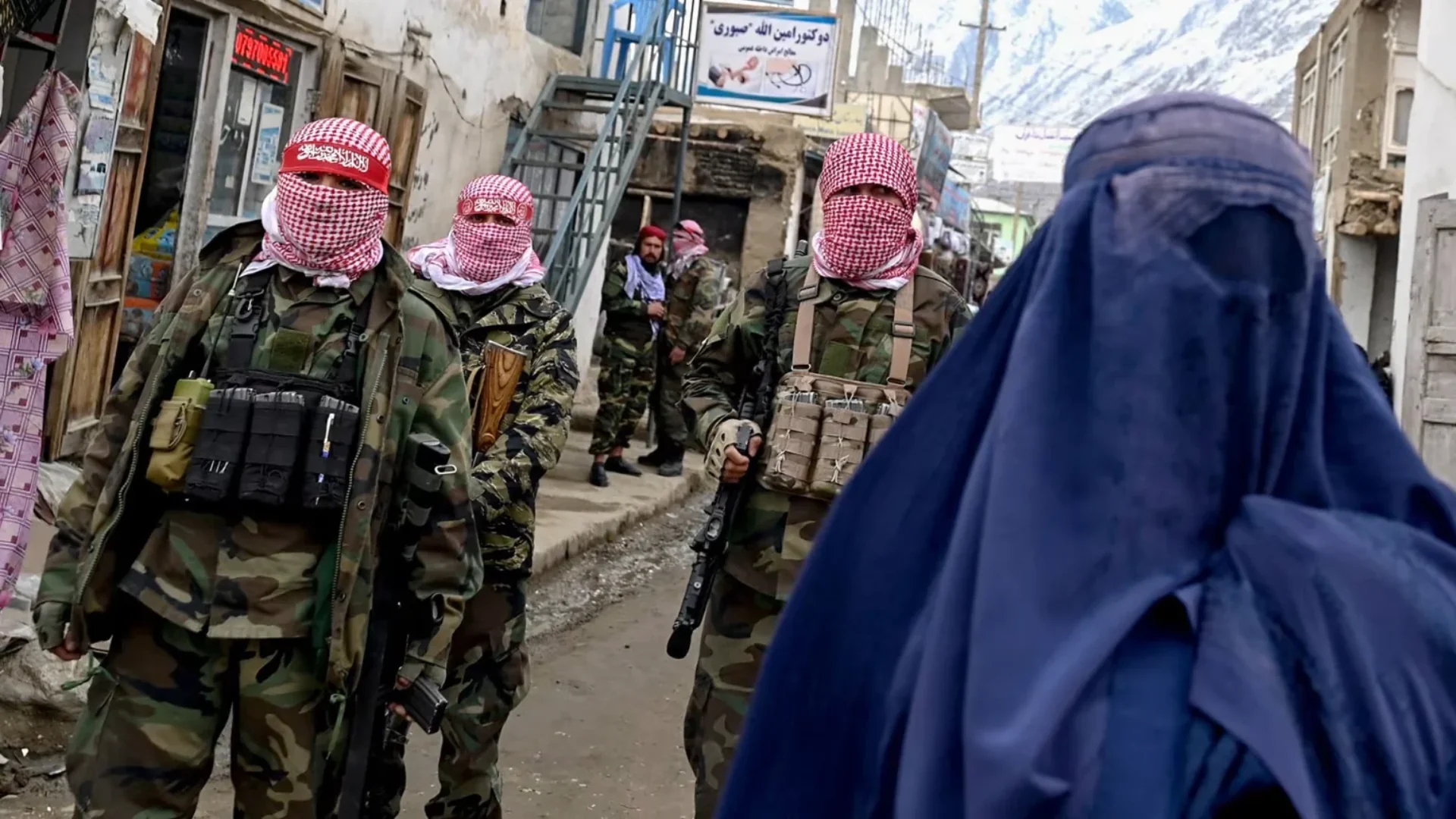
Five Years After Taliban Takeover, 2.4 Million Afghan Girls Remain Barred From School
UNESCO says Afghan girls' exclusion from secondary school grew by 200,000 in a year, as Russia, China and the UAE deepen ties with the Taliban.

Could AI Create a "Permanent Underclass"? What the Data Actually Shows
Stanford payroll data show AI-exposed 22-25 year-olds losing jobs at 3.8% a year, while wages diverge by income. What that means for a 'permanent underclass.'

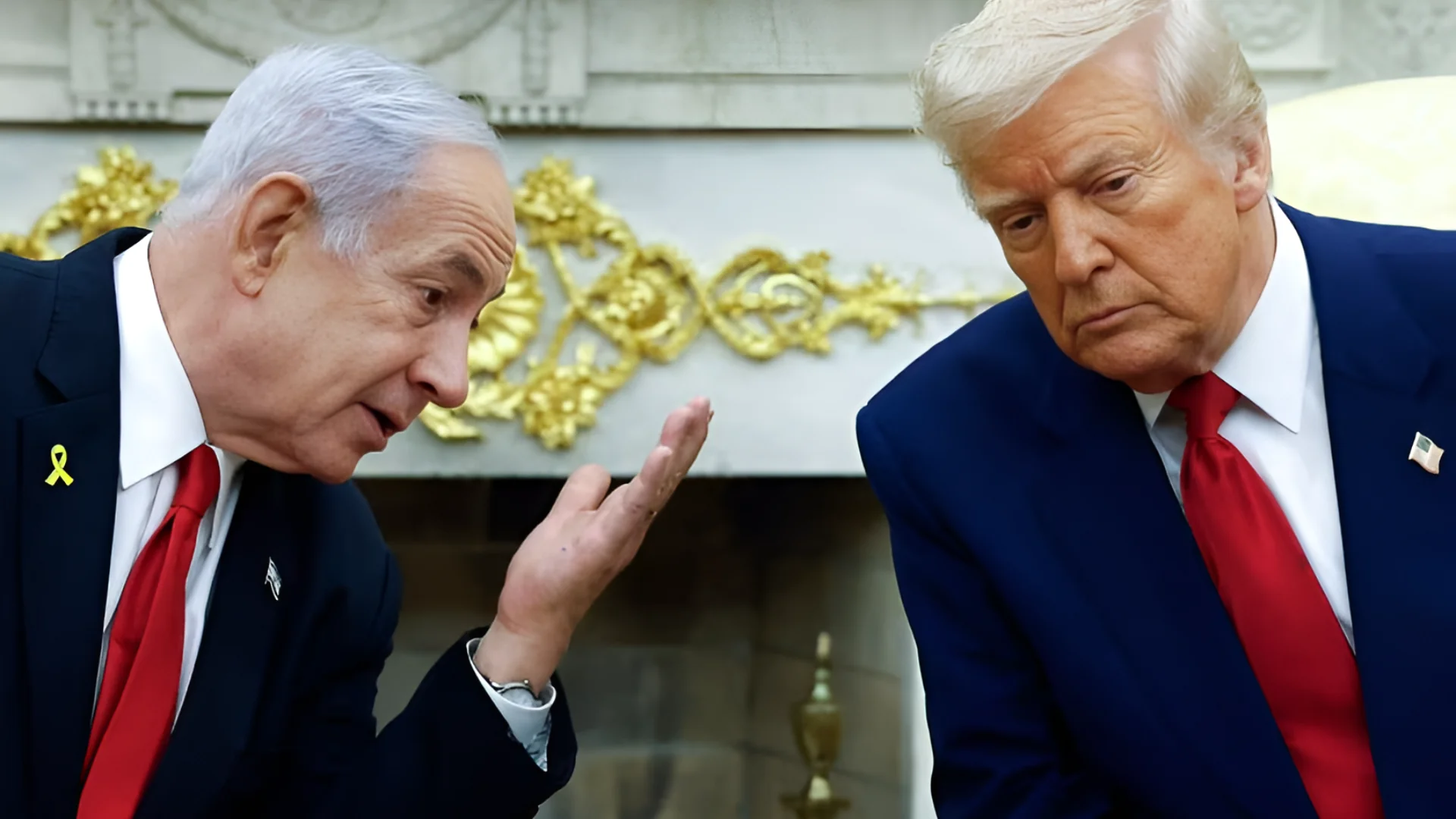
Netanyahu Rejects Trump-Backed Gaza Plan, Citing Disarmament Sequence
Israel's PM rejected the U.S.-backed 15-point Gaza plan Sunday, demanding Hamas disarm fully before any IDF withdrawal, deepening a sequencing standoff.

Comments (0)
Please sign in to join the discussion.
No comments yet.
Be the first to share your perspective on this topic.